


GameStop’s Origin, Evolution, and Market Role
GME Stock: Listing, Ticker, and a Volatility-First Profile
Business Model: How GameStop Makes Money
- Hardware: Consoles and accessories carry significant ticket sizes but typically offer tighter margins.
- Software: The shift towards direct platform distribution pressures this traditional revenue stream.
- Collectibles: Apparel, toys, and trading cards have increasingly mattered. Recent coverage points to collectibles becoming a much larger share of sales with healthier margins, signalling how the company is trying to follow consumer passion rather than fight platform physics.
Reinvention: Cost Discipline and the Web3 Experiment
- Operational: Reducing costs, rationalising the store count, tightening inventory, and prioritising cash preservation. These levers show up most clearly in earnings narratives and restructuring updates.
- Innovation: The company previously experimented with digital asset wallets and NFT marketplaces, though disclosures indicate these activities were wound down, a reminder that regulation and economics can be harsher than hype.
- Capital Allocation: Most recently, headlines have focused on GameStop’s board approving Bitcoin as a treasury reserve asset. Whether this becomes a meaningful financial strategy or a footnote will depend on scale, risk controls, and shareholder reception.
Financial Performance: What to Watch Beyond the Narrative
Ownership Structure: Institutions vs Retail
Competitive Landscape: Platforms and Big Retail
- Platform Holders: Digital storefronts offering instant access and subscriptions (PlayStation, Xbox, Steam).
- Big-Box Retailers: Giants like Amazon and Walmart compete on convenience and pricing for hardware.
- Specialty Marketplaces: Collectibles platforms compete on authenticity and community trust. GameStop’s edge comes from being a place where gaming enthusiasm is the organising principle, justifying its pivot towards collectibles.
Growth Drivers: The Bull Case
- Collectibles Scaling: Growing higher-engagement categories with decent margins to offset software declines.
- Store Optimisation: Improving operating leverage by closing weaker locations.
- Capital Allocation Narrative: The Bitcoin treasury decision adds a new dimension that some investors may view as an asymmetric asset exposure.
Major Risks: The Bear Case
- Digital Shift: The ongoing move to digital distribution erodes the classic retail role and reduces footfall.
- Execution Risk: Scaling a collectibles business requires precise demand forecasting to avoid inventory staleness.
- Volatility: Extreme price swings can distract management and complicate financing.
- Financial Strategy Risk: A Bitcoin treasury approach can amplify balance-sheet volatility and alter the company's risk profile.
Tokenised GameStop Exposure: GMEON on MEXC
Key Metrics Investors Should Track
- Gross Margin Quality: Is margin improvement coming from a healthier product mix or just cost cuts?
- Collectibles Growth: A proxy for the success of the post-digital strategy.
- Store Count Trajectory: Closures help leverage until they signal total demand evaporation.
- Balance Sheet: Cash deployment and treasury assets.
- Options Activity: Short interest and gamma exposure often dominate short-term price formation.
FAQ: GameStop (GME) and GMEON
Is GameStop publicly traded?
Why is GME called a "meme stock"?
What is GMEON?
Description:Crypto Pulse is powered by AI and public sources to bring you the hottest token trends instantly. For expert insights and in-depth analysis, visit MEXC Learn.
The articles shared on this page are sourced from public platforms and are provided for informational purposes only. They do not necessarily represent the views of MEXC. All rights remain with the original authors. If you believe any content infringes upon third-party rights, please contact service@support.mexc.com for prompt removal.
MEXC does not guarantee the accuracy, completeness, or timeliness of any content and is not responsible for any actions taken based on the information provided. The content does not constitute financial, legal, or other professional advice, nor should it be interpreted as a recommendation or endorsement by MEXC.
Latest Updates on GAMESTOP
View More
Best Crypto Presale as GameStop Holds 4,710 BTC and Pepeto Tops $8M
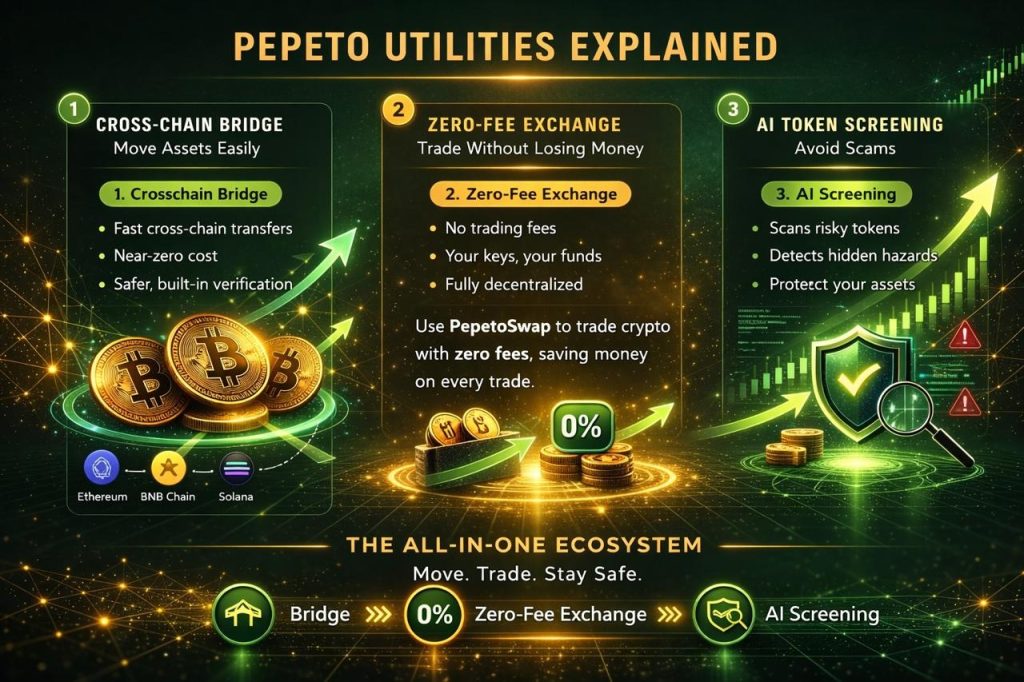
Traders Rush Into The Best Crypto Presale Pepeto as GameStop Holds 4,710 BTC

GameStop didn’t dump $324M in Bitcoin, SEC filing shows
HOT
Currently trending cryptocurrencies that are gaining significant market attention
Crypto Prices
The cryptocurrencies with the highest trading volume
Newly Added
Recently listed cryptocurrencies that are available for trading