U.S. Securities and Exchange Commission (SEC) Chairman Paul Atkins said on Friday that the agency is preparing reforms to corporate disclosure rules, a move that could give companies, including those in the crypto sector, greater flexibility over when they report earnings. Speaking on CNBC, Atkins confirmed that the SEC is “prioritizing” a proposal to let markets, including investors and banks, determine the cadence of company reporting instead of sticking to mandatory quarterly schedules. SEC’s Atkins Backs Flexible Reporting Cadence, Says Market Should Decide The plan follows renewed calls this week from President Donald Trump to shift from quarterly to semiannual reporting, which he argued would save costs and allow executives to concentrate on long-term strategy. Atkins said the rule change, if approved, would leave the decision in the hands of companies themselves. “For the sake of shareholders and public companies, the market can decide what the proper cadence is,” he noted. Supporters of less frequent reporting, such as Norway’s sovereign wealth fund and the Long-Term Stock Exchange, say semiannual reports reduce the pressure of short-term thinking. Opponents, however, argue that cutting down disclosures would reduce transparency, particularly harming retail investors who rely heavily on public filings. If adopted, the shift could carry notable benefits for crypto firms navigating U.S. regulatory structures: Filing fewer reports could ease the financial and administrative burden for crypto companies already juggling regulatory scrutiny. With less pressure to deliver short-term results, firms could devote greater attention to developing long-term blockchain strategies and expanding ecosystems. Flexible reporting cadence could allow companies to communicate performance in ways that better reflect the volatility and innovation cycles of the digital asset market. Atkins stressed that investors and banks will play a central role in setting expectations. “Investors will demand that sort of information at the cadence that’s appropriate to what the company’s doing,” he said, adding that banks will also weigh in given their role in lending and capital markets. Currently, all publicly traded companies in the U.S. must file quarterly earnings reports, though forecasts remain voluntary. The SEC could alter that requirement with a majority vote, and with Republicans holding a 3-1 advantage and one seat open, the proposal faces a favorable political landscape. Atkins pointed out that semiannual reporting is already standard practice for foreign private issuers trading in U.S. markets. “You have to realize that right now, semi-annual reporting is no stranger to our markets; foreign private issuers do it right now,” he said. No timeline has been set for the change, but Atkins described the proposal as “a good way forward.” Trump first floated the idea in 2018 and revived the push earlier this week in a post on his social media platform. SEC Shifts Tone on Crypto, Pairing Public Hearings With Compliance Outreach The SEC is stepping up its engagement with the crypto sector through public hearings, policy outreach, and a shift in enforcement strategy. On September 9, the agency announced that its Crypto Task Force will host a public hearing on October 17 at SEC headquarters in Washington. The session, scheduled from 1-4 p.m., will focus on financial privacy and surveillance, bringing together experts developing technologies that protect individual data. “Technology that helps Americans protect their privacy is critically important,” said Commissioner Hester M. Peirce, adding that insights from the event will guide future policy discussions in the crypto space. At the same time, SEC leadership is signaling a softer approach to compliance. In a September 15 interview with the Financial Times, SEC Chair Paul Atkins said the agency will issue notices of technical violations before pursuing formal enforcement actions. “You can’t just suddenly come and bash down their door,” Atkins said, criticizing the SEC’s past “shoot first and ask questions later” approach, which drew widespread industry pushback. The SEC is also expanding its outreach efforts nationwide. On September 18, the Crypto Task Force held a roundtable in Chicago as part of its “On The Road” initiative, which has already visited Dallas, Boston, and Berkeley. The sessions aim to include smaller crypto projects with fewer than ten employees, ensuring their perspectives shape regulatory frameworks. According to the SEC, the goal is to create rules that reflect broad input across the digital asset industryU.S. Securities and Exchange Commission (SEC) Chairman Paul Atkins said on Friday that the agency is preparing reforms to corporate disclosure rules, a move that could give companies, including those in the crypto sector, greater flexibility over when they report earnings. Speaking on CNBC, Atkins confirmed that the SEC is “prioritizing” a proposal to let markets, including investors and banks, determine the cadence of company reporting instead of sticking to mandatory quarterly schedules. SEC’s Atkins Backs Flexible Reporting Cadence, Says Market Should Decide The plan follows renewed calls this week from President Donald Trump to shift from quarterly to semiannual reporting, which he argued would save costs and allow executives to concentrate on long-term strategy. Atkins said the rule change, if approved, would leave the decision in the hands of companies themselves. “For the sake of shareholders and public companies, the market can decide what the proper cadence is,” he noted. Supporters of less frequent reporting, such as Norway’s sovereign wealth fund and the Long-Term Stock Exchange, say semiannual reports reduce the pressure of short-term thinking. Opponents, however, argue that cutting down disclosures would reduce transparency, particularly harming retail investors who rely heavily on public filings. If adopted, the shift could carry notable benefits for crypto firms navigating U.S. regulatory structures: Filing fewer reports could ease the financial and administrative burden for crypto companies already juggling regulatory scrutiny. With less pressure to deliver short-term results, firms could devote greater attention to developing long-term blockchain strategies and expanding ecosystems. Flexible reporting cadence could allow companies to communicate performance in ways that better reflect the volatility and innovation cycles of the digital asset market. Atkins stressed that investors and banks will play a central role in setting expectations. “Investors will demand that sort of information at the cadence that’s appropriate to what the company’s doing,” he said, adding that banks will also weigh in given their role in lending and capital markets. Currently, all publicly traded companies in the U.S. must file quarterly earnings reports, though forecasts remain voluntary. The SEC could alter that requirement with a majority vote, and with Republicans holding a 3-1 advantage and one seat open, the proposal faces a favorable political landscape. Atkins pointed out that semiannual reporting is already standard practice for foreign private issuers trading in U.S. markets. “You have to realize that right now, semi-annual reporting is no stranger to our markets; foreign private issuers do it right now,” he said. No timeline has been set for the change, but Atkins described the proposal as “a good way forward.” Trump first floated the idea in 2018 and revived the push earlier this week in a post on his social media platform. SEC Shifts Tone on Crypto, Pairing Public Hearings With Compliance Outreach The SEC is stepping up its engagement with the crypto sector through public hearings, policy outreach, and a shift in enforcement strategy. On September 9, the agency announced that its Crypto Task Force will host a public hearing on October 17 at SEC headquarters in Washington. The session, scheduled from 1-4 p.m., will focus on financial privacy and surveillance, bringing together experts developing technologies that protect individual data. “Technology that helps Americans protect their privacy is critically important,” said Commissioner Hester M. Peirce, adding that insights from the event will guide future policy discussions in the crypto space. At the same time, SEC leadership is signaling a softer approach to compliance. In a September 15 interview with the Financial Times, SEC Chair Paul Atkins said the agency will issue notices of technical violations before pursuing formal enforcement actions. “You can’t just suddenly come and bash down their door,” Atkins said, criticizing the SEC’s past “shoot first and ask questions later” approach, which drew widespread industry pushback. The SEC is also expanding its outreach efforts nationwide. On September 18, the Crypto Task Force held a roundtable in Chicago as part of its “On The Road” initiative, which has already visited Dallas, Boston, and Berkeley. The sessions aim to include smaller crypto projects with fewer than ten employees, ensuring their perspectives shape regulatory frameworks. According to the SEC, the goal is to create rules that reflect broad input across the digital asset industry

3 Ways Crypto Firms Gain from SEC Corporate Disclosure Shakeup Backed by Paul Atkins

2025/09/20 03:05
4 min read
For feedback or concerns regarding this content, please contact us at crypto.news@mexc.com

U.S. Securities and Exchange Commission (SEC) Chairman Paul Atkins said on Friday that the agency is preparing reforms to corporate disclosure rules, a move that could give companies, including those in the crypto sector, greater flexibility over when they report earnings.

Speaking on CNBC, Atkins confirmed that the SEC is “prioritizing” a proposal to let markets, including investors and banks, determine the cadence of company reporting instead of sticking to mandatory quarterly schedules.

SEC’s Atkins Backs Flexible Reporting Cadence, Says Market Should Decide

The plan follows renewed calls this week from President Donald Trump to shift from quarterly to semiannual reporting, which he argued would save costs and allow executives to concentrate on long-term strategy.

Atkins said the rule change, if approved, would leave the decision in the hands of companies themselves. “For the sake of shareholders and public companies, the market can decide what the proper cadence is,” he noted.

Supporters of less frequent reporting, such as Norway’s sovereign wealth fund and the Long-Term Stock Exchange, say semiannual reports reduce the pressure of short-term thinking.

Opponents, however, argue that cutting down disclosures would reduce transparency, particularly harming retail investors who rely heavily on public filings.

If adopted, the shift could carry notable benefits for crypto firms navigating U.S. regulatory structures:

  • Filing fewer reports could ease the financial and administrative burden for crypto companies already juggling regulatory scrutiny.
  • With less pressure to deliver short-term results, firms could devote greater attention to developing long-term blockchain strategies and expanding ecosystems.
  • Flexible reporting cadence could allow companies to communicate performance in ways that better reflect the volatility and innovation cycles of the digital asset market.

Atkins stressed that investors and banks will play a central role in setting expectations. “Investors will demand that sort of information at the cadence that’s appropriate to what the company’s doing,” he said, adding that banks will also weigh in given their role in lending and capital markets.

Currently, all publicly traded companies in the U.S. must file quarterly earnings reports, though forecasts remain voluntary. The SEC could alter that requirement with a majority vote, and with Republicans holding a 3-1 advantage and one seat open, the proposal faces a favorable political landscape.

Atkins pointed out that semiannual reporting is already standard practice for foreign private issuers trading in U.S. markets. “You have to realize that right now, semi-annual reporting is no stranger to our markets; foreign private issuers do it right now,” he said.

No timeline has been set for the change, but Atkins described the proposal as “a good way forward.” Trump first floated the idea in 2018 and revived the push earlier this week in a post on his social media platform.

SEC Shifts Tone on Crypto, Pairing Public Hearings With Compliance Outreach

The SEC is stepping up its engagement with the crypto sector through public hearings, policy outreach, and a shift in enforcement strategy.

On September 9, the agency announced that its Crypto Task Force will host a public hearing on October 17 at SEC headquarters in Washington.

The session, scheduled from 1-4 p.m., will focus on financial privacy and surveillance, bringing together experts developing technologies that protect individual data.

“Technology that helps Americans protect their privacy is critically important,” said Commissioner Hester M. Peirce, adding that insights from the event will guide future policy discussions in the crypto space.

At the same time, SEC leadership is signaling a softer approach to compliance. In a September 15 interview with the Financial Times, SEC Chair Paul Atkins said the agency will issue notices of technical violations before pursuing formal enforcement actions.

“You can’t just suddenly come and bash down their door,” Atkins said, criticizing the SEC’s past “shoot first and ask questions later” approach, which drew widespread industry pushback.

The SEC is also expanding its outreach efforts nationwide. On September 18, the Crypto Task Force held a roundtable in Chicago as part of its “On The Road” initiative, which has already visited Dallas, Boston, and Berkeley.

The sessions aim to include smaller crypto projects with fewer than ten employees, ensuring their perspectives shape regulatory frameworks.

According to the SEC, the goal is to create rules that reflect broad input across the digital asset industry.

Disclaimer: The articles reposted on this site are sourced from public platforms and are provided for informational purposes only. They do not necessarily reflect the views of MEXC. All rights remain with the original authors. If you believe any content infringes on third-party rights, please contact crypto.news@mexc.com for removal. MEXC makes no guarantees regarding the accuracy, completeness, or timeliness of the content and is not responsible for any actions taken based on the information provided. The content does not constitute financial, legal, or other professional advice, nor should it be considered a recommendation or endorsement by MEXC.

You May Also Like

XRP Whale Accumulation Hits 30-Day High: Could Ripple (XRP) Be Gearing Up for a Breakout?

XRP Whale Accumulation Hits 30-Day High: Could Ripple (XRP) Be Gearing Up for a Breakout?

The post XRP Whale Accumulation Hits 30-Day High: Could Ripple (XRP) Be Gearing Up for a Breakout? appeared on BitcoinEthereumNews.com. Key Takeaways On March 26
Share
BitcoinEthereumNews2026/03/29 16:19
Wormhole Launches Strategic Reserve to Lock In Token Value
Wormhole Launches Strategic Reserve to Lock In Token Value

The post Wormhole Launches Strategic Reserve to Lock In Token Value appeared on BitcoinEthereumNews.com. Altcoins 18 September 2025 | 09:05 Wormhole has unveiled a major overhaul of its tokenomics, introducing a system called the Strategic Wormhole Reserve. The upgrade is designed to consolidate revenues across the ecosystem and channel them into a long-term value mechanism for the W token. The reserve will pool income from the core protocol, the Wormhole Portal, and connected applications, creating a unified hub for revenue capture. According to the team, this approach ensures that staking rewards remain sustainable while also opening up fresh incentives for those who engage with governance or actively use Wormhole’s multi-chain products. Portal users will even be able to boost their staking yields through a points system, with the baseline return targeted at 4%. Developers emphasized that rewards will not come from token inflation but from existing supply and protocol revenues. The total supply of W remains capped at 10 billion tokens. The tokenomics redesign, set to go live in October, also addresses concerns about large scheduled unlocks that have previously pressured the market. The old annual “cliff” releases are being replaced by smaller biweekly unlocks, aimed at creating a more predictable flow of tokens into circulation. Distribution will continue to include guardian nodes, community backers, and strategic partners, while the Wormhole Foundation maintains its four-year treasury plan. Tokens allocated to core developers remain locked by contract, underscoring the commitment to long-term alignment. By restructuring supply schedules and centralizing revenues, Wormhole is positioning W 2.0 as a more sustainable system — one that balances rewards for active participants with safeguards against inflation and market shocks. The information provided in this article is for educational purposes only and does not constitute financial, investment, or trading advice. Coindoo.com does not endorse or recommend any specific investment strategy or cryptocurrency. Always conduct your own research and consult with…

Share
BitcoinEthereumNews2025/09/18 14:11
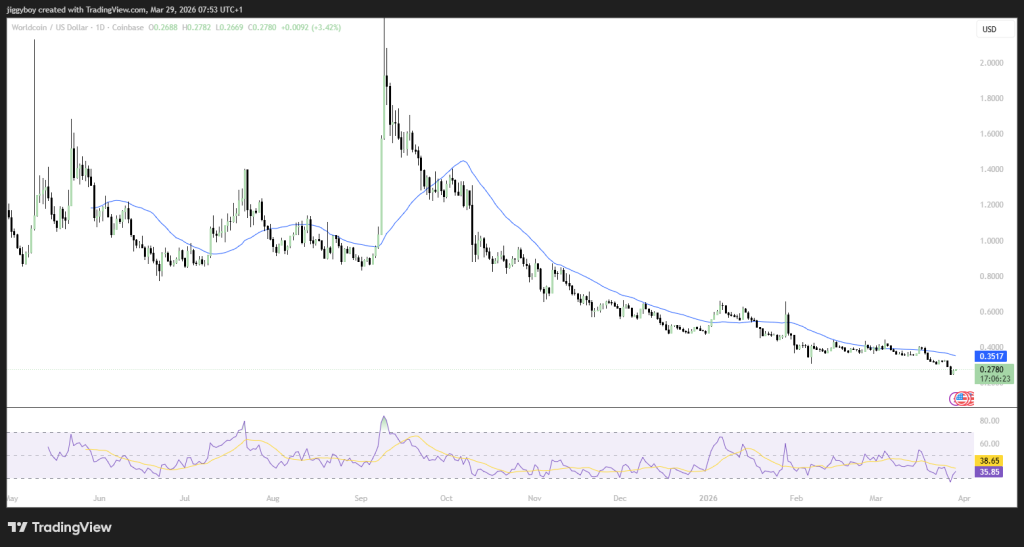
Crypto Price Prediction for Today, March 29: Worldcoin (WLD), XRP, Pi Coin

Crypto Price Prediction for Today, March 29: Worldcoin (WLD), XRP, Pi Coin

It’s been a mixed start for crypto today. Some coins are bouncing back, while others are still trying to find their footing. Let’s take a closer look at what’s
Share
Captainaltcoin2026/03/29 16:30