Twelve Senate Democrats are pressing for a greater role in shaping landmark cryptocurrency legislation as the Senate Banking Committee prepares for a vote on the Republican-led crypto market structure bill. The lawmakers released a joint statement on Friday urging their Republican colleagues to pursue a bipartisan authorship process, arguing that legislation of this scale should not move forward without equal input from both parties. Crypto Regulation in Limbo as Democrats and Republicans Struggle Over Drafting Power The group, which includes Senators Kirsten Gillibrand (D-NY), Cory Booker (D-NJ), Ruben Gallego (D-AZ), Mark Warner (D-VA), and others, described digital assets as a $4 trillion global market that demands a considered and bipartisan approach. They said they remain open to collaboration but emphasized that the process must begin with “mutual understanding” between both parties. The Democrats’ appeal follows the release of their own policy framework outlining seven core principles for digital asset oversight. Their proposal calls for closing gaps in spot markets for non-security tokens, clarifying regulatory jurisdiction between the Securities and Exchange Commission (SEC) and the Commodity Futures Trading Commission (CFTC), and bringing both issuers and trading platforms under clear regulatory standards. It also stresses the importance of preventing illicit finance, corruption, and abuse while ensuring fair and effective regulation. Republicans, led by Banking Committee Chairman Tim Scott, have been pushing to advance the bill before the end of September. Scott previously set a September 30 deadline to finalize the legislation, though aides now suggest the markup could be delayed until the week of October 20 to allow further Democratic input. The current Republican draft proposes creating a joint SEC-CFTC committee to harmonize regulatory guidance while also granting the CFTC new authority over spot markets for digital assets not classified as securities. Behind closed doors, Democrats are seeking deeper involvement in drafting the bill rather than being limited to offering feedback on a Republican-written version. According to reports from Politico, they also want greater coordination with the Senate Agriculture Committee, which oversees the CFTC, and closer engagement with technical assistance from regulatory agencies. The negotiations come at a time of heightened urgency in Washington to provide clear rules for digital assets. Senator Scott has argued that bipartisan support will be necessary to ensure the legislation’s success, recently predicting that at least 12 of the 18 Democrats on the committee could ultimately back the bill. However, some Democrats, including Senator Elizabeth Warren, have voiced skepticism about the crypto industry’s influence, posing a potential obstacle for broader party alignment. Republican lawmakers insist they have sought Democratic feedback since July and point to prior bipartisan efforts on narrower crypto legislation. A spokesperson for Senator Cynthia Lummis, a key Republican voice on digital assets, said both she and Scott remain committed to crafting legislation that balances innovation with investor protection. With Democrats now publicly pressing for an equal role in authorship, the path forward remains uncertain. Republicans could move the bill out of committee without Democratic backing, but doing so risks undermining momentum ahead of a full Senate vote. Clarity Act Faces Divisions in Congress as Market Confidence Wavers The push for comprehensive U.S. crypto regulation is gathering momentum but remains fraught with uncertainty. On Sept. 9, twelve Democratic senators unveiled a framework calling for stricter disclosure rules, mandatory registration of trading platforms with the Financial Crimes Enforcement Network, and expanded oversight by the SEC and CFTC. The plan also seeks to bar lawmakers and their families from profiting from digital assets, a move aimed at curbing political conflicts of interest. At the same time, public confidence in the CLARITY Act has dipped. A Polymarket prediction poll shows only 39% of bettors expect the measure to become law by the end of 2025, down sharply from 87% in mid-July. House Republicans have linked the bill to legislation banning a Federal Reserve central bank digital currency, advancing both measures in a procedural vote on Sept. 26. The decision follows President Trump’s successful July push to rally GOP support for a broader package, including stablecoin and anti-CBDC provisions. In the Senate, however, divisions are slowing progress. Sen. John Kennedy (R-La.) warned on Sept. 10 that the Banking Committee is “not ready” to move forward, citing unresolved concerns over industry influence. His comments directly challenge Chairman Tim Scott, who has pledged to mark up the bill before the end of September. Scott’s office insists that months of consultations with stakeholders show momentum is building. But with confidence faltering in markets and politics alike, the bill’s path remains uncertainTwelve Senate Democrats are pressing for a greater role in shaping landmark cryptocurrency legislation as the Senate Banking Committee prepares for a vote on the Republican-led crypto market structure bill. The lawmakers released a joint statement on Friday urging their Republican colleagues to pursue a bipartisan authorship process, arguing that legislation of this scale should not move forward without equal input from both parties. Crypto Regulation in Limbo as Democrats and Republicans Struggle Over Drafting Power The group, which includes Senators Kirsten Gillibrand (D-NY), Cory Booker (D-NJ), Ruben Gallego (D-AZ), Mark Warner (D-VA), and others, described digital assets as a $4 trillion global market that demands a considered and bipartisan approach. They said they remain open to collaboration but emphasized that the process must begin with “mutual understanding” between both parties. The Democrats’ appeal follows the release of their own policy framework outlining seven core principles for digital asset oversight. Their proposal calls for closing gaps in spot markets for non-security tokens, clarifying regulatory jurisdiction between the Securities and Exchange Commission (SEC) and the Commodity Futures Trading Commission (CFTC), and bringing both issuers and trading platforms under clear regulatory standards. It also stresses the importance of preventing illicit finance, corruption, and abuse while ensuring fair and effective regulation. Republicans, led by Banking Committee Chairman Tim Scott, have been pushing to advance the bill before the end of September. Scott previously set a September 30 deadline to finalize the legislation, though aides now suggest the markup could be delayed until the week of October 20 to allow further Democratic input. The current Republican draft proposes creating a joint SEC-CFTC committee to harmonize regulatory guidance while also granting the CFTC new authority over spot markets for digital assets not classified as securities. Behind closed doors, Democrats are seeking deeper involvement in drafting the bill rather than being limited to offering feedback on a Republican-written version. According to reports from Politico, they also want greater coordination with the Senate Agriculture Committee, which oversees the CFTC, and closer engagement with technical assistance from regulatory agencies. The negotiations come at a time of heightened urgency in Washington to provide clear rules for digital assets. Senator Scott has argued that bipartisan support will be necessary to ensure the legislation’s success, recently predicting that at least 12 of the 18 Democrats on the committee could ultimately back the bill. However, some Democrats, including Senator Elizabeth Warren, have voiced skepticism about the crypto industry’s influence, posing a potential obstacle for broader party alignment. Republican lawmakers insist they have sought Democratic feedback since July and point to prior bipartisan efforts on narrower crypto legislation. A spokesperson for Senator Cynthia Lummis, a key Republican voice on digital assets, said both she and Scott remain committed to crafting legislation that balances innovation with investor protection. With Democrats now publicly pressing for an equal role in authorship, the path forward remains uncertain. Republicans could move the bill out of committee without Democratic backing, but doing so risks undermining momentum ahead of a full Senate vote. Clarity Act Faces Divisions in Congress as Market Confidence Wavers The push for comprehensive U.S. crypto regulation is gathering momentum but remains fraught with uncertainty. On Sept. 9, twelve Democratic senators unveiled a framework calling for stricter disclosure rules, mandatory registration of trading platforms with the Financial Crimes Enforcement Network, and expanded oversight by the SEC and CFTC. The plan also seeks to bar lawmakers and their families from profiting from digital assets, a move aimed at curbing political conflicts of interest. At the same time, public confidence in the CLARITY Act has dipped. A Polymarket prediction poll shows only 39% of bettors expect the measure to become law by the end of 2025, down sharply from 87% in mid-July. House Republicans have linked the bill to legislation banning a Federal Reserve central bank digital currency, advancing both measures in a procedural vote on Sept. 26. The decision follows President Trump’s successful July push to rally GOP support for a broader package, including stablecoin and anti-CBDC provisions. In the Senate, however, divisions are slowing progress. Sen. John Kennedy (R-La.) warned on Sept. 10 that the Banking Committee is “not ready” to move forward, citing unresolved concerns over industry influence. His comments directly challenge Chairman Tim Scott, who has pledged to mark up the bill before the end of September. Scott’s office insists that months of consultations with stakeholders show momentum is building. But with confidence faltering in markets and politics alike, the bill’s path remains uncertain

Democrats Back Bipartisan Crypto Market Structure Bill as Senate Vote Looms

2025/09/23 02:44
4 min read
For feedback or concerns regarding this content, please contact us at crypto.news@mexc.com

Twelve Senate Democrats are pressing for a greater role in shaping landmark cryptocurrency legislation as the Senate Banking Committee prepares for a vote on the Republican-led crypto market structure bill.

The lawmakers released a joint statement on Friday urging their Republican colleagues to pursue a bipartisan authorship process, arguing that legislation of this scale should not move forward without equal input from both parties.

Crypto Regulation in Limbo as Democrats and Republicans Struggle Over Drafting Power

The group, which includes Senators Kirsten Gillibrand (D-NY), Cory Booker (D-NJ), Ruben Gallego (D-AZ), Mark Warner (D-VA), and others, described digital assets as a $4 trillion global market that demands a considered and bipartisan approach.

They said they remain open to collaboration but emphasized that the process must begin with “mutual understanding” between both parties.

The Democrats’ appeal follows the release of their own policy framework outlining seven core principles for digital asset oversight.

Their proposal calls for closing gaps in spot markets for non-security tokens, clarifying regulatory jurisdiction between the Securities and Exchange Commission (SEC) and the Commodity Futures Trading Commission (CFTC), and bringing both issuers and trading platforms under clear regulatory standards.

It also stresses the importance of preventing illicit finance, corruption, and abuse while ensuring fair and effective regulation.

Republicans, led by Banking Committee Chairman Tim Scott, have been pushing to advance the bill before the end of September.

Scott previously set a September 30 deadline to finalize the legislation, though aides now suggest the markup could be delayed until the week of October 20 to allow further Democratic input.

The current Republican draft proposes creating a joint SEC-CFTC committee to harmonize regulatory guidance while also granting the CFTC new authority over spot markets for digital assets not classified as securities.

Behind closed doors, Democrats are seeking deeper involvement in drafting the bill rather than being limited to offering feedback on a Republican-written version.

According to reports from Politico, they also want greater coordination with the Senate Agriculture Committee, which oversees the CFTC, and closer engagement with technical assistance from regulatory agencies.

The negotiations come at a time of heightened urgency in Washington to provide clear rules for digital assets.

Senator Scott has argued that bipartisan support will be necessary to ensure the legislation’s success, recently predicting that at least 12 of the 18 Democrats on the committee could ultimately back the bill.

However, some Democrats, including Senator Elizabeth Warren, have voiced skepticism about the crypto industry’s influence, posing a potential obstacle for broader party alignment.

Republican lawmakers insist they have sought Democratic feedback since July and point to prior bipartisan efforts on narrower crypto legislation.

A spokesperson for Senator Cynthia Lummis, a key Republican voice on digital assets, said both she and Scott remain committed to crafting legislation that balances innovation with investor protection.

With Democrats now publicly pressing for an equal role in authorship, the path forward remains uncertain. Republicans could move the bill out of committee without Democratic backing, but doing so risks undermining momentum ahead of a full Senate vote.

Clarity Act Faces Divisions in Congress as Market Confidence Wavers

The push for comprehensive U.S. crypto regulation is gathering momentum but remains fraught with uncertainty.

On Sept. 9, twelve Democratic senators unveiled a framework calling for stricter disclosure rules, mandatory registration of trading platforms with the Financial Crimes Enforcement Network, and expanded oversight by the SEC and CFTC.

The plan also seeks to bar lawmakers and their families from profiting from digital assets, a move aimed at curbing political conflicts of interest.

At the same time, public confidence in the CLARITY Act has dipped. A Polymarket prediction poll shows only 39% of bettors expect the measure to become law by the end of 2025, down sharply from 87% in mid-July.

House Republicans have linked the bill to legislation banning a Federal Reserve central bank digital currency, advancing both measures in a procedural vote on Sept. 26.

The decision follows President Trump’s successful July push to rally GOP support for a broader package, including stablecoin and anti-CBDC provisions.

In the Senate, however, divisions are slowing progress. Sen. John Kennedy (R-La.) warned on Sept. 10 that the Banking Committee is “not ready” to move forward, citing unresolved concerns over industry influence.

His comments directly challenge Chairman Tim Scott, who has pledged to mark up the bill before the end of September.

Scott’s office insists that months of consultations with stakeholders show momentum is building. But with confidence faltering in markets and politics alike, the bill’s path remains uncertain.

Disclaimer: The articles reposted on this site are sourced from public platforms and are provided for informational purposes only. They do not necessarily reflect the views of MEXC. All rights remain with the original authors. If you believe any content infringes on third-party rights, please contact crypto.news@mexc.com for removal. MEXC makes no guarantees regarding the accuracy, completeness, or timeliness of the content and is not responsible for any actions taken based on the information provided. The content does not constitute financial, legal, or other professional advice, nor should it be considered a recommendation or endorsement by MEXC.

You May Also Like

XRP Whale Accumulation Hits 30-Day High: Could Ripple (XRP) Be Gearing Up for a Breakout?

XRP Whale Accumulation Hits 30-Day High: Could Ripple (XRP) Be Gearing Up for a Breakout?

The post XRP Whale Accumulation Hits 30-Day High: Could Ripple (XRP) Be Gearing Up for a Breakout? appeared on BitcoinEthereumNews.com. Key Takeaways On March 26
Share
BitcoinEthereumNews2026/03/29 16:19
Wormhole Launches Strategic Reserve to Lock In Token Value
Wormhole Launches Strategic Reserve to Lock In Token Value

The post Wormhole Launches Strategic Reserve to Lock In Token Value appeared on BitcoinEthereumNews.com. Altcoins 18 September 2025 | 09:05 Wormhole has unveiled a major overhaul of its tokenomics, introducing a system called the Strategic Wormhole Reserve. The upgrade is designed to consolidate revenues across the ecosystem and channel them into a long-term value mechanism for the W token. The reserve will pool income from the core protocol, the Wormhole Portal, and connected applications, creating a unified hub for revenue capture. According to the team, this approach ensures that staking rewards remain sustainable while also opening up fresh incentives for those who engage with governance or actively use Wormhole’s multi-chain products. Portal users will even be able to boost their staking yields through a points system, with the baseline return targeted at 4%. Developers emphasized that rewards will not come from token inflation but from existing supply and protocol revenues. The total supply of W remains capped at 10 billion tokens. The tokenomics redesign, set to go live in October, also addresses concerns about large scheduled unlocks that have previously pressured the market. The old annual “cliff” releases are being replaced by smaller biweekly unlocks, aimed at creating a more predictable flow of tokens into circulation. Distribution will continue to include guardian nodes, community backers, and strategic partners, while the Wormhole Foundation maintains its four-year treasury plan. Tokens allocated to core developers remain locked by contract, underscoring the commitment to long-term alignment. By restructuring supply schedules and centralizing revenues, Wormhole is positioning W 2.0 as a more sustainable system — one that balances rewards for active participants with safeguards against inflation and market shocks. The information provided in this article is for educational purposes only and does not constitute financial, investment, or trading advice. Coindoo.com does not endorse or recommend any specific investment strategy or cryptocurrency. Always conduct your own research and consult with…

Share
BitcoinEthereumNews2025/09/18 14:11
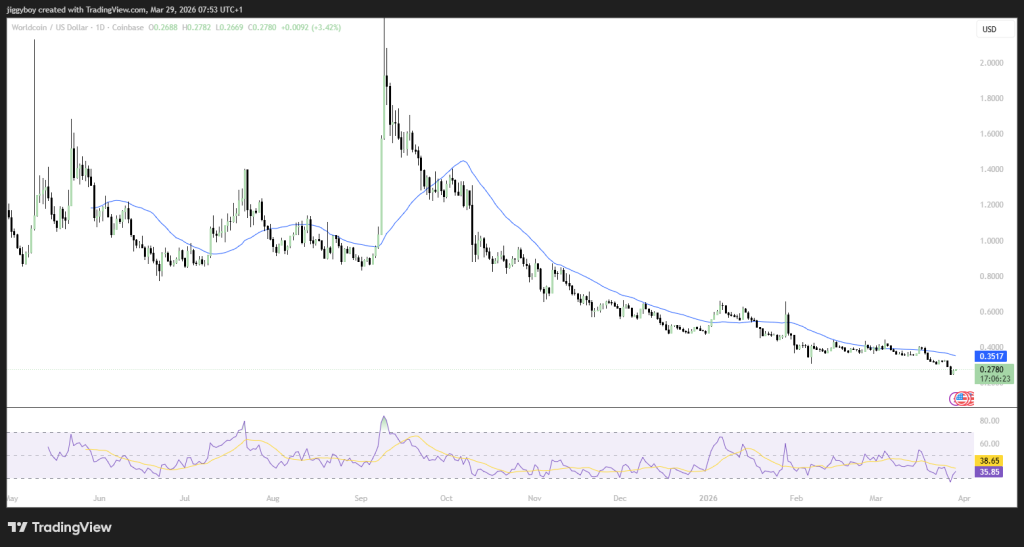
Crypto Price Prediction for Today, March 29: Worldcoin (WLD), XRP, Pi Coin

Crypto Price Prediction for Today, March 29: Worldcoin (WLD), XRP, Pi Coin

It’s been a mixed start for crypto today. Some coins are bouncing back, while others are still trying to find their footing. Let’s take a closer look at what’s
Share
Captainaltcoin2026/03/29 16:30