Olivia Gao is a principal at Verod-Kepple Africa Ventures (VKAV), a pan-African venture capital firm backing growth-stage companies across the continent.Olivia Gao is a principal at Verod-Kepple Africa Ventures (VKAV), a pan-African venture capital firm backing growth-stage companies across the continent.

“After a decade of asset-light evangelism, 2026 will mark the return of the balance sheet as a competitive advantage.” – Olivia Gao

2026/02/06 22:29
3 min read

Prediction

After a decade of asset-light evangelism, 2026 will mark the return of the balance sheet as a competitive advantage. Startups that own or finance productive assets—vehicles, devices, and equipment—will outcompete pure marketplaces by controlling supply, monetising financing margins, and unlocking private credit partnerships.

Traditional VC wisdom favoured asset-light models for faster scaling. But the post-2023 funding environment and renewed pressure for profitability are pushing founders toward business models with durable cash flows. Productive asset financing—from smartphones and refrigerators to motorbikes and commercial vehicles—is emerging as one of the most compelling paths, as it offers predictable cash flows, collateral-protected downside, and a faster path to achieve profitability.

This shift is underpinned by structural asset gaps across emerging markets. Massive unmet demand exists for mobility, energy access, appliances, logistics capacity, and agricultural equipment. Asset financing, therefore, becomes the product itself, not just an add-on to a platform. Moreover, compared to developed markets where such assets are abundant, their relative scarcity in emerging markets drives higher utilisation and stronger returns—making these models intrinsically more attractive than comparable asset-financing businesses in developed economies.

One caveat, though: scale in this context will resemble bank loan-book growth more than user-growth curves – and Africa’s banking sector has already demonstrated how large such balance sheets can become. As a result, valuing these businesses will require a balance-sheet–led approach rather than traditional revenue-multiple frameworks.

Supporting Evidence

2025 has already shown accelerating momentum in debt financing across Africa’s startup ecosystem. In Kenya and Egypt, more than half of total startup funding now comes through debt instruments. Several of the continent’s largest funding rounds this year—including M-Kopa, Sun King, d.light, and Spiro—were predominantly debt-financed.

This signals that both founders and capital providers are becoming comfortable with asset-backed venture structures at scale. We also see a growing volume of asset-financing business models emerging in our investment pipeline—they are increasingly becoming a partner for mobility or logistics platforms, which are looking for anchored supply partners.

Risk Factor

Unexpected default rates due to poorly managed collection or repossession processes could challenge investment confidence in asset financing models. While the model is attractive in theory, its success depends on disciplined execution and deep operational expertise in credit underwriting, debt structuring, and risk management—capabilities that remain scarce in many early-stage startups.

Who is Olivia Gao?

Olivia Gao is a principal at Verod-Kepple Africa Ventures (VKAV), a pan-African venture capital firm backing tech-enabled, growth-stage companies across the continent. At VKAV, Gao is involved in sourcing and evaluating investment opportunities, conducting due diligence, and supporting portfolio companies as they scale. Her role spans engagement with founders and helping shape investment strategy within the firm’s broader focus on supporting post-revenue startups with global growth potential.

Before joining VKAV, she gained investment experience as an associate and analyst at firms including SouthBridge Group and Future Hub Africa and worked on renewable energy and development finance initiatives during a research internship with Climate Finance Advisors, as well as with the United Nations Development Programme.

Market Opportunity
Bitlight Labs Logo
Bitlight Labs Price(LIGHT)
$0.2512
$0.2512$0.2512
+4.31%
USD
Bitlight Labs (LIGHT) Live Price Chart
Disclaimer: The articles reposted on this site are sourced from public platforms and are provided for informational purposes only. They do not necessarily reflect the views of MEXC. All rights remain with the original authors. If you believe any content infringes on third-party rights, please contact service@support.mexc.com for removal. MEXC makes no guarantees regarding the accuracy, completeness, or timeliness of the content and is not responsible for any actions taken based on the information provided. The content does not constitute financial, legal, or other professional advice, nor should it be considered a recommendation or endorsement by MEXC.

You May Also Like

Cashing In On University Patents Means Giving Up On Our Innovation Future

Cashing In On University Patents Means Giving Up On Our Innovation Future

The post Cashing In On University Patents Means Giving Up On Our Innovation Future appeared on BitcoinEthereumNews.com. “It’s a raid on American innovation that would deliver pennies to the Treasury while kneecapping the very engine of our economic and medical progress,” writes Pipes. Getty Images Washington is addicted to taxing success. Now, Commerce Secretary Howard Lutnick is floating a plan to skim half the patent earnings from inventions developed at universities with federal funding. It’s being sold as a way to shore up programs like Social Security. In reality, it’s a raid on American innovation that would deliver pennies to the Treasury while kneecapping the very engine of our economic and medical progress. Yes, taxpayer dollars support early-stage research. But the real payoff comes later—in the jobs created, cures discovered, and industries launched when universities and private industry turn those discoveries into real products. By comparison, the sums at stake in patent licensing are trivial. Universities collectively earn only about $3.6 billion annually in patent income—less than the federal government spends on Social Security in a single day. Even confiscating half would barely register against a $6 trillion federal budget. And yet the damage from such a policy would be anything but trivial. The true return on taxpayer investment isn’t in licensing checks sent to Washington, but in the downstream economic activity that federally supported research unleashes. Thanks to the bipartisan Bayh-Dole Act of 1980, universities and private industry have powerful incentives to translate early-stage discoveries into real-world products. Before Bayh-Dole, the government hoarded patents from federally funded research, and fewer than 5% were ever licensed. Once universities could own and license their own inventions, innovation exploded. The result has been one of the best returns on investment in government history. Since 1996, university research has added nearly $2 trillion to U.S. industrial output, supported 6.5 million jobs, and launched more than 19,000 startups. Those companies pay…
Share
BitcoinEthereumNews2025/09/18 03:26
China Blocks Nvidia’s RTX Pro 6000D as Local Chips Rise
China Blocks Nvidia’s RTX Pro 6000D as Local Chips Rise

The post China Blocks Nvidia’s RTX Pro 6000D as Local Chips Rise appeared on BitcoinEthereumNews.com. China Blocks Nvidia’s RTX Pro 6000D as Local Chips Rise China’s internet regulator has ordered the country’s biggest technology firms, including Alibaba and ByteDance, to stop purchasing Nvidia’s RTX Pro 6000D GPUs. According to the Financial Times, the move shuts down the last major channel for mass supplies of American chips to the Chinese market. Why Beijing Halted Nvidia Purchases Chinese companies had planned to buy tens of thousands of RTX Pro 6000D accelerators and had already begun testing them in servers. But regulators intervened, halting the purchases and signaling stricter controls than earlier measures placed on Nvidia’s H20 chip. Image: Nvidia An audit compared Huawei and Cambricon processors, along with chips developed by Alibaba and Baidu, against Nvidia’s export-approved products. Regulators concluded that Chinese chips had reached performance levels comparable to the restricted U.S. models. This assessment pushed authorities to advise firms to rely more heavily on domestic processors, further tightening Nvidia’s already limited position in China. China’s Drive Toward Tech Independence The decision highlights Beijing’s focus on import substitution — developing self-sufficient chip production to reduce reliance on U.S. supplies. “The signal is now clear: all attention is focused on building a domestic ecosystem,” said a representative of a leading Chinese tech company. Nvidia had unveiled the RTX Pro 6000D in July 2025 during CEO Jensen Huang’s visit to Beijing, in an attempt to keep a foothold in China after Washington restricted exports of its most advanced chips. But momentum is shifting. Industry sources told the Financial Times that Chinese manufacturers plan to triple AI chip production next year to meet growing demand. They believe “domestic supply will now be sufficient without Nvidia.” What It Means for the Future With Huawei, Cambricon, Alibaba, and Baidu stepping up, China is positioning itself for long-term technological independence. Nvidia, meanwhile, faces…
Share
BitcoinEthereumNews2025/09/18 01:37
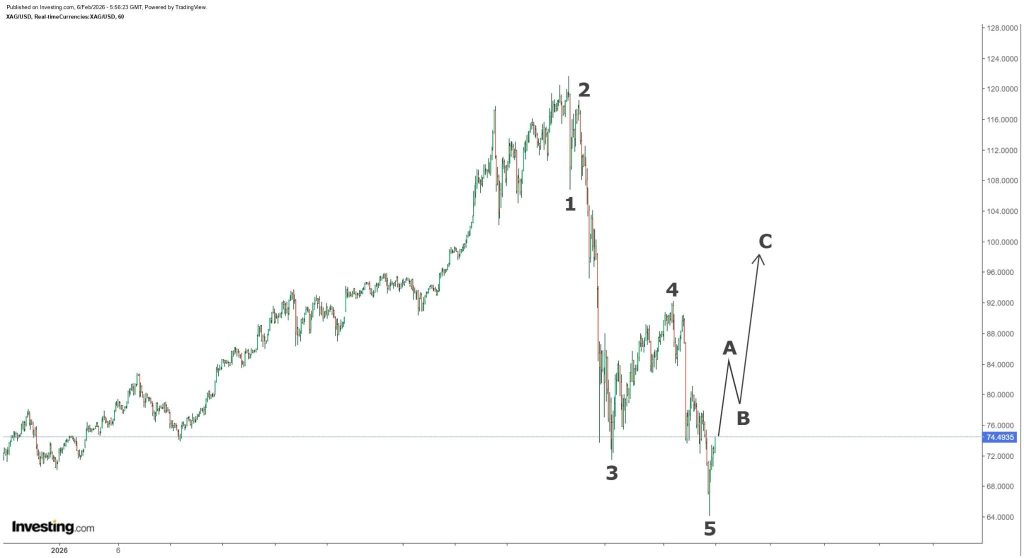
Silver Price Crash Is Over “For Real This Time,” Analyst Predicts a Surge Back Above $90

Silver Price Crash Is Over “For Real This Time,” Analyst Predicts a Surge Back Above $90

Silver has been taking a beating lately, and the Silver price hasn’t exactly been acting like a safe haven. After running up into the highs, the whole move reversed
Share
Captainaltcoin2026/02/07 03:15