"In 2026, I expect AI tutors to evolve into fully capable multimodal learning companions" - Boye Oshinaga"In 2026, I expect AI tutors to evolve into fully capable multimodal learning companions" - Boye Oshinaga

“In 2026, I expect AI tutors to evolve into fully capable multimodal learning companions” – Boye Oshinaga

2026/02/06 21:53
3 min read

Prediction

By 2026, I expect AI tutors to evolve into fully capable multimodal learning companions. These systems will teach using voice, video, animations and text in a way that is engaging enough for children as young as four and powerful enough to support adults learning new workplace skills.

In primary and secondary schools, this will make flipped learning much more explored in schools. Kids will learn core concepts at home with AI, and class time will be spent asking questions, solving problems and doing hands-on work with teachers. In vocation and the workplace, AI platforms will guide workers and upskill them faster.

At the university and tertiary institutions, AI-mediated oral assessments will be used to combat the surge in AI’s use for assignments and test cheating. Students will increasingly be required to explain their thinking aloud or in a live setting to show mastery.

Supporting Evidence

Multimodal AI is progressing faster than expected. GPT-4o and successors already understand speech, text and images in one model and are improving quarterly.

Edtech demand is exploding. The World Bank estimates that 70% of 10-year-olds in low and middle-income countries are in poverty, meaning they cannot read a simple text. Governments and development will need AI to scale learning interventions to close gaps faster than conventional methods. 

Universities are struggling with academic integrity. US, UK and Australian institutions have reported double-digit increases in AI-assisted submissions since 2023 and are already experimenting with oral defences, viva-style questioning and portfolio reviews.

Workforce retraining is becoming urgent. The World Economic Forum estimates that 44% of workers will need reskilling within five years. AI-driven coaching and upskilling tools are becoming a necessity.

Risk Factors

The biggest barrier will be institutional adoption. Education systems and employers might move more slowly than the tech curve due to policy bottlenecks, curriculum inertia or fear of replacing traditional approaches.

Another risk is access and infrastructure. If data costs, device availability or school connectivity do not improve, the benefits may concentrate among high-income learners and leave millions behind.

But if governments, telcos and innovators work together, this shift is still very likely to happen.

Who is Boye Oshinaga?

Boye Oshinaga is a Nigerian entrepreneur and two-time founder with experience building fintech and education technology businesses. He first founded Riby Finance, a platform focused on helping low-income workers save and access credit, which scaled to over three million users and reached $1 million in revenue.

He later founded Gradely, an edtech company using AI to personalise learning for primary and secondary school students across Africa and the diaspora. Gradely raised $700,000 in pre-seed funding and has served more than 200,000 families.

Beyond founding companies, Oshinaga has held leadership and investment roles across Africa’s startup ecosystem. He was the first Venture Partner at Founders Factory Africa (now 54Collective), the $100 million venture studio and fund, and previously served as Vice President for the edtech division at Venture Garden Group, where he helped launch Nigeria’s first accredited online MBA programme, which generated $1 million in revenue from its inaugural cohort.

Disclaimer: The articles reposted on this site are sourced from public platforms and are provided for informational purposes only. They do not necessarily reflect the views of MEXC. All rights remain with the original authors. If you believe any content infringes on third-party rights, please contact service@support.mexc.com for removal. MEXC makes no guarantees regarding the accuracy, completeness, or timeliness of the content and is not responsible for any actions taken based on the information provided. The content does not constitute financial, legal, or other professional advice, nor should it be considered a recommendation or endorsement by MEXC.

You May Also Like

Cashing In On University Patents Means Giving Up On Our Innovation Future

Cashing In On University Patents Means Giving Up On Our Innovation Future

The post Cashing In On University Patents Means Giving Up On Our Innovation Future appeared on BitcoinEthereumNews.com. “It’s a raid on American innovation that would deliver pennies to the Treasury while kneecapping the very engine of our economic and medical progress,” writes Pipes. Getty Images Washington is addicted to taxing success. Now, Commerce Secretary Howard Lutnick is floating a plan to skim half the patent earnings from inventions developed at universities with federal funding. It’s being sold as a way to shore up programs like Social Security. In reality, it’s a raid on American innovation that would deliver pennies to the Treasury while kneecapping the very engine of our economic and medical progress. Yes, taxpayer dollars support early-stage research. But the real payoff comes later—in the jobs created, cures discovered, and industries launched when universities and private industry turn those discoveries into real products. By comparison, the sums at stake in patent licensing are trivial. Universities collectively earn only about $3.6 billion annually in patent income—less than the federal government spends on Social Security in a single day. Even confiscating half would barely register against a $6 trillion federal budget. And yet the damage from such a policy would be anything but trivial. The true return on taxpayer investment isn’t in licensing checks sent to Washington, but in the downstream economic activity that federally supported research unleashes. Thanks to the bipartisan Bayh-Dole Act of 1980, universities and private industry have powerful incentives to translate early-stage discoveries into real-world products. Before Bayh-Dole, the government hoarded patents from federally funded research, and fewer than 5% were ever licensed. Once universities could own and license their own inventions, innovation exploded. The result has been one of the best returns on investment in government history. Since 1996, university research has added nearly $2 trillion to U.S. industrial output, supported 6.5 million jobs, and launched more than 19,000 startups. Those companies pay…
Share
BitcoinEthereumNews2025/09/18 03:26
China Blocks Nvidia’s RTX Pro 6000D as Local Chips Rise
China Blocks Nvidia’s RTX Pro 6000D as Local Chips Rise

The post China Blocks Nvidia’s RTX Pro 6000D as Local Chips Rise appeared on BitcoinEthereumNews.com. China Blocks Nvidia’s RTX Pro 6000D as Local Chips Rise China’s internet regulator has ordered the country’s biggest technology firms, including Alibaba and ByteDance, to stop purchasing Nvidia’s RTX Pro 6000D GPUs. According to the Financial Times, the move shuts down the last major channel for mass supplies of American chips to the Chinese market. Why Beijing Halted Nvidia Purchases Chinese companies had planned to buy tens of thousands of RTX Pro 6000D accelerators and had already begun testing them in servers. But regulators intervened, halting the purchases and signaling stricter controls than earlier measures placed on Nvidia’s H20 chip. Image: Nvidia An audit compared Huawei and Cambricon processors, along with chips developed by Alibaba and Baidu, against Nvidia’s export-approved products. Regulators concluded that Chinese chips had reached performance levels comparable to the restricted U.S. models. This assessment pushed authorities to advise firms to rely more heavily on domestic processors, further tightening Nvidia’s already limited position in China. China’s Drive Toward Tech Independence The decision highlights Beijing’s focus on import substitution — developing self-sufficient chip production to reduce reliance on U.S. supplies. “The signal is now clear: all attention is focused on building a domestic ecosystem,” said a representative of a leading Chinese tech company. Nvidia had unveiled the RTX Pro 6000D in July 2025 during CEO Jensen Huang’s visit to Beijing, in an attempt to keep a foothold in China after Washington restricted exports of its most advanced chips. But momentum is shifting. Industry sources told the Financial Times that Chinese manufacturers plan to triple AI chip production next year to meet growing demand. They believe “domestic supply will now be sufficient without Nvidia.” What It Means for the Future With Huawei, Cambricon, Alibaba, and Baidu stepping up, China is positioning itself for long-term technological independence. Nvidia, meanwhile, faces…
Share
BitcoinEthereumNews2025/09/18 01:37
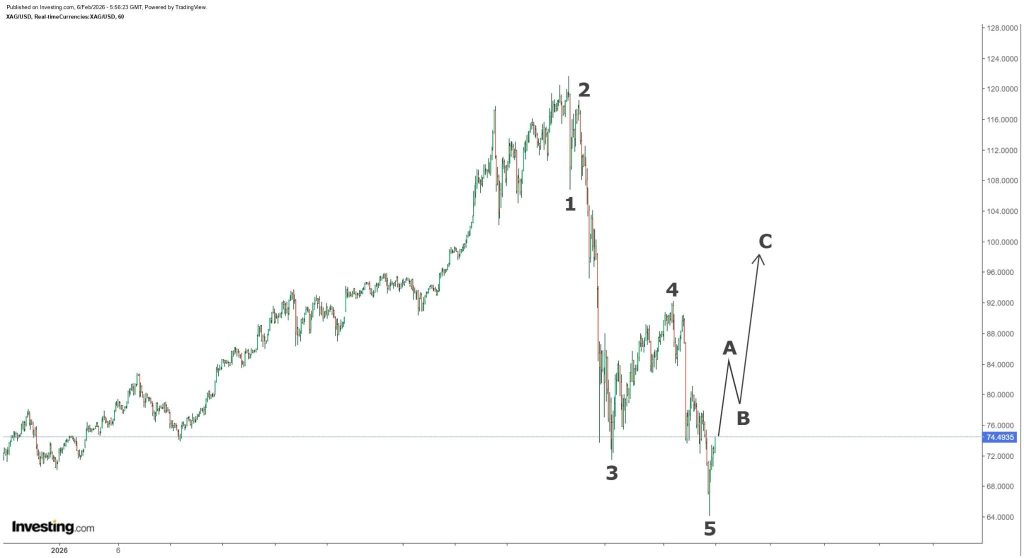
Silver Price Crash Is Over “For Real This Time,” Analyst Predicts a Surge Back Above $90

Silver Price Crash Is Over “For Real This Time,” Analyst Predicts a Surge Back Above $90

Silver has been taking a beating lately, and the Silver price hasn’t exactly been acting like a safe haven. After running up into the highs, the whole move reversed
Share
Captainaltcoin2026/02/07 03:15