A US judge has denied Elon Musk's request to dismiss the SEC lawsuit over his failure to disclose his stake in Twitter.A US judge has denied Elon Musk's request to dismiss the SEC lawsuit over his failure to disclose his stake in Twitter.

US judge rejects Musk bid to dismiss SEC lawsuit over Twitter stake disclosure

4 min read

A US-based federal judge has denied billionaire Elon Musk’s motion to dismiss a complaint from the US Securities and Exchange Commission (SEC) alleging he exceeded the time allowed to report his accumulating Twitter shares.

In an attempt to defend himself, Musk said the federal agency unfairly targeted him and that the case violated his free speech rights, among other claims. 

After carefully assessing these claims, US District Judge Sparkle Sooknanan just recently issued a ruling in Washington. The ruling stated that a straightforward application of the law indicated that none of these arguments provided a sufficient legal basis for dismissing the lawsuit.

In January 2025, the SEC filed its complaint against Tesla and SpaceX CEO, just days before Donald Trump assumed the presidency. Regarding this lawsuit, sources with knowledge of the situation disclosed that the federal agency claimed Musk purchased Twitter shares in 2022 but delayed reporting his holdings until it was too late. Afterwards, reports pointed out that the influential tech figure secretly acquired the social media platform for $44 billion and changed its name from Twitter to X.

Following this claim, the SEC pointed to the possibility of Musk purchasing stakes at a reduced price as the main reason for his decision to delay his announcement of an increased stake. At this point, sources confirmed Twitter shareholders spent over $150 million to buy Twitter’s shares.

Even so, the industry executive’s lawyers filed a motion to terminate the proceedings, calling the case a waste of the court’s time and a misuse of public resources. Responding to this statement, the SEC requested that Judge Sooknanan find Musk guilty without a trial, arguing that the failure to meet the disclosure deadline is incontrovertible.

In a statement, Sooknanan mentioned that, “The court understands that Mr. Musk would prefer not to disclose information that could affect stock prices as he seeks control of the company. However, what Congress established in Section 13(d) does not violate the First Amendment.” 

This case is referred to as Securities and Exchange Commission v. Musk, 25-cv-00105. It took place in the US District Court for the District of Columbia (Washington). 

 xAI seeks to solidify its position as a leader in the tech industry 

Reports mentioned that Elon Musk’s company, xAI, has been actively challenging leading AI labs such as OpenAI, the firm he founded and later clashed with, over the past three years.

Nonetheless, the outcome received mixed reactions from individuals since the chatbot Grok, xAI’s key product, drew people’s attention for submitting antisemitic replies and a sexualized image scandal, diminishing its technical achievements.

To offset this impact, reports from reliable sources disclosed that Musk is partnering with one of his most successful ventures to accelerate his efforts to develop advanced AI systems.

Regarding this collaboration, the billionaire shared an X post dated Monday, February 2, noting that he decided to merge xAI with SpaceX to establish a combined firm with $1.25 trillion in valuation. According to Musk, the aim of this collaboration is to help xAI acquire the three major elements required for AI development. Notably,  these elements include more computing power, talent, and data.

Meanwhile, like other AI startups, xAI has allocated significant amounts of funds, which total around  $1 billion monthly, on data centers, chips, and other investments to create artificial intelligence models. 

Consequently, financial reports declared that xAI has incurred $5 billion in corporate debt, a substantial liability for a young startup. However, the company’s AI infrastructure development remains modest compared to OpenAI’s massive $1.4 trillion commitment to data centers and chips.

Sharpen your strategy with mentorship + daily ideas - 30 days free access to our trading program

Disclaimer: The articles reposted on this site are sourced from public platforms and are provided for informational purposes only. They do not necessarily reflect the views of MEXC. All rights remain with the original authors. If you believe any content infringes on third-party rights, please contact service@support.mexc.com for removal. MEXC makes no guarantees regarding the accuracy, completeness, or timeliness of the content and is not responsible for any actions taken based on the information provided. The content does not constitute financial, legal, or other professional advice, nor should it be considered a recommendation or endorsement by MEXC.

You May Also Like

Three dormant wallets, suspected to belong to the same entity, purchased 5,970 ETH eight hours ago.
Three dormant wallets, suspected to belong to the same entity, purchased 5,970 ETH eight hours ago.

PANews reported on February 4 that, according to Lookonchain monitoring, three wallets that had been dormant for four years (likely controlled by the same entity
Share
PANews2026/02/04 11:36
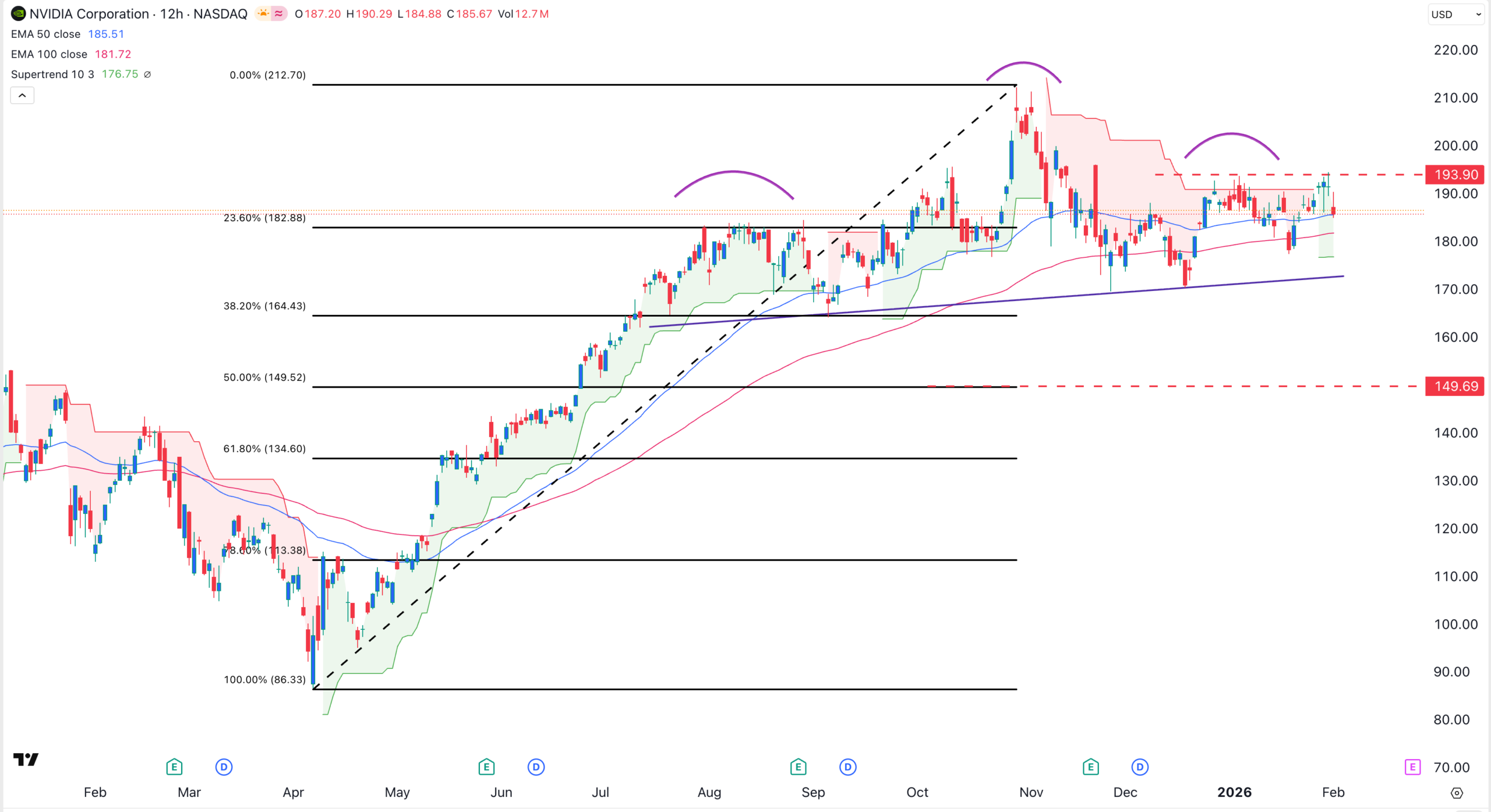
NVIDIA Stock Price Analysis as OpenAI Issues Concerns About its Chips

NVIDIA Stock Price Analysis as OpenAI Issues Concerns About its Chips

Key Insights NVIDIA stock started the week in the red. It crashed by over 2%. Meanwhile, the S&P 500, Dow Jones, and Nasdaq 100 moved close to their all-time highs
Share
Themarketperiodical2026/02/04 11:27
Ondo Finance Launches USDY Yieldcoin on Stellar, Bringing Tokenized U.S. Treasuries to Users

Ondo Finance Launches USDY Yieldcoin on Stellar, Bringing Tokenized U.S. Treasuries to Users

Ondo Finance, a U.S.-based digital asset firm specializing in bringing traditional financial products on-chain through tokenization, is expanding its yieldcoin USDY to the Stellar network. This lates update marks a step forward in merging tokenized real-world assets with a global payments infrastructure, unlocking new opportunities for users worldwide. The announcement was made at the Stellar Meridian event in Copacabana, Rio de Janeiro, on September 17. USDY Joins the Stellar Ecosystem Ondo Finance, a recognized leader in tokenized real-world assets, announced the deployment of United States Dollar Yield (USDY) on Stellar, the payments-focused blockchain known for speed and low transaction costs. USDY is the most widely available “yieldcoin,” offering investors access to onchain assets backed by U.S. Treasuries. This launch allows Stellar’s global user base to tap into permissionless, yield-bearing assets tied to one of the safest financial instruments in the world. It also aligns with Stellar’s mission of driving fast, affordable cross-border payments. Combining Yield with Payments Infrastructure “Stablecoins unlocked global access to the U.S. dollar. With USDY, we’re taking the next step by bringing U.S. Treasuries onchain in a form that combines stability, liquidity, and yield,” said Ian De Bode, Chief Strategy Officer at Ondo Finance. “Fast, affordable cross-border payments are at the center of what Stellar was designed to do. The global reach of the Stellar ecosystem combined with a yield-bearing asset like USDY levels up what is possible onchain, allowing wallets and businesses to offer yield opportunities to their users,” said Denelle Dixon, CEO of the Stellar Development Foundation. Ondo claims by pairing USDY with Stellar’s infrastructure, new possibilities open up in treasury management, collateralization, and everyday financial applications. Unlocking Institutional and Retail Use Cases USDY currently manages over $650 million in total value locked (TVL) across nine blockchains and offers a 5.3% APY. By launching on Stellar, Ondo Finance extends these benefits to global retail and institutional users. The firm explains balances on Stellar can now become productive, supporting use cases such as onchain savings, institutional treasury strategies, cost-efficient collateral for DeFi protocols, and remittance flows that carry yield rather than remaining static. A Milestone for Tokenized Treasuries With the integration of USDY, Stellar users gain more than just access to stable-value assets—they gain access to institutional-grade yield. For investors outside the U.S., the launch represents a new way to combine the safety of Treasuries with the accessibility of blockchain technology. As tokenization accelerates globally, Ondo Finance’s decision to deploy USDY on Stellar reinforces the narrative that blockchain is not just about speculation, but about reimagining the global financial system through secure, yield-bearing digital assets
Share
CryptoNews2025/09/18 00:46
