Bitcoin fell back toward $65,000 on Friday as investors cut exposure to risk assets after another round of Middle East tensions kept oil prices elevated, pushedBitcoin fell back toward $65,000 on Friday as investors cut exposure to risk assets after another round of Middle East tensions kept oil prices elevated, pushed

Bitcoin drops toward $65k after new Trump Iran delay sends oil higher, triggering $200M wipeout

2026/03/27 20:40
6 min read
For feedback or concerns regarding this content, please contact us at crypto.news@mexc.com

Bitcoin fell back toward $65,000 on Friday as investors cut exposure to risk assets after another round of Middle East tensions kept oil prices elevated, pushed Treasury yields to their highest levels in months, and lifted the dollar.

According to CryptoSlate's data, BTC dumped nearly 5% to around $66,484, its lowest price since the beginning of the month. This continues a trend in which the top crypto repeatedly fails to hold when macro pressure returns.

An analyst at Bitunix told CryptoSlate:

Data from CoinGlass showed that the price action wiped nearly $200 million from crypto traders within the past hour, with long traders bearing most of the losses.
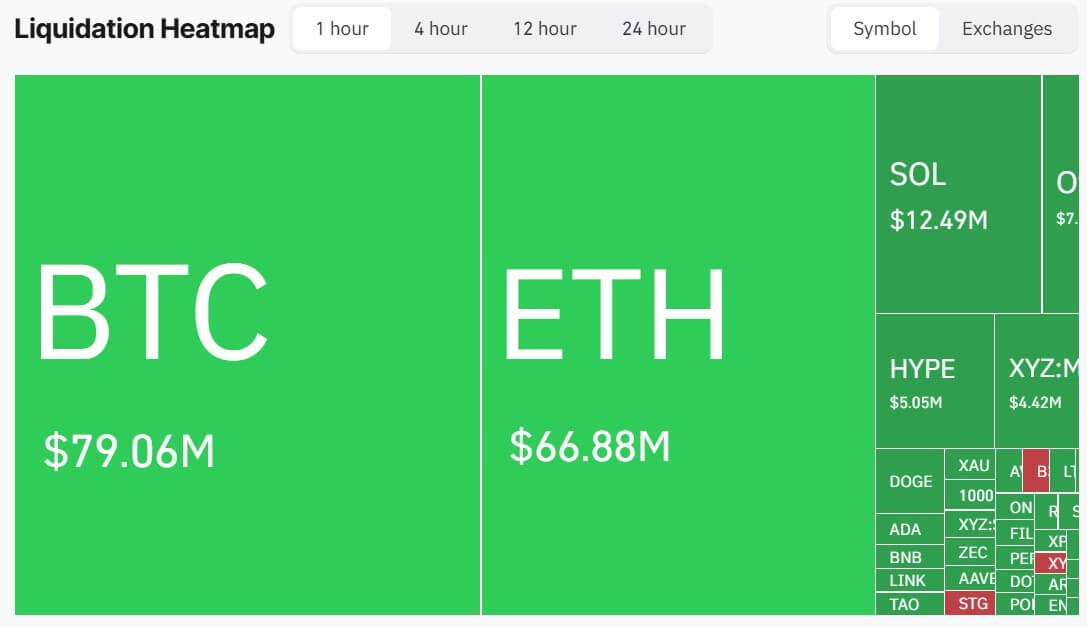
Crypto Market LiquidationCrypto Market Liquidation in The Last 1 Hour on March 27 (Source: CoinGlass)

Why is Bitcoin price falling?

BTC's current slide did not come from a crypto-specific shock. Instead, the downturn can be linked to geopolitical tensions that have rattled the global market.

Related Reading

Bitcoin price just collapsed because the macro selloff collided with a $14 billion options expiry this morning

Roughly $14.1B in Bitcoin options and $2.2B in Ethereum options expired on Friday, Mar. 27. History suggests more volatility around expiry.

Mar 27, 2026 · Gino Matos

In a post on Truth Social, President Donald Trump revealed that he was postponing plans to destroy Iran's energy plants by another 10 days, extending the deadline to April 6 as talks continued. This represented the second significant pause he had introduced amid the ongoing conflict with Iran.

The new announcement rattled global markets, with Brent crude rising toward $110 a barrel, the US 10-year Treasury yield climbing to 4.456%, its highest since July, and the Nasdaq remaining in correction territory after falling 11% from its recent high.

At the same time, the dollar was also heading for its strongest month since July 2025 as investors sought safety and markets priced in tighter financial conditions.

Against this backdrop, market analysts stated that Bitcoin’s decline showed that the flagship digital asset was still trading more like a high-beta risk asset than a hedge against geopolitical stress.

When oil surges, investors do not just see a war story. They also see the threat of higher inflation, fewer rate cuts, and a tougher backdrop for richly valued assets. In that setup, Bitcoin can fall with technology stocks rather than rise with gold or other defensive trades.

Related Reading

Market swings by $3 trillion as Bitcoin price explodes upward in 5 minutes

Bitcoin cleared $70k because a Trump Iran headline broke a wider market panic, not because crypto suddenly turned bullish.

Mar 23, 2026 · Liam 'Akiba' Wright

Oil and yields reset the macro backdrop

The most useful way to frame the current market move is to look at what happened in oil and rates after Trump’s announcement. The pause on attacks changed the immediate war timetable, but it did not convince markets that the inflation threat had eased enough to lift pressure on risk assets.

Data from Oilprices.org show that the oil benchmarks were still sharply higher from the start of the conflict, with Brent up 52% and US crude up 43% since the war began.

Those gains have been large enough to keep inflation fears alive even during moments when diplomacy appears to make progress.

That is the key transmission channel for Bitcoin. Higher oil prices do not only signal geopolitical danger. They also express concerns that inflation will remain elevated, forcing central banks to keep policy tighter for longer.

For context, Reuters’ March 26 poll found most economists still expect the Federal Reserve to hold rates steady until at least September, but financial markets have moved much further, shifting from expectations of cuts to debate over whether another hike is possible later this year.

On Friday, Reuters reported markets were pricing in a 70% chance the Fed will raise rates in 2026. For Bitcoin, that is a hostile combination: expensive energy, higher real-world borrowing costs, and a market increasingly focused on inflation persistence rather than on fresh liquidity.

The dollar's strong performance this month has added to that strain.

Data from TradingView shows that the dollar index was heading for a 2.4% monthly gain, its best performance since July, as investors sought haven assets and repriced the US rate outlook. A stronger dollar often tightens global financial conditions on its own and makes speculative trades less attractive.

Bitcoin, which had already lost some momentum in recent weeks, was exposed to that shift as soon as the broader market began cutting risk.

ETF support has turned less reliable

Meanwhile, BTC's move towards $65,000 also showed that the post-ETF market still needs steady institutional inflows to absorb selling pressure.

The US spot Bitcoin ETF complex did not lose all of its demand this month, but the flow pattern turned uneven just as macro conditions worsened.

Data from SoSoValue shows that the funds, after registering strong inflows of around $2 billion during the early part of this month, have seen a significant slowdown.

US Bitcoin ETFs Daily Inflow in MarchUS Bitcoin ETFs Daily Inflow in March (Source: SoSoValue)

For context, the US-listed investment vehicles have registered net outflows of over $70 million in this trading week compared to the week ending March 13, when the funds saw inflows of $767.33 million.

Those figures describe a market where institutional demand is no longer arriving in a straight line.

This is because strong ETF inflows can cushion crypto when macro headlines deteriorate, but patchy inflows leave Bitcoin more exposed to the same swings in yields, equities, and the dollar that are hitting the rest of the risk complex.

A large options expiry sharpened the move

Friday’s selloff also landed alongside one of the year’s largest derivatives events.

Data from Greeks.live show that about $13 billion in Bitcoin options were set to expire, with a put-call ratio of 0.56 and a maximum strike price of $74,000.
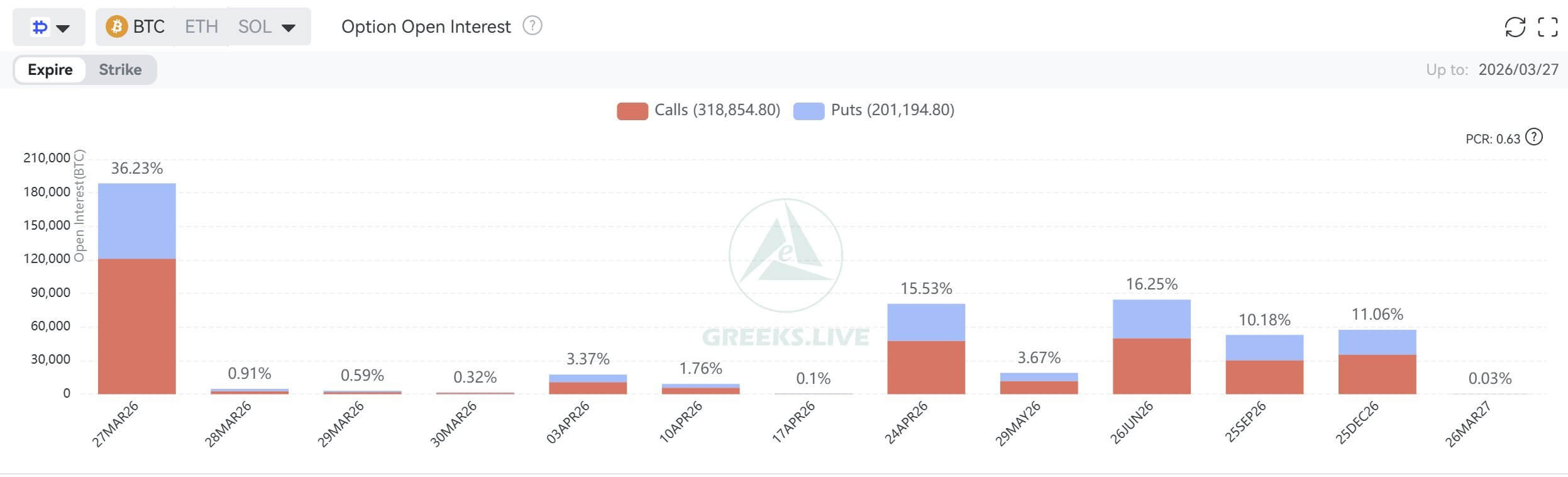
Bitcoin OptionsBitcoin Options Expiry on March 27 (Source: Greeks.Live)

According to the firm:

A Bitcoin options contract gives its holder the choice to buy BT at a set price before or on a specified future date, without forcing them to go through with the purchase.

In practice, that means the buyer can walk away when the contract expires if the trade no longer makes sense, or exercise the option if it does.

As expiration approaches, the crypto market can see sharper price swings because traders often adjust positions, roll contracts forward, or close trades altogether.

So, big options expiries, like today's, have often coincided with heavy market sell-offs, though that outcome is far from automatic.

What the break says now

The move back towards $65,000  says less about a collapse in belief in Bitcoin than about the market environment around it. Bitcoin is still being pulled by inflation expectations, central bank assumptions, oil volatility and the strength of the dollar.

When those variables move against risk assets simultaneously, BTC does not receive special treatment. It gets sold with the rest.

For now, that leaves Bitcoin trading inside a narrow but important framework. Analysts at Bitunix told CryptoSlate:

The post Bitcoin drops toward $65k after new Trump Iran delay sends oil higher, triggering $200M wipeout appeared first on CryptoSlate.

Market Opportunity
OFFICIAL TRUMP Logo
OFFICIAL TRUMP Price(TRUMP)
$2.949
$2.949$2.949
-1.89%
USD
OFFICIAL TRUMP (TRUMP) Live Price Chart
Disclaimer: The articles reposted on this site are sourced from public platforms and are provided for informational purposes only. They do not necessarily reflect the views of MEXC. All rights remain with the original authors. If you believe any content infringes on third-party rights, please contact crypto.news@mexc.com for removal. MEXC makes no guarantees regarding the accuracy, completeness, or timeliness of the content and is not responsible for any actions taken based on the information provided. The content does not constitute financial, legal, or other professional advice, nor should it be considered a recommendation or endorsement by MEXC.

You May Also Like

The Coinbase Bitcoin Premium Index has been in negative territory for 10 consecutive days, currently at -0.0857%.

The Coinbase Bitcoin Premium Index has been in negative territory for 10 consecutive days, currently at -0.0857%.

PANews reported on March 29th that, according to Coinglass data, the Coinbase Bitcoin Premium Index has been in a negative premium state for 10 consecutive days
Share
PANews2026/03/29 08:45
The Cloud Mining Revolution of 2025: Earn Bitcoin, Dogecoin, and More Cryptocurrencies at Zero Cost


The Cloud Mining Revolution of 2025: Earn Bitcoin, Dogecoin, and More Cryptocurrencies at Zero Cost

The post The Cloud Mining Revolution of 2025: Earn Bitcoin, Dogecoin, and More Cryptocurrencies at Zero Cost appeared on BitcoinEthereumNews.com. Want to earn stable returns in the cryptocurrency market but don’t want to spend thousands of dollars on mining equipment? Worried about high electricity bills and complex maintenance? In 2025, TALL Miner makes it easy: Simply use your phone or computer, open the app, and select a contract—zero barriers to entry, no hardware required, and zero hassle—to turn your crypto assets into passive cash flow settled daily. Why Cloud Mining is the New Crypto Currency Traditional mining requires purchasing ASICs/GPUs, building cooling and power systems, dealing with noise and maintenance, and facing the uncertainty of electricity prices and hardware depreciation. TALL Miner changes the game: Mining by renting hashing power: No need to build your own mining rigs, directly access hashing power and participate in block reward distribution. Operate anytime, anywhere: Available on iOS, Android, and desktop, you can mine wherever you go. Flexible contracts: Choose from free or paid contracts, with clear and transparent terms and capacities. Daily settlement: Profits are deposited 24 hours a day, so what you see is what you get. Whether you’re a novice or experienced investor, you can choose a plan that matches your strategy, making volatility your friend and achieving more stable returns. TALL Miner: Your Passive Income Partner We not only provide cloud computing power, but also a set of long-term, transparent and sustainable passive income solutions. Core advantages at a glance: Sign up and receive $15: Experience the real mining process and withdrawal path with zero investment. No hardware or maintenance required: The platform manages your mining machines, server rooms, power supply, and mining pool integration for 24/7 stable operation. Multi-currency support: BTC, DOGE, ETH, SOL, XRP, USDC, LTC, USDT, and other mainstream assets are all covered in one place. Minimalist interface & professional reporting: Clear dashboard and KPI visibility at…
Share
BitcoinEthereumNews2025/09/18 19:01
Crypto Real Estate Hedge: Eric Trump Unlocks a Revolutionary Strategy

Crypto Real Estate Hedge: Eric Trump Unlocks a Revolutionary Strategy

BitcoinWorld Crypto Real Estate Hedge: Eric Trump Unlocks a Revolutionary Strategy In the dynamic world of finance, investors constantly seek innovative ways to safeguard and grow their wealth. Recently, Eric Trump, a prominent figure in real estate and business, made a notable statement that has captured significant attention: he believes a crypto real estate hedge is the perfect solution for protecting property assets. This perspective opens up a fascinating discussion about the evolving relationship between traditional investments and the burgeoning digital asset space. What Exactly is a Crypto Real Estate Hedge? When we talk about a crypto real estate hedge, we are referring to the strategy of using cryptocurrency investments to offset potential risks or volatility in a real estate portfolio. Think of it as diversifying your financial safety net. Historically, investors have used various assets like gold, bonds, or different market sectors to hedge against downturns in other areas. Cryptocurrency, with its unique characteristics, presents a fresh option for this strategy. Its often uncorrelated price movements relative to traditional markets can provide a valuable counterweight during economic shifts. This approach isn’t about replacing real estate, but rather enhancing its resilience through strategic digital asset allocation. Why Consider Crypto for Your Property Portfolio? The idea of integrating cryptocurrency into a real estate strategy might seem unconventional at first, but several compelling reasons support it: Diversification: Cryptocurrencies often operate independently of traditional financial markets. This lack of correlation can reduce overall portfolio risk, making it a strong diversification tool. Inflation Protection: Some cryptocurrencies, particularly Bitcoin, are seen by many as a hedge against inflation due to their finite supply. As fiat currencies lose purchasing power, a strong digital asset might retain or even increase in value. Liquidity: While real estate is a long-term, illiquid asset, cryptocurrencies offer high liquidity. You can convert them to cash relatively quickly, providing access to funds when needed. Accessibility: Digital assets are globally accessible, allowing investors to participate in a market that transcends geographical boundaries and traditional banking hours. Eric Trump’s endorsement underscores a growing recognition of these benefits among seasoned investors. He sees it as a forward-thinking move to secure wealth in an unpredictable economic climate. Navigating the Challenges of a Crypto Real Estate Hedge While the potential benefits are clear, adopting a crypto real estate hedge strategy is not without its challenges. The cryptocurrency market is known for its volatility, with prices often experiencing dramatic swings. This inherent risk requires a cautious and informed approach. Moreover, the regulatory landscape for cryptocurrencies is still evolving. Different countries and jurisdictions have varying rules, which can impact how digital assets are taxed and managed. Investors must also contend with the technical aspects of securely storing and managing their crypto holdings. Understanding wallet security, exchange reliability, and potential cyber threats is paramount. Therefore, thorough research and a clear understanding of your risk tolerance are essential before integrating crypto into your investment strategy. Actionable Insights for Property Investors For real estate investors considering a crypto real estate hedge, here are some actionable steps: Start Small: Begin with a modest allocation to cryptocurrencies that aligns with your overall investment goals and risk profile. You do not need to commit a large portion of your assets initially. Educate Yourself: Learn about different cryptocurrencies, blockchain technology, and market dynamics. Understanding the fundamentals is key to making informed decisions. Choose Wisely: Focus on established cryptocurrencies with strong fundamentals and a proven track record, such as Bitcoin or Ethereum, rather than highly speculative altcoins. Prioritize Security: Use reputable exchanges and secure storage solutions (like hardware wallets) for your digital assets. Two-factor authentication is a must. Consult Experts: Speak with financial advisors who understand both real estate and cryptocurrency markets. They can help tailor a strategy that suits your individual needs. This strategic integration can provide a robust layer of protection, especially during periods of economic uncertainty. It represents a modern approach to asset management, blending traditional stability with digital innovation. The Future of Asset Protection: A Compelling Summary Eric Trump’s statement about cryptocurrency being a perfect hedge for real estate assets highlights a significant shift in investment thinking. The concept of a crypto real estate hedge is gaining traction as investors seek resilient strategies in an increasingly interconnected and volatile global economy. While challenges exist, the potential for diversification, inflation protection, and enhanced liquidity makes cryptocurrency a compelling consideration for safeguarding and growing wealth. As the digital asset landscape matures, its role in traditional investment portfolios is likely to expand, offering innovative solutions for asset protection and growth. Embracing this forward-thinking approach could be a key differentiator for investors looking to future-proof their wealth. Frequently Asked Questions (FAQs) 1. What does ‘hedge’ mean in the context of a crypto real estate hedge? A hedge is an investment made to reduce the risk of adverse price movements in an asset. In this case, a crypto real estate hedge uses cryptocurrency to protect against potential declines or volatility in real estate values. 2. Is cryptocurrency a stable investment for hedging? Cryptocurrency is known for its volatility. However, its often uncorrelated price movements with traditional assets like real estate can make it an effective hedge, providing diversification even with its inherent risks. The key is strategic allocation and understanding. 3. Which cryptocurrencies are best for a real estate hedge? While any cryptocurrency could theoretically be used, investors typically consider larger, more established assets like Bitcoin (BTC) or Ethereum (ETH) due to their higher liquidity and broader adoption. These are generally considered less volatile than newer, smaller altcoins. 4. How much crypto should I allocate for a real estate hedge? The ideal allocation depends on your individual risk tolerance, overall portfolio size, and financial goals. Many financial advisors suggest starting with a small percentage, perhaps 1-5% of your total portfolio, and adjusting as you gain more understanding and comfort with the asset class. 5. What are the tax implications of using crypto as a hedge? Tax implications for cryptocurrency vary significantly by jurisdiction. Generally, capital gains from selling crypto are taxable, and some countries also tax crypto income or even certain transactions. It is crucial to consult with a tax professional familiar with cryptocurrency regulations in your region. Did you find this article insightful? Share it with your network and spark a conversation about the future of investment strategies! To learn more about the latest crypto market trends, explore our article on key developments shaping Bitcoin institutional adoption. This post Crypto Real Estate Hedge: Eric Trump Unlocks a Revolutionary Strategy first appeared on BitcoinWorld.
Share
Coinstats2025/09/18 01:30
