👨🏿🚀TechCabal Daily – ‘MoMo, we need to talk’
Happy pre-TGIF.
This week on Francophone Weekly, we talk about La Ruche Health, a startup in Abidjan, Côte d’Ivoire, that answers health questions, from antenatal care to reproductive and mental health, that women ask through Kiko, its WhatsApp-based AI assistant. Read the edition and subscribe to the newsletter.
Let’s get into it.
—Emmanuel
- Nigeria’s tech regulator pushes for breach disclosure
- MTN shareholders to vote on fintech split
- Amazon Leo eyes Kenya approval
- Solly Malatsi on hot seat over AI policy fiasco
- World Wide Web 3
- Events
policy
Nigeria’s tech regulator is moving to mandate organisations to disclose cyberattacks
 Image Source: Tenor
Nigeria has been trying to get its financial institutions to report fraud and breaches openly since 2015. Nearly a decade later, barely a third of them were doing it—and in 2026, compliance around disclosures remains weak. Now, regulators want to extend that same expectation to every organisation in the country.
Here’s what happened: On the sidelines of GITEX Africa in Morocco on April 9, Kashifu Abdullahi, the Director-General of the National Information Technology Development Agency (NITDA), Nigeria’s tech regulator, said organisations across all sectors need to start disclosing cyberattacks, or at least sharing threat intelligence, as attacks grow more frequent and interconnected. This doesn’t target banks or fintechs, which have faced mandatory fraud reporting since the Central Bank of Nigeria’s June 2015 circular—it applies to everyone else.
Why the existing system is already broken: Even within finance, where reporting is compulsory,only 60 out of 163 institutions reported fraud incidents in 2023, a compliance rate of just 37%. In Q3 2025, fraud lossesreached ₦5.26 billion ($3.81 million) across 14,697 incidents, according to the Financial Institutions Training Centre (FITC). Outside finance, the silence is deeper, with breaches at organisations like the Corporate Affairs Commission (CAC) receiving little formal public disclosure.
What is being done: NITDA is coordinating with the Office of the National Security Adviser (ONSA) and the Ministry of Communications, Innovation, and Digital Economy, and the government is establishing a cybersecurity coordination council. On the financial side, the CBN has also been tightening its own screws: in December 2025, it mandated a72-hour window for customers to report fraudulent transfers and a 16-working-day cycle for banks to investigate. Recently, it introduced a cybersecurity self-assessment tool for financial institutions.
Will organisations actually talk? Nigeria is not starting from zero, but a decade of trying has not achieved full compliance in finance alone. Across Africa, countries are moving in the same direction: Kenya mandates breach disclosures within 48 hours. South Africa enforces transparency through the Protection of Personal Information Act, 2013 (POPIA). Nigeria is moving the same way. Whether that movement translates into actual openness is a different matter entirely.
20+ Markets. One API.
Fincra connects your business to Africa’s payment rails without building market by market. For collection, payout, FX, and settlement through a single integration. See what this means for your business.
Companies
MTN Nigeria shareholders to vote today on fintech split
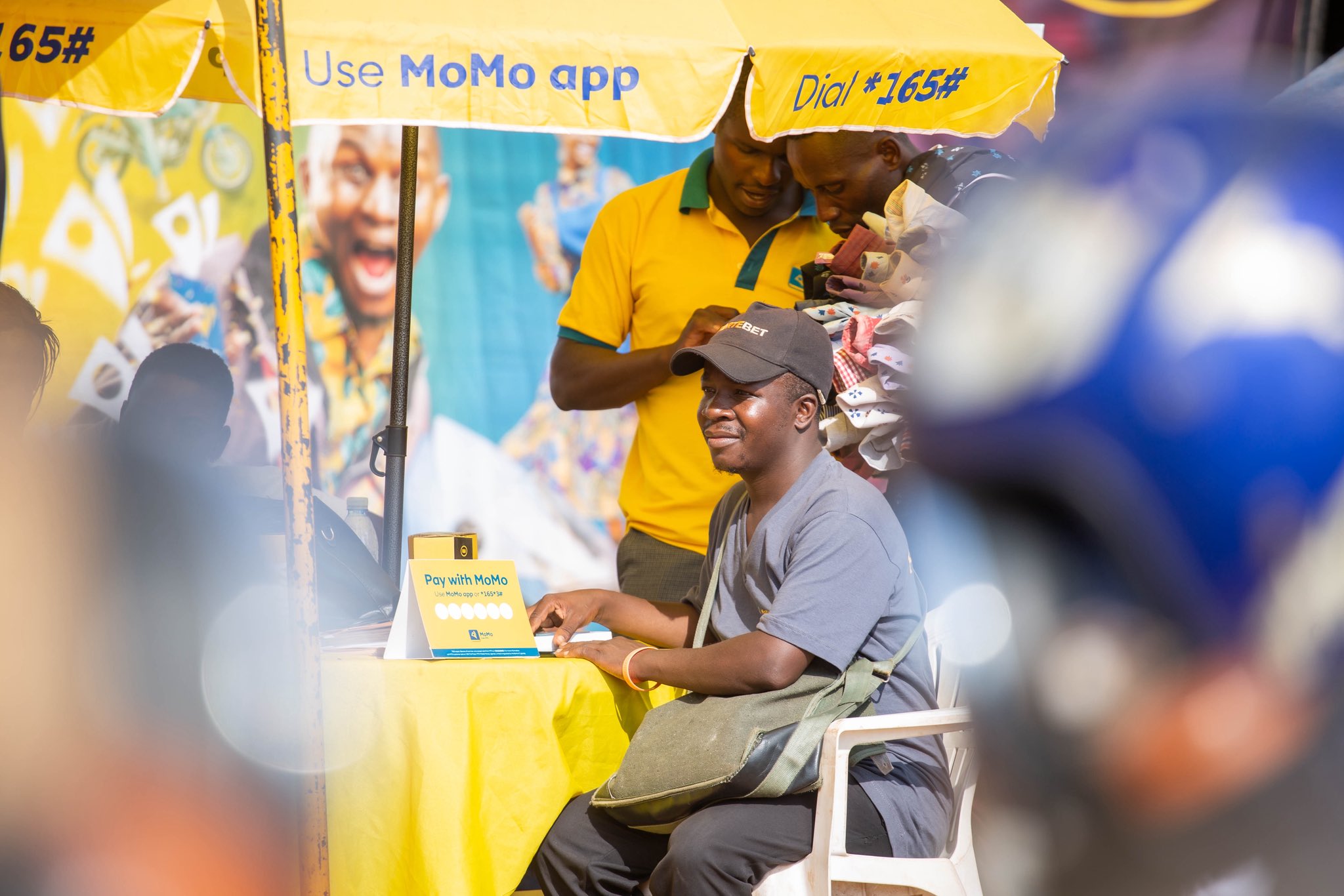 Image Source: MTN MoMo
MTN Nigeria, the country’s largest telecom operator, is asking shareholders to approve a major internal restructuring that will see its fintech businesses separated from its core telecom operations.
At its Annual General Meeting (AGM) today, April 30, shareholders will vote on a deal that moves MoMo Payment Service Bank Limited (PSB) and Y’ello Digital Financial Services Limited (YDFS) into a new holding structure.
How the restructuring will work: MTN Group, through its fintech investment arm, will inject ₦152.06 billion ($110.54 million) into the fintech business in exchange for a 60% stake, with MTN Nigeria holding the remaining 40%. Both stakes will then sit under a new Central Bank-regulated holding company, creating a shared ownership model.
So instead of fintech being just another division inside MTN Nigeria, it becomes a separate but connected business with its own capital, structure, and regulatory lane.
What is the rationale behind this? Fintechs are expensive to grow in this competitive market. MTN Nigeria has been bankrolling this unit on its own, but it has now reached the point where growth requires external capital and more flexibility.
What this means for the business: One of them is optics. According to its 2025 full-year results, MTN Nigeria’s fintech unit is deeply loss-making. The company recognised a ₦62.56 billion ($45.5 million) impairment loss on its investments in MoMo PSB and YDFS, triggered by persistent operating losses, a negative net asset position for YDFS, and an independent Deloitte valuation that returned a negative value in use for both subsidiaries.
The losses are not new: MoMo PSB alone recorded a ₦16.92 billion ($12.3 million) loss after tax in 2023, following a ₦13.29 billion ($9.7 million) loss the year before. Once the fintech business is separated from MTN Nigeria’s books, those losses will no longer drag on its financial statements. MTN Nigeria can then focus on network quality while the fintech business scales on its own track with dedicated capital. Regulation will also become simpler: the Nigerian Communications Commission (NCC) will oversee the telecom operations, while the CBN will oversee the fintech.
The Safe and Reliable Banking App

With over 35 million users and a 99.9% transaction success rate, PalmPay is making digital banking safer, simpler, and more reliable for everyday Nigerians. Download the app to learn more.
companies
Amazon Leo is seeking regulatory approval to operate in Kenya
 Image Source: Tenor
Amazon Leo, the Jeff Bezos-owned satellite Internet company formerly known as Kuiper, is seeking regulatory approval to operate in Kenya—and if granted, it will walk into a market where a rival has already been making moves. In March, Amazon CEO Andy Jassy said the company is eyeing a mid-2026 launch for its Leo Internet services, likely to roll out first in the United States.
The company has applied for a Network Facilities Provider (NFP) Tier 2 licence, a permit to build and operate telecoms infrastructure across the country, from satellite-linked stations to fibre backhaul.
The licence spans 15 years, costs around $115,000 upfront, and comes with a local ownership requirement: at least 30% of the company must be held by Kenyan citizens within three years of approval. Kenya is attaching conditions that force companies to embed themselves locally, share ownership, and file rollout plans.
Why this matters: Traditional Internet infrastructure—the kind that connects most homes and offices—relies on fibre cables buried underground or mobile towers scattered across cities. It works well in dense urban areas, but it has always struggled to reach rural communities, remote towns, or places where the economics of building ground infrastructure simply don’t add up.
Satellite Internet solves that problem differently: instead of laying cables, it beams connectivity from space directly to a small dish at your home or office. The newer generation of these satellites—called low Earth orbit (LEO) satellites—orbit much closer to the planet than older satellites, which means faster speeds and lower latency. That’s the technology both Amazon Leo and Starlink, owned by Elon Musk’s SpaceX, are deploying.
Starlink got to Kenya first, and it has not wasted the head start. It is now Kenya’s eighth-largest Internet service provider, with over 22,000 subscribers. More telling: despite holding less than 1% of the overall market, Starlink dominates the high-speed segment, accounting for more than half of all connections above 100 megabytes per second (Mbps).
It got there through aggressive pricing—hardware rentals, installment payment plans—that lowered the barrier of entry in a market where upfront costs have historically kept people offline. Amazon’s approach has been more methodical. It secured a landing permit in Nigeria in January 2026, though commercial services haven’t launched there yet. Kenya is next on the list.
The bigger picture: Two of the world’s wealthiest men are now racing to connect Africa’s internet users from space, each backed by billions in capital and ambitions that extend well beyond the continent.
TECHCABAL 4.0

In March 2013, TechCabal published its first article. Thousands of stories later, the work continues, and today, it goes deeper.
TechCabal has always been free. That’s not changing.
We’ve opened a new layer. Reporting that goes further, built on sources you won’t find anywhere else, and told in ways we haven’t tried before. You’re among the first to see it.
Getting in takes less than 15 seconds.
You’re one step away from the other side.
Click the button below to see what TechCabal 4.0 looks like and what it means for you.
policy
South Africa’s Solly Malatsi asked to appear in parliament over AI policy scandal
 Image Source: Zikoko Memes
On April 26, South Africa’s Communications Minister Solly Malatsi withdrew the country’s draft national AI policy after it was found to contain fictitious academic sources, likely generated by AI and inserted without verification. The 86-page document had 67 cited references, several of which pointed to journals that had no record of the cited work, or did not exist at all.
The irony is hard to miss. A government that cannot yet govern AI used AI to write the policy meant to govern it.
But this story has a political undercurrent too. The African National Congress (ANC), South Africa’s ruling party leading the government coalition, is now pushing for Malatsi to appear before parliament. While e the demand is legitimate, the urgency is not purely principled. Malatsi is a Democratic Alliance (DA) minister, the first non-ANC figure to lead the communications portfolio since 1994, and his tenure has been contentious. The ANC and Malatsi’s department have clashed repeatedly over the enforcement of Black Economic Empowerment (BEE) in the ICT sector.
Zoom out: The deeper problem is harder to dismiss. Across Africa, governments are rushing to legislate AI, often without the technical literacy, institutional capacity, or research infrastructure to do it well. South Africa proposed seven new oversight bodies in this draft while committing zero money to compute infrastructure. While the policy draft’s architecture was elaborate, the foundation was hollow. And now, the opposition won’t let the scandal simply end with Malatsi’s apologies.
The next few weeks will be a trying time for Malatsi and South Africa’s entire Communications and Digital Technologies department.
CRYPTO TRACKER
The World Wide Web3
Source:

|
Coin Name |
Current Value |
Day |
Month |
|---|---|---|---|
| Bitcoin | $75,707 |
– 1.98% |
+ 11.95% |
| Ether | $2,246 |
– 3.40% |
+ 8.87% |
| XRP | $1.36 |
– 1.99% |
+ 3.34% |
| Solana | $82.73 |
– 2.50% |
– 0.64% |
* Data as of 06.42 AM WAT, April 30, 2026.
Events
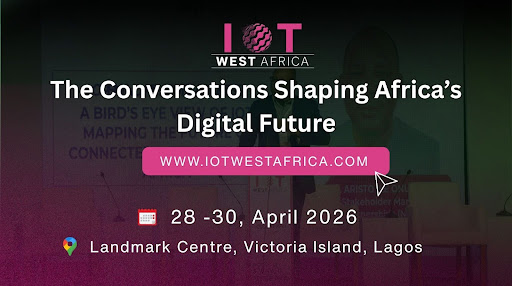 The voices shaping Africa’s digital future are taking the stage. From AI and IoT to cloud, connectivity and smart infrastructure, IOT West Africa | Data Centre & Cloud Expo Africa 2026 brings together the leaders building the continent’s next digital chapter. This is where the ecosystem meets, and we’ll see you there. The event kicks off on April 28–30 at the Landmark Centre, Victoria Island, Lagos. Register here to attend.
- All roads lead to Nairobi on May 7, 2026. Gathered at the Sarit Expo Centre, senior leaders from across Africa’s fintech and payments ecosystem will gather for a day of meaningful connections, market insights, and cross-border collaboration. The focus of the Africa Fintech Live event is on driving real engagement, bringing together industry leaders and emerging innovators to spark strategic conversations that will shape the future of finance on the continent. Secure your early bird ticket now at 50% off.
- On May 6–8, 2026, policy, capital, and innovation in Africa will take centre stage at the 3i Africa Summit. Happening at the Destiny Arena, Accra, Ghana, it will pack operators, investors, and policymakers in one room to answer questions about the continent’s integrated fintech future, and what it’s still missing. Register here to attend.
- The Africa Tech Summit London 2026 is back for its 10th edition. Held at the London Stock Exchange building in London on May 29, it will feature 350 attendees from over 200 companies, the event will be a small, high-impact gathering of founders, investors, and global partners driving the future of tech in Africa. Use the code TC10 to get 10% off tickets. Apply to attend.
- Inside the spam call machine behind Nigeria’s digital lending boom
- Kenya’s WapiPay expands into Jamaica to tap $2.5 billion remittance market
- Tutto Passa, TechCabal debut podcast unpacking risk, capital, building in Africa
Written by: Emmanuel Nwosu and Opeyemi Kareem
Edited by: Emmanuel Nwosu and Ganiu Oloruntade
Want more of TechCabal?
Sign up for our insightful newsletters on the business and economy of tech in Africa.
- The Next Wave: futuristic analysis of the business of tech in Africa.
- Francophone Weekly by TechCabal: insider insights and analysis of Francophone’s tech ecosystem
P:S If you’re often missing TC Daily in your inbox, check your Promotions folder and move any edition of TC Daily from “Promotions” to your “Main” or “Primary” folder and TC Daily will always come to you.



You May Also Like

Trump orders Iran briefing as Bitcoin opens at lowest point since April 13

Luxor Ships Commander Software to Optimize Bitcoin Mining Fleet Profitability – News Bytes Bitcoin News