Bitcoin Whales Lost $30.9B in Q1 as Daily Realized Losses Hit $337M
Bitcoin addresses holding between 100 and 10,000 BTC realized losses averaging $337 million per day throughout Q1 2026, bringing their combined total to roughly $30.9 billion for the quarter. The sustained selling by large holders, classified as sharks and whales in on-chain analytics, marks one of the heaviest periods of loss realization since the 2022 bear market and coincides with extreme fear across crypto markets.
What $30.9 billion in realized losses reveals about whale behavior
The distinction matters: these are realized losses, not paper drawdowns. Whale and shark cohorts actively moved Bitcoin at prices below their cost basis, locking in losses on-chain rather than holding through the downturn.
Addresses holding 100 to 1,000 BTC, often labeled sharks, accounted for roughly $188.5 million in daily realized losses during Q1. Whales holding 1,000 to 10,000 BTC contributed another $147.5 million per day, bringing the combined daily pace to the headline figure.
The quarterly total reflects sustained capitulation across roughly 90 trading days, not a single liquidation event. That consistency suggests large holders faced ongoing margin pressure or strategic repositioning rather than a one-off shock, a dynamic that has also shaped Bitcoin’s broader safe-haven narrative this week.
Why large holders kept selling at a loss
A Glassnode weekly report from early February noted that Bitcoin’s 7-day simple moving average of realized losses had risen above $1.26 billion per day during the current contraction. The analysts wrote that elevated loss realization suggests fear-driven selling persists, with weak spot demand compounding the pressure.
The same Glassnode analysis flagged that Bitcoin had lost the True Market Mean near $80,200, with the Realized Price around $55,800 defining a lower bound where long-term capital has historically re-engaged. That price structure gave whales limited incentive to hold through further declines.
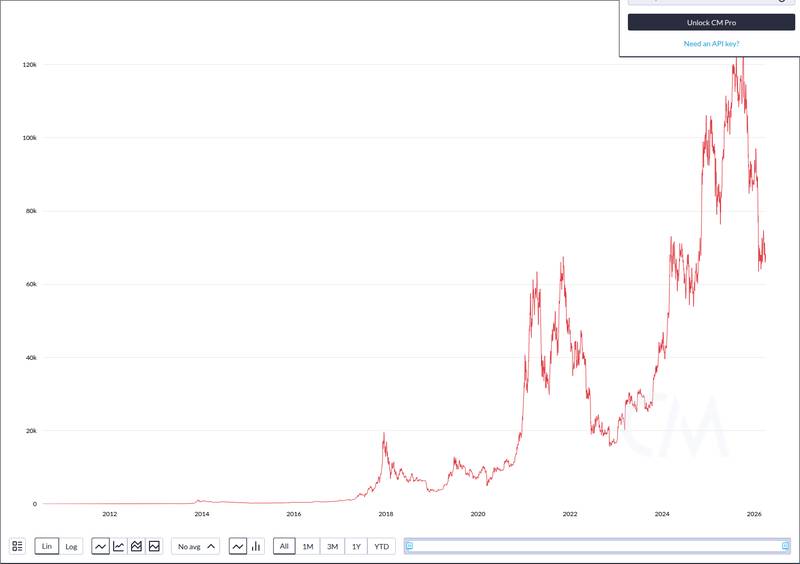 CoinMetrics on-chain context supporting the network-flow discussion around bitcoin.
Several possible drivers explain the sustained loss-taking. Forced margin calls on leveraged positions, tax-loss harvesting strategies ahead of regulatory deadlines, and portfolio rotation into stablecoins or fiat all represent plausible motivations. The Q1 timeframe, which saw Bitcoin slide well below the True Market Mean, gave large holders repeated opportunities to exit at progressively worse prices.
Some analysts have suggested the sell-off raises the odds of a 2022-style bear market, with a possible bottom in Q4 2026, though that remains unconfirmed commentary rather than a settled market outcome. Similarly, the $40,000 to $50,000 range has been floated as a potential floor, according to unconfirmed analyst speculation.
What whale capitulation signals for Bitcoin sentiment
Bitcoin traded at $67,245 at press time, up 0.57% over 24 hours, with a market cap near $1.35 trillion and about $21.38 billion in daily volume. The modest bounce has done little to shift broader sentiment, even as other major tokens have shown relative strength in recent sessions.
The crypto Fear and Greed Index sits at 11, deep in Extreme Fear territory. That reading aligns with the whale behavior: when large holders are actively realizing billions in losses, retail and institutional sentiment tends to follow downward.
Historically, periods of heavy whale capitulation have sometimes preceded market bottoms, as forced sellers exhaust their supply overhang. The Q1 loss realization could be read as a clearing event, but only if spot demand returns to absorb the selling. Glassnode’s assessment of weak spot demand suggests that absorption has not yet materialized.
The picture emerging from Q1 is one of broad deleveraging among Bitcoin’s largest non-exchange holders. Whether those locked-in losses represent a capitulation floor or an early stage of deeper unwinding depends largely on whether Bitcoin can reclaim the True Market Mean near $80,200, the level that Glassnode identified as the dividing line between recovery and continued contraction. Across the broader market, the pressure on large Bitcoin holders stands in contrast to Ethereum’s own pivotal moment around foundation staking activity.
Disclaimer: This article is for informational purposes only and does not constitute financial or investment advice. Cryptocurrency and digital asset markets carry significant risk. Always do your own research before making decisions.


추천 콘텐츠

Smart Buyers Rush to BlockDAG for 85x Instant ROI While XRP & Ethereum Move Sideways

The Hidden Cost of Choosing the Wrong Media Outlets