

Laos Eyes Bitcoin Mining To Tackle Mounting Debt
Laos is exploring a new way to service the debts from its decades-long hydropower build-out: turning excess electricity into Bitcoin. In a report published on September 17, the South China Morning Post framed the pivot bluntly: “Saddled with debt and surplus electricity, the ‘battery of Southeast Asia’ is eyeing energy-intensive crypto mining to turn a profit.” The article situates the move within a dam-driven development model that has left Laos with power it cannot always sell and a mounting repayment schedule.
Why Laos Eyes Bitcoin Mining
The policy logic is straightforward. Bitcoin mining converts electrons into a globally liquid asset and can be sited directly at hydropower plants, mitigating transmission bottlenecks and absorbing seasonal surpluses. Laos has promoted electricity exports for years—SCMP notes power accounted for roughly a quarter of the country’s exports last year—yet export deals and grids do not always line up with generation, exacerbating revenue-timing mismatches against hard-currency debt obligations from dam construction.
According to SCMP “environmental campaigners view the turn to crypto as symptomatic of a flawed energy policy that has left Laos indebted and unable to offload its surplus power.” The Chinese news report cites Witoon Permpongsacharoen, director of the Mekong Energy and Ecology Network: “Laos allowing electricity to be used for cryptocurrency mining is clearly not something driven by internal conditions. It stems from the fact that Laos is heavily indebted and unable to pay off its debts.”
If implemented, this would not be Laos’s first embrace of digital-asset mining. In September 2021, the government launched a pilot program authorizing six firms to mine and trade Bitcoin and cryptocurrencies under regulated power-purchase terms, a move widely read as an attempt to capture miners displaced by China’s crackdown.
However, the stance has seesawed amid hydrological stress and grid constraints: in August 2023, the state utility Électricité du Laos (EDL) halted electricity supply to Bitcoin miners citing drought and power shortages; by May 2024, Reuters reported crypto data centers made up “over a third of the country’s power” consumption and contributed to outages, prompting authorities to stop approving new operations even as they weighed proposals to stabilize supply.
The fiscal backdrop helps explain the renewed interest. External public debt service is projected by the World Bank to average about $1.3 billion per year over 2025–2028—around 9% of GDP annually—keeping gross financing needs elevated as key hydropower assets are still ramping. Separate reporting this year underscored the strain: a Chinese dam operator initiated a $555 million arbitration against EDL for alleged unpaid dues, highlighting the financial pressures on the state power sector.
Yet the “surplus power” narrative is not uniform. Hydropower output is volatile, impacted by erratic rainfall and a warming climate, while export pipelines remain politically and commercially complex. Laos produces surplus electricity in the wet season but must import power from neighboring countries during the dry months. These structural frictions are precisely the niches where mobile, interruptible loads like Bitcoin mines can monetize stranded energy—until the water runs low.
Analysts who champion “wasted renewables” see a broader pattern. “Bhutan, Ethiopia, and now Laos use Bitcoin mining to monetize wasted renewable energy,” Bitcoin climate activist Daniel Batten wrote via X as coverage of the SCMP story circulated, casting the strategy as part of a 2025 “vibe shift.”
Bhutan has openly leaned into hydro-powered mining this year, calling bitcoin “a strategic battery” to arbitrage seasonal surpluses and fund development; Ethiopia’s power utility has said it generated about $55 million over 10 months by selling surplus hydro to miners. Laos’s plan would slot into that template, albeit with more fragile hydrology and balance-sheet constraints.
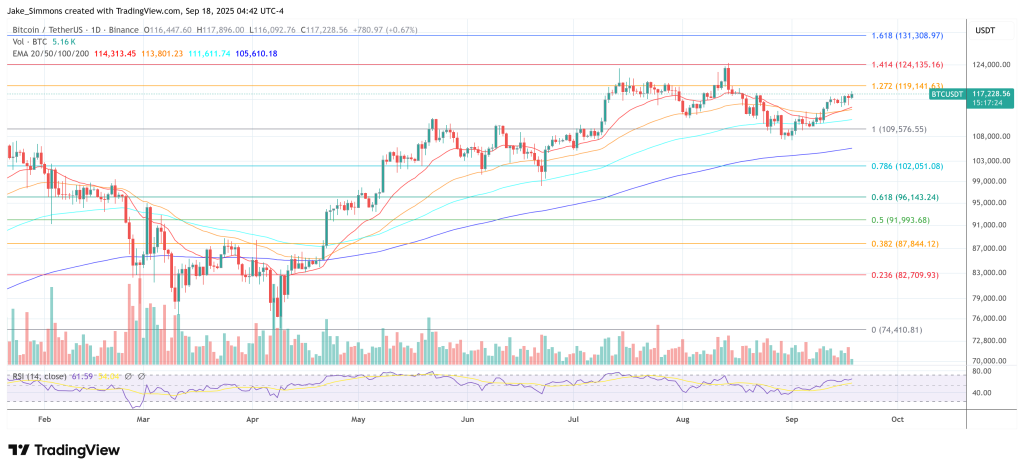
At press time, BTC traded at $117,228.


추천 콘텐츠

DOT Price Prediction: Polkadot Eyes $1.50 Recovery as Technical Indicators Signal Oversold Conditions

Here’s How High Kaspa (KAS) Price Could Go This New Week




