

Flying into Bangkok and planning to ride the BTS Skytrain? The Rabbit Card is the first thing to sort out.
The Rabbit Card is Bangkok’s equivalent of Singapore’s EZ-Link — a reloadable, tap-and-go stored-value card that gets you through BTS gates faster and cheaper than buying single-trip tickets every time.
This guide covers everything: what the card is, whether tourists can use it, where to buy one (including at the airport), how much it costs, the app, expiry rules, and how to get your money back when you leave.
 Stay Up To Date:
– Best Multi-Currency Cards In Singapore (2026): A Full Comparison Guide
– US ATM Withdrawal Guide: Fees, Locations, Exchange Rates (2026)
– Things To Do In New Zealand: The Ultimate Travel Guide (2026)
 TL;DR: Bangkok Rabbit Card at a Glance
| Highlights | Details |
|---|---|
| Best for | BTS Skytrain travel in Bangkok |
| Tourist option? | Yes, standard Rabbit Card (stored-value) or BTS One-Day Pass (unlimited rides) |
| Where to buy | BTS station counters, Suvarnabhumi Airport (Phaya Thai BTS) |
| Price (standard card) | 200 THB (~S$7.50) — 100 THB card fee (non-refundable) + 100 THB stored value |
| Passport needed? | Yes — foreigners must register with passport (2025 policy) |
| Refundable? | Stored value only — card fee (100 THB) is non-refundable |
 Table of Contents:
- What Is the Bangkok Rabbit Card?
- What Is the Rabbit Card Used For?
- Can Tourists Use a Rabbit Card in Bangkok?
- Rabbit Card vs BTS One-Day Pass
- Where to Buy a Rabbit Card in Bangkok
- Where to Buy a Rabbit Card at Bangkok Airport
- Do You Need a Passport to Buy a Rabbit Card?
- How Much Does a Rabbit Card Cost?
- How to Get a Rabbit Card in Bangkok
- Using the Rabbit Card on the BTS and MRT
- The Rabbit Card App
- Rabbit Card and Apple Wallet
- Rabbit Card Expiry
- How to Get a Rabbit Card Refund
- Tips for Singaporean Travellers in Bangkok
- FAQ
What Is the Bangkok Rabbit Card?
Image credits: Sweet Escape Thailand
The Rabbit Card is a stored-value smart card issued by BTS Group Holdings — the company that operates Bangkok’s BTS Skytrain. Launched in 2012, the Year of the Rabbit, it works on the same principle as Singapore’s EZ-Link: load money on, tap in, tap out, fare deducted automatically.
No queuing for tickets at every station. No rummaging for exact change. Just tap and go.
 Related Guide: Best Things To Do in Bangkok: The Complete Bangkok Travel Guide
What Is the Rabbit Card Used For?
The primary use is riding the BTS Skytrain across two lines:
- Sukhumvit Line — Khu Khot to Kheha (with extended sections)
- Silom Line — National Stadium to Bang Wa
Beyond transit, the card is accepted at a growing number of partner merchants — convenience stores, coffee shops, and F&B outlets in and around BTS stations. Think of it as a transit card that doubles as a light payments wallet.
Important: Bangkok’s MRT (underground metro) uses a separate card system. The Rabbit Card does not work on the MRT Blue or Yellow Lines. You’ll need a dedicated MRT card or single-trip tokens for those journeys — more on that below.
Related Guide: BTS Bangkok Guide: BTS Map, Routes, Prices, Cards, How to Use
Can Tourists Use a Rabbit Card in Bangkok?
Yes, and it’s worth getting. Tourists have two options:
- Standard Rabbit Card — stored-value, reloadable, same card locals use (200 THB)
- BTS One-Day Pass — a separate unlimited-rides ticket for a single day (150 THB)
The One-Day Pass makes sense if you’re in Bangkok briefly and plan to hop between BTS stations all day. For longer stays or occasional rides, the Rabbit Card gives you more flexibility — top up as needed, use it across trips.
Related Guide: Top 10 Bangkok Hotels In Thailand From S$53/Night
Rabbit Card vs BTS One-Day Pass
BTS One-Day Pass
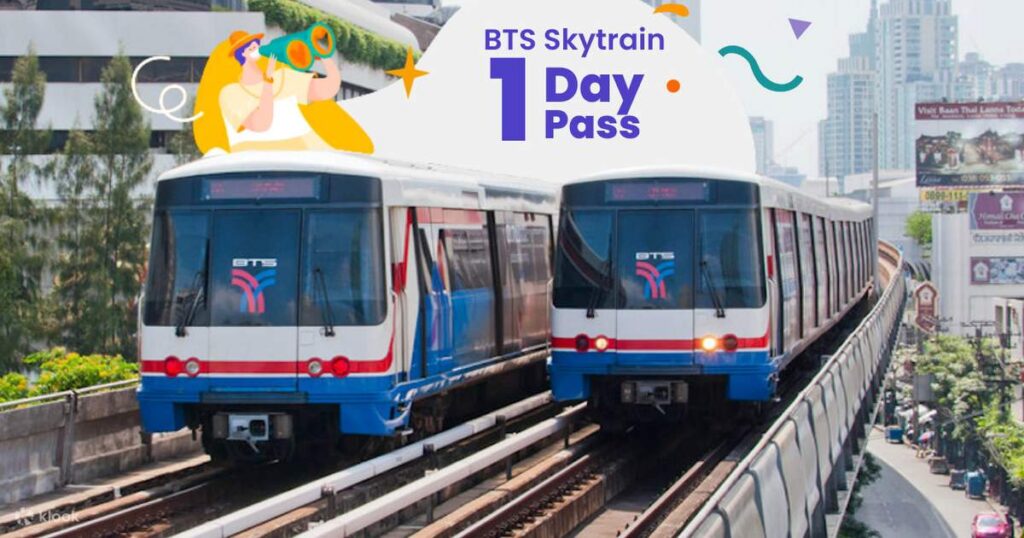
Image Credits: Klook
A standalone paper ticket (not a Rabbit Card) that gives you unlimited BTS rides for one day, valid until midnight on the day you activate it.
- Price: 150 THB (~S$5.50)
- Covers the Sukhumvit Line and Silom Line
- No registration or passport required
- Buy at any BTS customer service counter or ticket machine
- Single use — can’t reload or carry value forward
Rabbit Card
Image Credits: Wikipedia
The standard stored-value card used by locals and tourists alike. You register it, load credit, tap in and out, and top up as needed.
- Price: 200 THB to start (100 THB card fee + 100 THB loaded value)
- Works at partner merchants, not just transit
- Top up at any BTS station machine or counter
- Passport required — foreigners must register under 2025 AML rules
- Value carries over between trips — useful if you visit Bangkok more than once
- Stored value has an inactivity expiry period — see the expiry section
Which one should you get? If you’re making 4+ BTS trips in a single day, the One-Day Pass pays off. For multi-day trips or regular Bangkok visitors, the Rabbit Card is the better long-term option.
Related Guide: Bangkok to Chiang Mai: Bus, Train, Plane, Taxi or Car?
Where to Buy a Rabbit Card in Bangkok
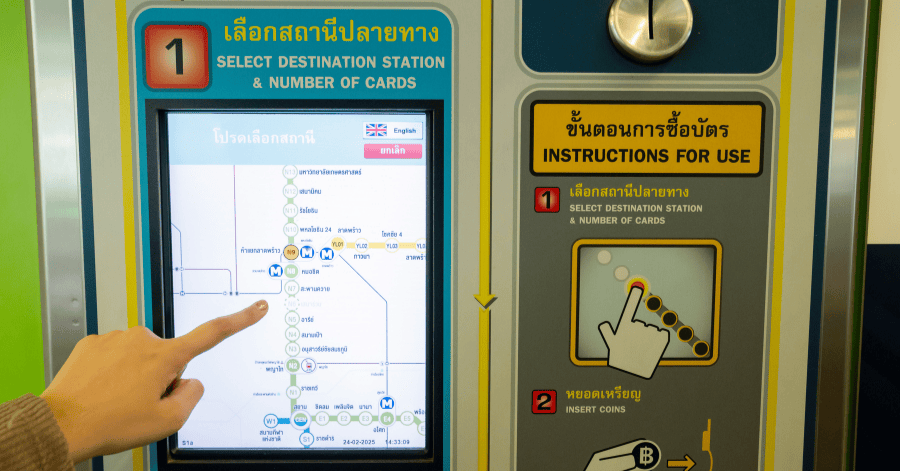
Image Credits: BTS
- BTS customer service counters at major stations (Siam, Asok, Mo Chit, Victory Monument, On Nut, and others) — buy both Rabbit Cards and One-Day Passes here
- BTS ticket machines at most stations — One-Day Passes and top-ups; may also issue Rabbit Cards
- Selected convenience stores near BTS stations — availability varies
Buying a Rabbit Card requires registration with your passport (2025 policy). Head to a customer service counter — not just a machine — to complete this. The whole process takes about 5 minutes.
Related Guide: Best Hidden Cocktail Bars In Bangkok
Where to Buy a Rabbit Card at Bangkok Airport
Suvarnabhumi Airport (BKK)
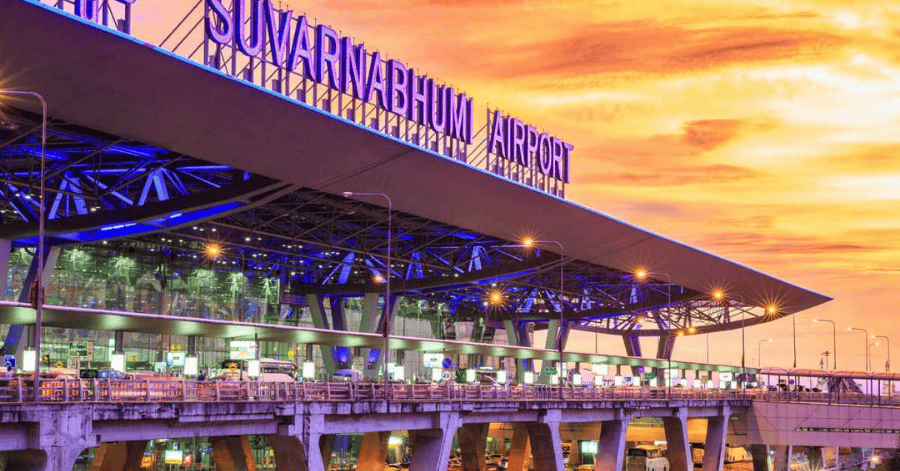
Image Credits: Domestic Flights Thailand
Suvarnabhumi’s Airport Rail Link (ARL) is a separate system — it uses ARL cards or tokens, not the Rabbit Card. Once you transfer to the BTS network (the connection point is Phaya Thai Station), you can buy a Rabbit Card at the BTS customer service counter there.
In short: take the ARL from Suvarnabhumi to Phaya Thai, then buy your Rabbit Card at Phaya Thai’s BTS counter before continuing your journey.
Don Mueang Airport (DMK)
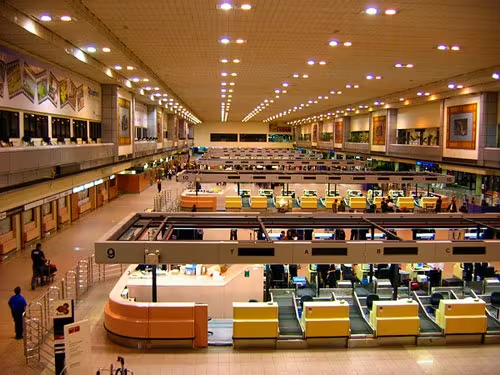
Image Credits: www.donmueangairport.com
Don Mueang doesn’t have a direct BTS connection. Most travellers take a shuttle bus or taxi to the Mo Chit BTS station. Pick up your Rabbit Card at the Mo Chit customer service counter on arrival.
Related Guide: Thailand ATM Withdrawal Guide: Fees, Locations, Exchange Rates
Do You Need a Passport to Buy a Rabbit Card?
For the Rabbit Card: yes, if you’re a foreigner.
Under Thailand’s 2025 AML regulations, all Rabbit Card holders must register their card. Foreigners (including tourists) must present their passport to buy or top up a Rabbit Card at any BTS station counter. You’ll also need an email address and phone number for registration.
For the BTS One-Day Pass: no.
The One-Day Pass is a single-use paper ticket — no registration, no passport, just pay and go.
| Option | Passport Required? |
|---|---|
| Rabbit Card (foreigners) | Yes — passport + email + phone required |
| BTS One-Day Pass | No |
Travel Essentials: Thailand Power Plug & Plug Socket Guide: Adapter & Voltage Tips
How Much Does a Rabbit Card Cost?
Standard Rabbit Card
A standard Rabbit Card costs 200 THB (~S$7.50) at any BTS counter. This breaks down as:
- 100 THB stored value — loaded onto the card and ready to use
- 100 THB card issuance fee — non-refundable
BTS One-Day Pass
The One-Day Pass costs 150 THB (~S$5.50) and gives you unlimited BTS rides from activation until midnight the same day. It covers the Sukhumvit and Silom Lines — the two main tourist lines.
Single BTS fares typically run 17–59 THB (~S$0.63–S$2.20) depending on distance. At 150 THB for the day pass, the break-even is roughly 4–5 trips. If you’re moving between neighbourhoods (Chatuchak, Asok, Silom, On Nut), you’ll hit that easily in a day.
Related Guide: Top 15 Things To Do In Krabi, Thailand Right Now
How to Get a Rabbit Card in Bangkok
Time needed: 5 minutes
- Head to any BTS customer service counter at a major station
- Tell the staff you want a Rabbit Card
- Present your passport
Registration is mandatory for foreigners
- Pay 200 THB (100 THB card fee + 100 THB stored value)
- Provide your email and phone number for registration
- Tap at the turnstile — the card works immediately
Top-up machines are at every BTS station. You can also top up at the customer service counter if the machine gives you trouble.
Related Guide: 15 Things To Do In Phuket, Thailand Right Now
Using the Rabbit Card on the BTS and MRT
BTS Skytrain
Tap your card on the reader at the entry turnstile, ride to your destination, and tap again on exit. The fare deducts automatically based on the number of zones travelled.
Bangkok MRT
The Rabbit Card does not work on the Bangkok MRT (Blue or Yellow Lines), which are operated by a separate company (MRTA). You’ll need an MRT stored-value card or single-trip tokens for underground metro journeys.
This is one of Bangkok’s ongoing transit frustrations — no single card covers everything. If you’re using both networks regularly, carry separate payment for each or budget for the mild inconvenience.
Related Guide: Songkran Festival: A Guide For First-Timers
The Rabbit Card App
The Rabbit LINE Pay app (available on iOS and Android) is BTS Group’s digital platform. Key features include:
- Check stored-value balance
- View recent transaction history
- Top up via linked bank accounts or payment cards
The app is most feature-complete for holders of the Rabbit LINE Pay card (a separate financial debit product). Standard transit Rabbit Card holders can use it for balance checks and history, though some features may require account registration with your card number.
Related Guide: Best SGD to Thai Baht Rate in Singapore
Rabbit Card and Apple Wallet
As of early 2026, Apple Wallet support for the Rabbit Card has not been confirmed — Bangkok is not on Apple’s supported transit card list. Check the BTS website before your trip.
Rabbit Card Expiry
The physical card does not expire, but stored value can become inactive if the card goes unused for an extended period. The general rule:
- Stored value freezes after ~2 years of inactivity.
- To unfreeze: top up the card — the frozen balance restores automatically.
- No proof of ownership or counter visit required.
For Singaporeans who visit Bangkok annually, the remaining balance should stay valid between trips — but if you’re returning after a longer gap, check the card at a counter before loading more credit.
Related Guide: Chiang Mai Lantern Festival: Guide to Tickets, Dates & Magical Yi Peng
How to Get a Rabbit Card Refund
Head to any BTS customer service counter to return your card and get your money back.
What you get back:
- Stored value — refunded in full, minus a small administrative fee
- Card issuance fee (100 THB) — not refunded
How long it takes:
- Balance of 250 THB or less — refunded on the spot
- Balance over 250 THB — takes up to 15 days to process
What to bring: The physical card. If you bought a tourist card, bring your passport too.
Where to go: Any BTS customer service counter — Siam, Asok, and Mo Chit are the most accessible.
If you’re heading to the airport, sort the refund before you leave. Queues at busy stations can be slow during peak hours — give yourself 15–20 minutes.
Related Guide: 21 Best Things To Do in Chiang Mai: Top Attractions, Food & Tips
Tip for Singaporean Travellers in Bangkok:
The Rabbit Card handles your BTS fares — but for everything else (restaurants, shopping, hotels, ATMs), use a card that won’t eat into your budget with foreign transaction fees.
YouTrip converts at the wholesale exchange rate with no FX markup, which typically beats the hotel counter rate and the standard Singapore bank card surcharge of 3.25-3.5%. Load THB before you fly or let it convert automatically when you spend.
FAQs
Yes. Tourists use the same standard Rabbit Card as locals. You’ll need your passport to register under Thailand’s 2025 AML rules.
If you want to skip registration, the BTS One-Day Pass (150 THB) gives unlimited rides for one day with no ID required.
Go to any BTS customer service counter at a major station — Siam, Asok, Mo Chit, and Victory Monument all have them.
Bring your passport, pay 200 THB, provide your email and phone number for registration, and you’re ready to tap. Takes about 5 minutes.
At BTS customer service counters at major stations — you’ll need to register in person with your passport, so the counter (not the machine) is the right stop.
The BTS One-Day Pass can be bought at counters and ticket machines.
At Suvarnabhumi, take the Airport Rail Link to Phaya Thai station and buy a Rabbit Card at the BTS counter there. For Don Mueang, head to Mo Chit BTS station — there’s a customer service counter on arrival.
Yes, if you’re a foreigner. Thailand’s 2025 AML regulations require Rabbit Card registration with valid ID — foreigners must present their passport plus an email and phone number.
The BTS One-Day Pass has no registration requirement.
The Rabbit Card costs 200 THB (~S$7.50) — 100 THB non-refundable card fee plus 100 THB loaded stored value.
The BTS One-Day Pass (a separate unlimited-rides ticket) costs 150 THB (~S$5.50).
No. The MRT Blue and Yellow Lines use a separate payment system and require their own stored-value card or single-trip tokens.
Yes — return the card at any BTS customer service counter to get your stored value back, minus a small processing fee.
Note: the 100 THB card issuance fee is non-refundable. Balances over 250 THB take up to 15 days to process.
Yes — the Rabbit LINE Pay app (iOS and Android) lets you check your balance and transaction history. Some top-up features may require account registration.
Explore Bangkok Fuss-Free!

Whether you’re heading to Siam for shopping, Asok for nightlife, Chatuchak for weekend markets, or Silom for rooftop bars, the Rabbit Card makes getting around the BTS a breeze. Don’t forget to bring along your YouTrip card for the best THB exchange rates with zero FX fees!
Not a YouTrooper yet? Skip the money changer and get a free YouTrip card + S$5 YouTrip credits with code <YTBLOG5>.
Then, head over to our YouTrip Perks page for exclusive offers and promotions — we promise you won’t regret it. Join our Telegram (@YouTripSG) and Community Group (@YouTripSquad) for travel tips, event invites, and more!
Happy travels!
Related Articles
Money Changer Near Me: 14 Best Money Changers In Singapore
Best Singapore Credit Card For Overseas Spending
YouTrip Exchange Rates: Everything You Need to Know


The post Bangkok Rabbit Card: Complete Tourist Guide 2026 appeared first on YouTrip Singapore.


추천 콘텐츠

Moody’s Assigns First-Ever Rating to Bitcoin-Backed Municipal Bond in Historic Crypto Finance Move

Vodacom Tanzania Modernises M-Pesa With $28m Infrastructure Upgrade




