If you're exploring the Solana ecosystem, you've probably wondered about its native token.
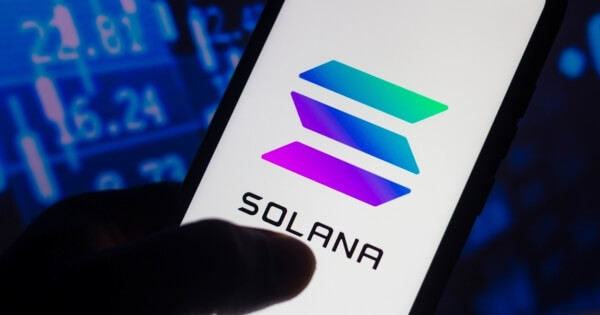
SOL is the native cryptocurrency of the Solana blockchain, serving as the fundamental fuel that powers every transaction and operation on the network.
This guide explains what SOL is, how it works, and why it's essential for anyone using Solana's fast and affordable blockchain platform.
Whether you're interested in staking, trading, or building decentralized applications, understanding SOL is your first step into the Solana ecosystem.
For a complete blockchain overview, see our Solana beginner's guide.
Key Takeaways:
SOL is the native token that powers all transactions and operations on the Solana blockchain.
Transaction fees on Solana average $0.00025, with 50% of fees permanently burned to reduce supply.
SOL enables staking, where holders can delegate tokens to validators and earn rewards while securing the network.
The token uses a controlled inflation model starting at 8% annually, declining by 15% every two years until reaching 1.5%.
Over 570 million SOL tokens currently circulate with no maximum supply cap.
SOL's value derives from its utility across DeFi protocols, NFT marketplaces, smart contracts, and network governance.
SOL is the native token of the Solana blockchain, functioning similarly to how the US dollar serves as the native currency of the United States.
The tokenlaunched in March 2020alongside the Solana mainnet and has since become a top-ten cryptocurrency by market capitalization. Unlike other digital assets built on Solana that follow the SPL token standard, SOL exists at the protocol level as the blockchain's fundamental currency.
Every action on Solana requires SOL, from sending transactions to deploying smart contracts.
The current circulating supply exceeds 570 million tokens, with no maximum supply cap.
SOL pays for all network operations on the Solana blockchain, making it essential for every user interaction.
When you send tokens, swap assets, or interact with smart contracts, you're paying validators in SOL to process your transaction.
Half of each transaction fee gets permanently burned, removing it from circulation, while validators receive the other half as compensation for securing the network.
Staking represents one of the most important functions of the native token of the Solana blockchain.
Validators must stake SOL to participate in the network's Proof of Stake consensus mechanism, which secures the blockchain and validates transactions.
Token holders who don't want to run validator infrastructure can delegate their SOL to existing validators and earn staking rewards.
This delegation process helps decentralize the network while allowing everyday users to earn passive income by contributing to Solana's security.
Developers building on Solana use SOL to deploy smart contracts and power decentralized applications across DeFi, NFTs, gaming, and Web3.
Every program deployed to the blockchain requires SOL for account creation and ongoing operations.
The token acts as the primary medium of exchange within the Solana ecosystem, enabling seamless value transfer between users and applications.
SOL holders can participate in network governance by voting on protocol upgrades, feature implementations, and ecosystem development proposals.
This governance function gives the community direct influence over Solana's future direction and technical evolution.
Solana's breakthrough performance stems from its unique combination ofProof of Historyand Proof of Stake consensus mechanisms, with SOL serving as the economic incentive layer that makes both systems work. Proof of History creates acryptographic timestamp for transactionsbefore they enter the consensus process, essentially functioning as a decentralized clock that helps validators efficiently order events without extensive communication. This innovation allows Solana to process approximately2,700 transactions per secondin typical conditions, with theoretical capacity reaching 65,000 TPS on optimized networks. The native token of the Solana blockchain enables validators to participate in this consensus mechanism by requiring them to stake SOL as collateral.
Validators with higher stakes have proportionally better chances of being selected to produce blocks, creating economic alignment between network security and validator behavior.
The fee structure paid in SOL maintains network efficiency by preventing spam attacks while keeping costs low enough for mainstream adoption.
Solana's Sealevel parallel processing engine executes multiple non-conflicting smart contracts simultaneously, unlike blockchains that process transactions sequentially.
This parallel execution capability, combined with low SOL-denominated fees, enables real-time applications like gaming, high-frequency trading on decentralized exchanges, and instant payment systems that wouldn't be practical on slower, more expensive networks.
Seed sale participants received 15.86%, while founding sale investors obtained 12.63% of the initial allocation.
The validator sale accounted for 5.07%, strategic sale received 1.84%, and the public auction sale distributed 1.60% of tokens.
The Solana team andSolana Foundationeach received 12.50%, with the remaining 38% allocated to community reserves for ecosystem development.
Solana implements a unique monetary policy that balances network growth incentives with long-term value preservation.
The inflation rate began at 8% annually to incentivize early validator participation and network security.
This rate decreases by 15% every two years, gradually declining toward a permanent base rate of 1.5% that will sustain validator rewards indefinitely.
The fee-burning mechanism creates deflationary pressure by permanently removing 50% of all transaction fees from circulation, which helps offset inflation over time.
The native token of the Solana blockchain derives value from genuine utility rather than speculation alone.
Network adoption directly impacts SOL demand since every transaction, smart contract deployment, and staking activity requires the token.
The growing DeFi ecosystem on Solana includes decentralized exchanges like Serum and Raydium, and lending platforms like Mango Markets.
Solana's NFT marketplace, anchored by platforms like Magic Eden and Solanart, contributes to network activity.
Applications are being developed across gaming, payments, and Web3 infrastructure.
Users can purchase SOL on major cryptocurrency exchanges including MEXC, where the token trades with high liquidity and competitive fees.
For long-term holders, transferring SOL to self-custody wallets provides greater security and enables direct staking participation.
Hardware wallets offer the highest security level for significant holdings, while software wallets like Phantom and Solflare provide convenient access for active users.
Q: What is the native token of the Solana blockchain?
SOL is the native cryptocurrency that powers all transactions and operations on the Solana network.
Q: How much does a Solana transaction cost?
Solana transactions average approximately $0.00025 in SOL, making it one of the most affordable blockchain networks.
Q: Can I stake my SOL tokens?
Yes, SOL holders can stake directly as validators or delegate to existing validators to earn staking rewards.
Q: Where can I buy SOL?
Major cryptocurrency exchanges like MEXC list SOL for trading against fiat currencies and other cryptocurrencies.
Q: What makes SOL different from other Solana tokens?
SOL exists at the protocol level as the native currency, while other tokens follow the SPL standard built on top of Solana.
Q: How many SOL tokens exist?
Over 570 million SOL tokens currently circulate, with no maximum supply cap but controlled inflation declining to 1.5%long-term.
Q: What gives SOL value?
SOL's value comes from its utility for transaction fees, staking, smart contracts, and participation in Solana's growing DeFi and NFT ecosystems.
Understanding that SOL is the native token of the Solana blockchain is fundamental to participating in this high-performance ecosystem.
Whether you're paying transaction fees, staking for rewards, or building decentralized applications, SOL serves as the essential currency that makes Solana's speed and affordability possible.
The token's carefully designed economics, combining controlled inflation with fee-burning mechanisms, creates long-term sustainability while maintaining network security through Proof of Stake consensus.
As Solana's ecosystem continues expanding across DeFi, NFTs, gaming, and Web3 applications, SOL's utility and importance will only grow.
Learn more about Solana's technology and uses.