

Crypto Card Fees Explained: Hidden Costs To Know
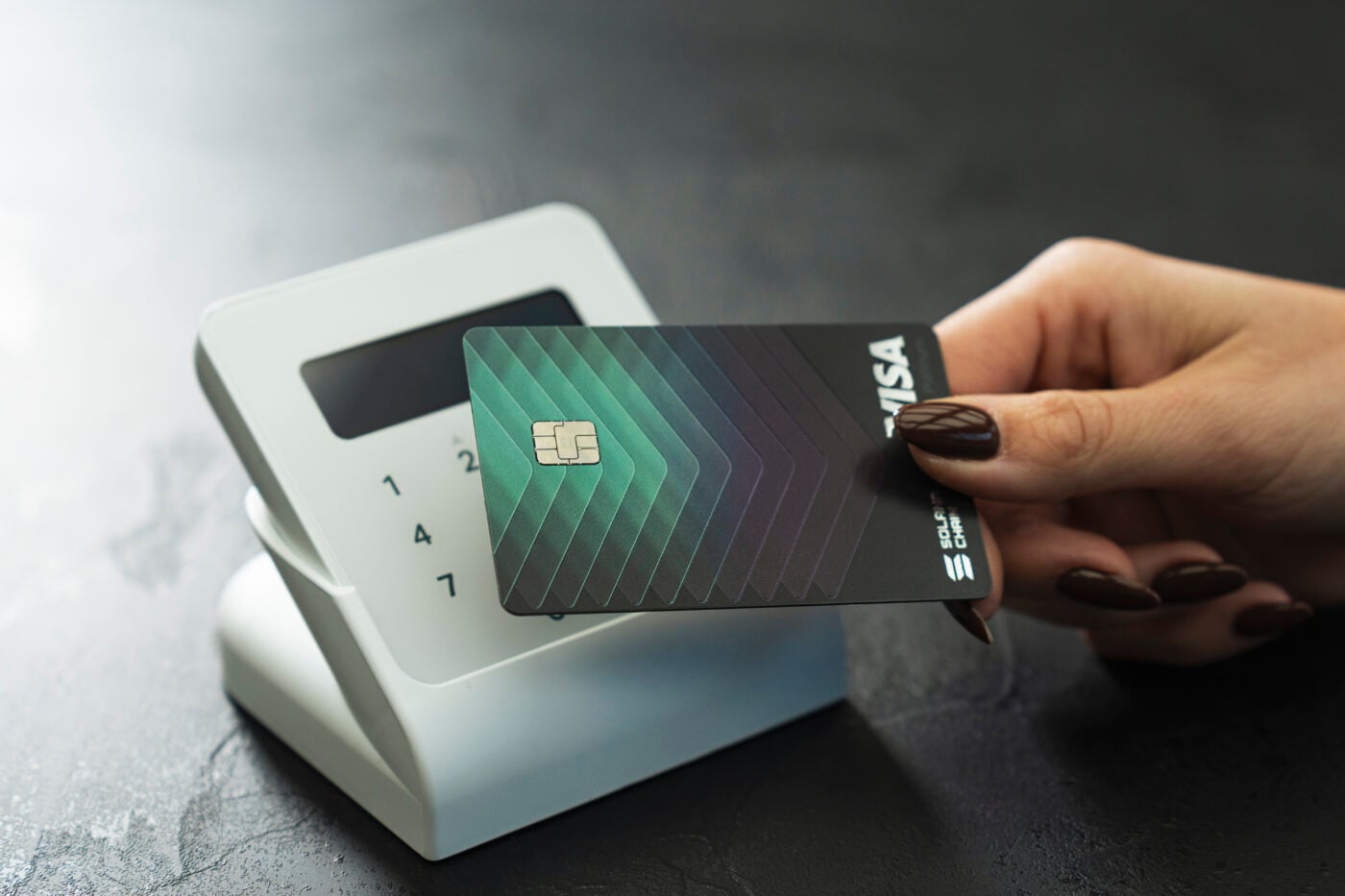
A crypto card can look simple. You tap to pay, shop online, or withdraw cash, and it works much like a regular card.
Still, the total cost is not always obvious. Depending on the provider, users may pay blockchain fees, conversion costs, foreign exchange charges, ATM fees, or merchant markups. Some of those costs appear clearly. Others are built into the rate or show up only at checkout.
That is why the real cost of a crypto card is not one single fee. It is the total cost of moving funds, converting them, and spending them.
Network fees can start before you even spend
The first cost can appear when a user moves crypto into a wallet or account linked to the card. In that case, the blockchain may charge a network fee, often called a gas fee.
That fee usually does not come from the card provider. Instead, it comes from the network that processes the transaction. As a result, the cost can change depending on which blockchain the user picks and how busy that network is.
So even before the card is used for a purchase, the funding step may already carry a cost.
The exchange rate can include a hidden conversion cost
Many crypto cards convert crypto into fiat at the moment of payment. In some cases, that conversion cost appears as a stated fee. In other cases, it sits inside the exchange rate itself.
That difference matters. A card may look cheap on paper, but the user may still pay more through the rate used to convert crypto into dollars, euros, or another currency.
So when comparing cards, users should not look only at the fee page. They should also look at how the provider handles conversion.
Foreign purchases can trigger FX fees
When a card is used in a different currency, foreign exchange fees can apply. That is common when users travel, shop on foreign websites, or withdraw cash abroad.
In some cases, the card network sets one rate and the issuer adds its own FX fee on top. That means the final cost can rise even when the transaction goes through normally.
This is one reason why cross border spending often costs more than a domestic purchase.
DCC is one of the clearest ways to overpay
Another common cost appears at the terminal. When a user pays abroad, the merchant or ATM may ask whether to charge the card in the user’s home currency instead of the local one. That is Dynamic Currency Conversion, or DCC.
It often looks convenient, but it usually costs more. BEUC, the European Consumer Organisation, said consumers are financially worse off in “practically every single case” when they accept DCC. The same paper cited research showing DCC was on average 7.6% more expensive in one study, while the highest markup reached 12.4%.
So the cleaner option is usually the local currency, not the home currency shown on the screen.
A simple DCC example
|
Option |
What happens |
Typical result |
| Pay in your home currency through DCC | The merchant or ATM converts the purchase | Often a worse rate than letting the card network handle it |
| Pay in the local currency | The card network and issuer handle the conversion | Usually the more standard and lower cost route |
That difference may look small on one purchase. Still, it adds up across repeated payments and withdrawals. BEUC’s paper also found examples where payment markups in stores ranged from 2% to 5%, while ATM DCC increases ran from 2.6% to 12% in one dataset.
ATM withdrawals can stack several fees at once
Cash withdrawals are another area where costs can pile up fast. First, the ATM operator may charge its own fee. Then the card issuer may add a withdrawal fee. If the withdrawal is in a foreign currency, an FX fee may apply as well.
So one ATM transaction can combine several charges in a single step. That is why withdrawing cash is often one of the more expensive ways to use a crypto card.
Users should check both the card provider’s fee schedule and the ATM screen before confirming the transaction.
 Card holds are not fees, but they still affect spending
Not every unexpected charge is a fee. Hotels, fuel stations, car rentals, and some online merchants often place a temporary hold on the card before the final charge settles.
That hold reduces the available balance for a period of time. Later, the merchant posts the final amount and releases the unused part.
So while a hold is not a direct cost, it can still confuse users and make the card balance look lower than expected.
Other small charges can still matter
Some crypto cards also charge for physical card shipping, replacement cards, premium plans, or inactivity. These costs are not the same across the market, so they should not be treated as universal.
That is why the fee page matters as much as the headline promise. A provider may advertise low spending fees while charging in other places.
In short, the total cost depends on the full structure, not one line in the marketing copy.
What cost can look like in practice
A user may pay one fee to move crypto onchain, another cost through the conversion rate, another fee on a foreign purchase, and another markup if DCC is accepted by mistake. Then, if the same user withdraws cash abroad, ATM and FX charges may come on top.
KAST’s public fee page offers one example of how that structure can work. It says non-USD card purchases carry a foreign exchange fee of 0.5% to 1.75%, depending on the countries involved. It also says ATM withdrawals cost $3 plus 2% of the withdrawal amount, with the same 0.5% to 1.75% FX fee added for non-USD withdrawals.
That example does not make crypto cards unusually expensive. It simply shows that the total cost often comes from several layers, not one headline fee.
If you want to see how a real fee schedule is laid out before you travel or spend abroad, take a minute to explore KAST.
The main point on cost
Crypto cards are easier to understand when each cost is separated clearly. The main ones to watch are network fees, conversion costs, FX fees, DCC markups, ATM charges, and temporary holds.
Among them, DCC remains one of the clearest traps because it can make a transaction more expensive without adding any real benefit for the cardholder. BEUC’s findings underline that point.
So the simplest rule is this: check how the card handles conversion, read the fee page before using it abroad, and choose the local currency when a terminal gives you the choice.
The post Crypto Card Fees Explained: Hidden Costs To Know appeared first on Blockonomi.


You May Also Like

Meta, CoreWeave Shares Rise After Expanding $21 Billion AI Cloud Deal

Latest Crypto News: White House Economists Say Stablecoin Yields Will Not Hurt Banks and the Whole Crypto Bill Debate Has Shifted




