Ofir Wainboim Profile: Ofir Wainboim (WAIN) — The Architecture Behind the Record Ofir Wainboim, professionally known as WAIN, occupies a rare position in contemporaryOfir Wainboim Profile: Ofir Wainboim (WAIN) — The Architecture Behind the Record Ofir Wainboim, professionally known as WAIN, occupies a rare position in contemporary

Ofir Wainboim (WAIN) — The Architecture Behind the Record

Ofir Wainboim

Profile: Ofir Wainboim (WAIN) — The Architecture Behind the Record

Ofir Wainboim, professionally known as WAIN, occupies a rare position in contemporary Israeli music: a producer whose work consistently shapes how songs function in public space, not just how they sound in isolation. Working across pop, electronic, folk-pop, and hybrid forms, his productions reveal a long-standing preoccupation with structure, emotional pacing, and translation—how music moves from studio speakers to national broadcast, streaming platforms, and live performance ecosystems.

WAIN’s studio practice is rooted in decisive authorship. Sessions routinely involve radical editorial choices—rewriting verses late in production, shifting keys to reframe vocal impact, cutting entire sections that dilute narrative force. This approach has defined projects recorded at his Wain Studio, where records are treated less as layered accumulations and more as architectural systems built to withstand exposure. His technical toolkit—Logic Pro X, hybrid acoustic/electric instrumentation, precision vocal capture, and controlled modulation effects—is deployed in service of clarity rather than spectacle.

That clarity has made him a recurrent choice for artists operating under high public visibility. He has produced, mixed, and mastered releases for finalists and winners of Israel’s most-watched prime-time music programs, including “The Next Star” and “X-Factor Israel,” a context where production quality is inseparable from professional survival. Repeat collaborations in that environment function as a quiet form of industry endorsement: trust earned under pressure.

WAIN’s work has also crossed into broader cultural circulation. He produced, mixed, and mastered the song “One Nation” (Am Echad), which surpassed 1.4 million streams and achieved international viral reach during wartime—an uncommon trajectory that underscores the song’s role as mass communication rather than entertainment alone. His self-produced album Still Colorful (2025) further established his capacity for long-form authorship, demonstrating sustained harmonic, textural, and emotional coherence across a full-length release.

Critical and media recognition has followed accordingly. His work has been featured in major international and national outlets, including VENTS Magazine and BuzzMusic Los Angeles, as well as leading Israeli broadcast platforms such as Channel 13 (Reshet), MAKO, and i24NEWS. For a producer, this level of visibility signals professional relevance beyond niche scenes.

Taken together, these markers point to a figure operating at the center of his field. WAIN has garnered significant national recognition and is widely regarded as one of the most influential and in-demand music producers in Israel today, distinguished from his peers by an unrivaled sustained impact on contemporary production practice. His records don’t chase trends; they define functional standards—how modern songs are built to last.

His approach has come to define the projects recorded at his Wain Studio, where records are treated less as layered accumulations of sound and more as architectural systems. Each element is designed with intention, supporting the whole rather than competing for attention. Songs are constructed like structures, with space, balance, and durability in mind, built to withstand repeated exposure over time. Rather than relying on excess or density, his productions emphasize clarity and purpose, allowing ideas to breathe. The result is work that feels solid and enduring—records engineered not just to impress on first listen, but to hold up through sustained engagement and long-term listening.


Comments
Market Opportunity
SuperRare Logo
SuperRare Price(RARE)
$0.02156
$0.02156$0.02156
-2.61%
USD
SuperRare (RARE) Live Price Chart
Disclaimer: The articles reposted on this site are sourced from public platforms and are provided for informational purposes only. They do not necessarily reflect the views of MEXC. All rights remain with the original authors. If you believe any content infringes on third-party rights, please contact service@support.mexc.com for removal. MEXC makes no guarantees regarding the accuracy, completeness, or timeliness of the content and is not responsible for any actions taken based on the information provided. The content does not constitute financial, legal, or other professional advice, nor should it be considered a recommendation or endorsement by MEXC.

You May Also Like

Bitcoin ETF Investors React to Fed’s Decision

Bitcoin ETF Investors React to Fed’s Decision

The post Bitcoin ETF Investors React to Fed’s Decision appeared on BitcoinEthereumNews.com. In a surprise move, spot Bitcoin ETFs experienced their first significant daily outflows in over a week, following the Federal Reserve’s adjusted policy outlook. This shift reflects the market’s readiness to respond to any hint of change on the regulatory landscape, as well as its sensitivity to central bank cues. Continue Reading:Bitcoin ETF Investors React to Fed’s Decision Source: https://en.bitcoinhaber.net/bitcoin-etf-investors-react-to-feds-decision
Share
BitcoinEthereumNews2025/09/18 18:51
US Senators Introduce SAFE Crypto Act to Target Rising Crypto Scams

US Senators Introduce SAFE Crypto Act to Target Rising Crypto Scams

The post US Senators Introduce SAFE Crypto Act to Target Rising Crypto Scams appeared first on Coinpedia Fintech News Crypto scams are getting faster, smarter and
Share
CoinPedia2025/12/17 18:33
From Idea to App Store: The Complete Guide to Mobile App Development in Saudi Arabia

From Idea to App Store: The Complete Guide to Mobile App Development in Saudi Arabia

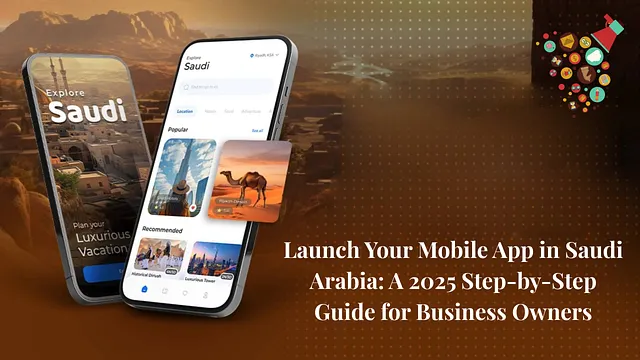
Saudi Arabia is at the forefront of digital transformation. With Vision 2030 driving innovation and a rapidly growing population of tech-savvy users, mobile apps have become a core driver of business growth in the Kingdom. From e-commerce and fintech to healthcare, logistics, and on-demand services, Saudi businesses are embracing mobile apps to connect with customers and scale faster. But how do you take a mobile app idea and turn it into a successful launch on the App Store or Google Play? This guide breaks down the complete mobile app development process in Saudi Arabia — step by step. Step 1: Validate Your App Idea for the Saudi Market Before you start building, ask: What problem does my app solve for Saudi users? Is there a cultural or market gap my app can fill? How do local competitors approach the same challenge? For example, apps related to digital payments, e-learning, delivery services, and healthcare are in high demand across Saudi Arabia. Conducting market research and aligning your app idea with local user behavior is critical. Step 2: Plan Features with Local Needs in Mind Your app should start with an MVP (Minimum Viable Product) — a core version that solves the main problem. Later, you can scale with advanced features. In Saudi Arabia, consider adding: Arabic language support (essential for user adoption) Integration with local payment gateways like STC Pay, Mada, or Apple Pay Regulatory compliance (especially for fintech and health apps) Localization for user preferences (Hijri calendar, cultural UI elements) Step 3: Select the Right Development Approach You can choose: Native Apps (Swift for iOS, Kotlin for Android) — Great for scalability and performance. Cross-Platform Apps (Flutter, React Native) — Cost-effective for startups targeting both iOS and Android simultaneously. Hybrid Apps — Suitable for simpler apps with limited features. For Saudi startups and enterprises, cross-platform development is often preferred to reach a wider audience quickly and efficiently. Step 4: Design With a Local Touch The design must balance global usability standards with local cultural relevance. UI (User Interface): Clean, modern visuals that align with Saudi branding. UX (User Experience): Simple navigation, clear Arabic text support, and intuitive flows. Wireframing & Prototyping: Test early with Saudi users to ensure adoption. A user-friendly design is one of the top reasons apps succeed in the Kingdom’s competitive market. Step 5: Develop Your Mobile App Once the design is ready, the coding begins. Saudi app development companies often follow Agile methodology, ensuring flexibility and faster delivery. Front-End Development: Interface and user interactions. Back-End Development: Databases, servers, and APIs. Integration: Secure connections between front-end and back-end. Strong collaboration between developers, designers, and business analysts ensures your app aligns with Saudi market needs. Step 6: Testing Across Devices and Networks Saudi users rely on different devices and network speeds. That’s why rigorous testing is critical: Functionality Testing: Features work as expected. Performance Testing: The app runs smoothly on both 4G and 5G networks. Localization Testing: Arabic text displays correctly, without alignment issues. Security Testing: Data protection compliance with Saudi cybersecurity standards. Step 7: App Store & Google Play Launch in Saudi Arabia To publish your app: Apple App Store (iOS): Requires an Apple Developer account and strict guideline compliance. Google Play Store (Android): Faster approval but still requires detailed app info. You’ll also need metadata in both English and Arabic — titles, descriptions, and screenshots — to maximize visibility among Saudi users. Step 8: Market Your App in Saudi Arabia Launching an app is only the beginning. You need a marketing strategy tailored to the Kingdom: App Store Optimization (ASO): Use Arabic and English keywords. Social Media Campaigns: Leverage platforms like Snapchat, Twitter (X), and Instagram, which are highly popular in Saudi Arabia. Influencer Marketing: Collaborate with Saudi influencers for early traction. Paid Ads: Google Ads and Saudi-focused Facebook/Instagram ads. Partnerships: Collaborate with local businesses to reach a wider audience. Step 9: Gather Feedback and Optimize Once your app is live, monitor: User reviews on app stores Analytics on engagement, retention, and churn rates Suggestions from Saudi users for culturally relevant features Continuous updates and improvements are vital to stay competitive. Step 10: Scale With Advanced Features Once your MVP gains traction, you can expand with advanced features such as: AI and machine learning for personalization Blockchain-based payments for fintech apps AR/VR features for retail and gaming apps IoT integration for smart home and mobility solutions Saudi Arabia’s digital ecosystem is growing rapidly — apps that adapt quickly will thrive. Conclusion Mobile app development in Saudi Arabia is not just about building an app — it’s about aligning with Vision 2030, cultural needs, and user expectations. By following a clear process — from idea validation to launch and beyond — you can transform your concept into a profitable digital product. Whether you’re a startup or an enterprise in Saudi Arabia, the opportunity is massive. With the right strategy, you can move from idea to App Store and create an app that truly resonates with Saudi users. From Idea to App Store: The Complete Guide to Mobile App Development in Saudi Arabia was originally published in Coinmonks on Medium, where people are continuing the conversation by highlighting and responding to this story
Share
Medium2025/09/18 14:46