Chinese tech giants JD[dot]com and Alibaba affiliate Ant Group are pressuring the People’s Bank of China to authorize yuan-based stablecoins. The companies are proposing to launch an offshore yuan in Hong Kong to counter the U.S. dollar’s dominance in digital payments and accelerate the yuan’s internationalization, according to Reuters . The lobbying effort comes as Hong Kong’s comprehensive stablecoin regulations take effect August 1, 2025 , establishing one of the world’s most rigorous frameworks for digital currency issuance. 🇭🇰 Hong Kong’s new stablecoin regulations will take effect on August 1, introducing a strict licensing regime and reserve requirements for issuers. #HongKong #StablecoinRegulations https://t.co/Dq6UAZsKl1 — Cryptonews.com (@cryptonews) June 6, 2025 Both companies already plan to issue Hong Kong dollar-backed stablecoins, but argue that offshore yuan tokens are urgently needed as strategic tools for cross-border commerce. Yuan Devaluation At Risk If US Dollar Stablecoins Dominate According to Reuters, over 99% of the $247 billion global stablecoin market remains U.S. dollar-denominated. The yuan’s share of global payments dropped to 2.89% in May, its lowest in nearly two years, while the dollar commands 48.46% market share through SWIFT payment systems. “ The global expansion of U.S. dollar stablecoins is posing fresh challenges to yuan internationalisation ,” said Wang Yongli, former vice head of Bank of China and co-chairman of Digital China Information Service Group. “ It would be a strategic risk if cross-border yuan payment is not as efficient as dollar stablecoins. “ The push is a shift from China’s 2021 crypto ban, which is strategic, as it came at a time when Standard Chartered Bank projects the global stablecoin market could reach $2 trillion by 2028, driven by anticipated U.S. regulatory explicit clarity and institutional adoption. Hong Kong Emerges as Digital Currency Testing Ground Hong Kong’s stablecoin framework requires full reserve backing with high-quality liquid assets, segregated from the issuer’s funds and protected from creditor claims. The minimum capital requirements are HKD 25 million or 1% of the total issuance, whichever is greater. Redemption at par within one business day is required under normal conditions. Previously, JD.com’s subsidiary, Jingdong Coinlink Technology, entered the Hong Kong Monetary Authority’s stablecoin sandbox alongside Standard Chartered, Animoca Brands, and Hong Kong Telecommunications. 🪙 @JD_Corporate is testing a fiat-pegged stablecoin in Hong Kong’s regulatory sandbox for cross-border payments and retail use. #stablecoin #hongkong https://t.co/WlxEcenrfl — Cryptonews.com (@cryptonews) May 30, 2025 The company completed second-phase testing for its blockchain-based stablecoin, pegged 1:1 to fiat currencies, including the Hong Kong dollar and the U.S. dollar. Similarly, Ant Group’s Singapore-based international unit also plans to file for Hong Kong stablecoin licenses immediately after August 1 regulations take effect. The company is also pursuing licenses in Singapore and Luxembourg, anchoring its digital currency ambitions in key global financial hubs. This stablecoin regulation clarity is particularly crucial as Hong Kong banks processed HK$17.2 billion ($2.19 billion) in digital asset transactions during 2024 , with HK$5.1 billion ($649.7 million) under custody by year-end. Ten digital asset trading platforms have secured licenses, with eight more applications under review by the Securities and Futures Commission. Source: SFC Hong Kong Additionally, VMS Group, managing nearly $4 billion for Hong Kong’s wealthiest families, allocated $10 million to Re7 Capital’s decentralized finance strategies . These strategic moves are painting a picture of growing institutional adoption of regulated digital asset exposure in Hong Kong and China as a whole. Strategic Push Against Dollar Dominance Intensifies Chinese exporters are increasingly using dollar-pegged stablecoins as overseas merchants send payments in USDT, according to HashKey chairman Xiao Feng. Capital controls, geopolitical tensions, and currency volatility in emerging markets have spurred this shift among Chinese businesses. In fact, Crypto HK, Hong Kong’s largest crypto OTC exchange, reports a five-fold growth in monthly USDT trading volume by Chinese clients for trade settlement since 2021, as Reuters reported. The trend further shows the growing adoption of dollar stablecoins for cross-border commerce, despite China’s domestic crypto restrictions. JD.com proposed that China allow yuan stablecoin issuance in Hong Kong before expanding pilots to offshore markets within China’s free trade zones. The company argued that Hong Kong dollar stablecoins fail to promote yuan usage since they’re pegged to U.S. dollars. Recognizing the challenges that dollar stablecoins pose to Chinese financial regulation, many high officials are considering “a possibility” for a yuan-pegged stablecoin. President Donald Trump’s support for stablecoins following his January inauguration has particularly accelerated the development of the U.S. regulatory framework. The timing adds urgency to China’s considerations as the GENUIS Act is close to legitimizing dollar-pegged cryptocurrencies. As it stands now, Beijing is evaluating strategic responses to maintain monetary sovereignty amid the growing threat of the dollar’s dominance.Chinese tech giants JD[dot]com and Alibaba affiliate Ant Group are pressuring the People’s Bank of China to authorize yuan-based stablecoins. The companies are proposing to launch an offshore yuan in Hong Kong to counter the U.S. dollar’s dominance in digital payments and accelerate the yuan’s internationalization, according to Reuters . The lobbying effort comes as Hong Kong’s comprehensive stablecoin regulations take effect August 1, 2025 , establishing one of the world’s most rigorous frameworks for digital currency issuance. 🇭🇰 Hong Kong’s new stablecoin regulations will take effect on August 1, introducing a strict licensing regime and reserve requirements for issuers. #HongKong #StablecoinRegulations https://t.co/Dq6UAZsKl1 — Cryptonews.com (@cryptonews) June 6, 2025 Both companies already plan to issue Hong Kong dollar-backed stablecoins, but argue that offshore yuan tokens are urgently needed as strategic tools for cross-border commerce. Yuan Devaluation At Risk If US Dollar Stablecoins Dominate According to Reuters, over 99% of the $247 billion global stablecoin market remains U.S. dollar-denominated. The yuan’s share of global payments dropped to 2.89% in May, its lowest in nearly two years, while the dollar commands 48.46% market share through SWIFT payment systems. “ The global expansion of U.S. dollar stablecoins is posing fresh challenges to yuan internationalisation ,” said Wang Yongli, former vice head of Bank of China and co-chairman of Digital China Information Service Group. “ It would be a strategic risk if cross-border yuan payment is not as efficient as dollar stablecoins. “ The push is a shift from China’s 2021 crypto ban, which is strategic, as it came at a time when Standard Chartered Bank projects the global stablecoin market could reach $2 trillion by 2028, driven by anticipated U.S. regulatory explicit clarity and institutional adoption. Hong Kong Emerges as Digital Currency Testing Ground Hong Kong’s stablecoin framework requires full reserve backing with high-quality liquid assets, segregated from the issuer’s funds and protected from creditor claims. The minimum capital requirements are HKD 25 million or 1% of the total issuance, whichever is greater. Redemption at par within one business day is required under normal conditions. Previously, JD.com’s subsidiary, Jingdong Coinlink Technology, entered the Hong Kong Monetary Authority’s stablecoin sandbox alongside Standard Chartered, Animoca Brands, and Hong Kong Telecommunications. 🪙 @JD_Corporate is testing a fiat-pegged stablecoin in Hong Kong’s regulatory sandbox for cross-border payments and retail use. #stablecoin #hongkong https://t.co/WlxEcenrfl — Cryptonews.com (@cryptonews) May 30, 2025 The company completed second-phase testing for its blockchain-based stablecoin, pegged 1:1 to fiat currencies, including the Hong Kong dollar and the U.S. dollar. Similarly, Ant Group’s Singapore-based international unit also plans to file for Hong Kong stablecoin licenses immediately after August 1 regulations take effect. The company is also pursuing licenses in Singapore and Luxembourg, anchoring its digital currency ambitions in key global financial hubs. This stablecoin regulation clarity is particularly crucial as Hong Kong banks processed HK$17.2 billion ($2.19 billion) in digital asset transactions during 2024 , with HK$5.1 billion ($649.7 million) under custody by year-end. Ten digital asset trading platforms have secured licenses, with eight more applications under review by the Securities and Futures Commission. Source: SFC Hong Kong Additionally, VMS Group, managing nearly $4 billion for Hong Kong’s wealthiest families, allocated $10 million to Re7 Capital’s decentralized finance strategies . These strategic moves are painting a picture of growing institutional adoption of regulated digital asset exposure in Hong Kong and China as a whole. Strategic Push Against Dollar Dominance Intensifies Chinese exporters are increasingly using dollar-pegged stablecoins as overseas merchants send payments in USDT, according to HashKey chairman Xiao Feng. Capital controls, geopolitical tensions, and currency volatility in emerging markets have spurred this shift among Chinese businesses. In fact, Crypto HK, Hong Kong’s largest crypto OTC exchange, reports a five-fold growth in monthly USDT trading volume by Chinese clients for trade settlement since 2021, as Reuters reported. The trend further shows the growing adoption of dollar stablecoins for cross-border commerce, despite China’s domestic crypto restrictions. JD.com proposed that China allow yuan stablecoin issuance in Hong Kong before expanding pilots to offshore markets within China’s free trade zones. The company argued that Hong Kong dollar stablecoins fail to promote yuan usage since they’re pegged to U.S. dollars. Recognizing the challenges that dollar stablecoins pose to Chinese financial regulation, many high officials are considering “a possibility” for a yuan-pegged stablecoin. President Donald Trump’s support for stablecoins following his January inauguration has particularly accelerated the development of the U.S. regulatory framework. The timing adds urgency to China’s considerations as the GENUIS Act is close to legitimizing dollar-pegged cryptocurrencies. As it stands now, Beijing is evaluating strategic responses to maintain monetary sovereignty amid the growing threat of the dollar’s dominance.

Chinese Tech Giants Alibaba and JD.com Urge Central Bank Approval for Yuan-Based Stablecoins

4 min read

Chinese tech giants JD[dot]com and Alibaba affiliate Ant Group are pressuring the People’s Bank of China to authorize yuan-based stablecoins.

The companies are proposing to launch an offshore yuan in Hong Kong to counter the U.S. dollar’s dominance in digital payments and accelerate the yuan’s internationalization, according to Reuters.

The lobbying effort comes as Hong Kong’s comprehensive stablecoin regulations take effect August 1, 2025, establishing one of the world’s most rigorous frameworks for digital currency issuance.

Both companies already plan to issue Hong Kong dollar-backed stablecoins, but argue that offshore yuan tokens are urgently needed as strategic tools for cross-border commerce.

Yuan Devaluation At Risk If US Dollar Stablecoins Dominate

According to Reuters, over 99% of the $247 billion global stablecoin market remains U.S. dollar-denominated.

The yuan’s share of global payments dropped to 2.89% in May, its lowest in nearly two years, while the dollar commands 48.46% market share through SWIFT payment systems.

The global expansion of U.S. dollar stablecoins is posing fresh challenges to yuan internationalisation,” said Wang Yongli, former vice head of Bank of China and co-chairman of Digital China Information Service Group.

The push is a shift from China’s 2021 crypto ban, which is strategic, as it came at a time when Standard Chartered Bank projects the global stablecoin market could reach $2 trillion by 2028, driven by anticipated U.S. regulatory explicit clarity and institutional adoption.

Hong Kong Emerges as Digital Currency Testing Ground

Hong Kong’s stablecoin framework requires full reserve backing with high-quality liquid assets, segregated from the issuer’s funds and protected from creditor claims.

The minimum capital requirements are HKD 25 million or 1% of the total issuance, whichever is greater. Redemption at par within one business day is required under normal conditions.

Previously, JD.com’s subsidiary, Jingdong Coinlink Technology, entered the Hong Kong Monetary Authority’s stablecoin sandbox alongside Standard Chartered, Animoca Brands, and Hong Kong Telecommunications.

The company completed second-phase testing for its blockchain-based stablecoin, pegged 1:1 to fiat currencies, including the Hong Kong dollar and the U.S. dollar.

Similarly, Ant Group’s Singapore-based international unit also plans to file for Hong Kong stablecoin licenses immediately after August 1 regulations take effect.

The company is also pursuing licenses in Singapore and Luxembourg, anchoring its digital currency ambitions in key global financial hubs.

This stablecoin regulation clarity is particularly crucial as Hong Kong banks processed HK$17.2 billion ($2.19 billion) in digital asset transactions during 2024, with HK$5.1 billion ($649.7 million) under custody by year-end.

Ten digital asset trading platforms have secured licenses, with eight more applications under review by the Securities and Futures Commission.
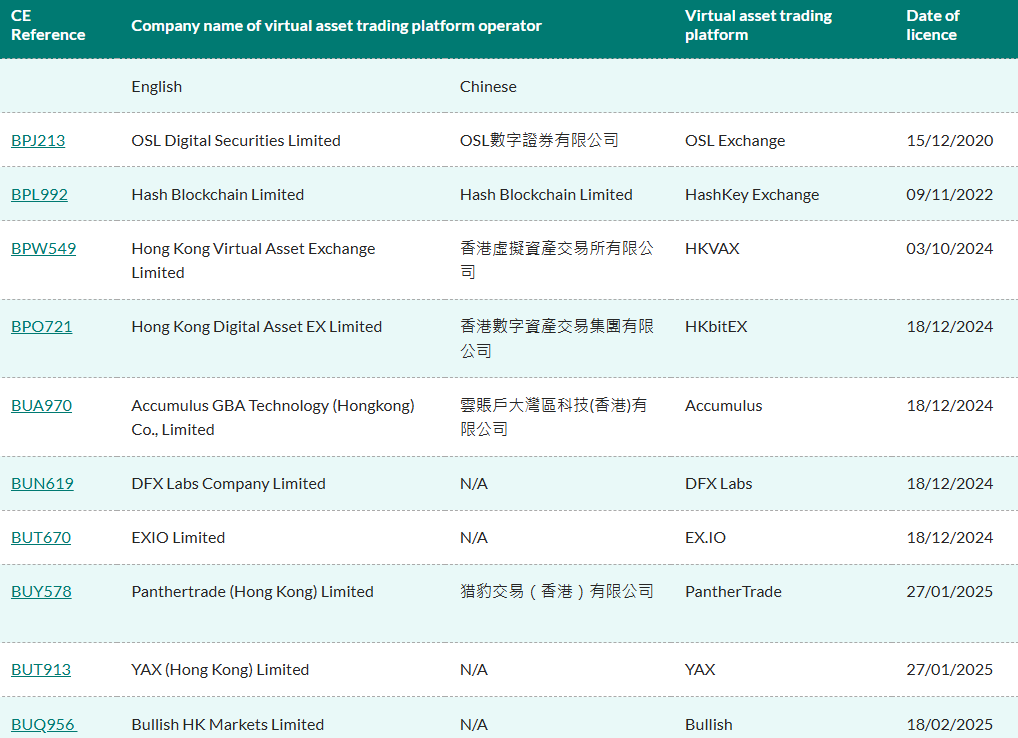
Chinese Tech Giants Alibaba and JD.com Urge Central Bank Approval for Yuan-Based StablecoinsSource: SFC Hong Kong

Additionally, VMS Group, managing nearly $4 billion for Hong Kong’s wealthiest families, allocated $10 million to Re7 Capital’s decentralized finance strategies.

These strategic moves are painting a picture of growing institutional adoption of regulated digital asset exposure in Hong Kong and China as a whole.

Strategic Push Against Dollar Dominance Intensifies

Chinese exporters are increasingly using dollar-pegged stablecoins as overseas merchants send payments in USDT, according to HashKey chairman Xiao Feng.

Capital controls, geopolitical tensions, and currency volatility in emerging markets have spurred this shift among Chinese businesses.

In fact, Crypto HK, Hong Kong’s largest crypto OTC exchange, reports a five-fold growth in monthly USDT trading volume by Chinese clients for trade settlement since 2021, as Reuters reported.

The trend further shows the growing adoption of dollar stablecoins for cross-border commerce, despite China’s domestic crypto restrictions.

JD.com proposed that China allow yuan stablecoin issuance in Hong Kong before expanding pilots to offshore markets within China’s free trade zones.

The company argued that Hong Kong dollar stablecoins fail to promote yuan usage since they’re pegged to U.S. dollars.

Recognizing the challenges that dollar stablecoins pose to Chinese financial regulation, many high officials are considering “a possibility” for a yuan-pegged stablecoin.

President Donald Trump’s support for stablecoins following his January inauguration has particularly accelerated the development of the U.S. regulatory framework.

The timing adds urgency to China’s considerations as the GENUIS Act is close to legitimizing dollar-pegged cryptocurrencies.

As it stands now, Beijing is evaluating strategic responses to maintain monetary sovereignty amid the growing threat of the dollar’s dominance.

Market Opportunity
Threshold Logo
Threshold Price(T)
$0.00766
$0.00766$0.00766
-0.63%
USD
Threshold (T) Live Price Chart
Disclaimer: The articles reposted on this site are sourced from public platforms and are provided for informational purposes only. They do not necessarily reflect the views of MEXC. All rights remain with the original authors. If you believe any content infringes on third-party rights, please contact service@support.mexc.com for removal. MEXC makes no guarantees regarding the accuracy, completeness, or timeliness of the content and is not responsible for any actions taken based on the information provided. The content does not constitute financial, legal, or other professional advice, nor should it be considered a recommendation or endorsement by MEXC.

You May Also Like

Is Doge Losing Steam As Traders Choose Pepeto For The Best Crypto Investment?
Is Doge Losing Steam As Traders Choose Pepeto For The Best Crypto Investment?

The post Is Doge Losing Steam As Traders Choose Pepeto For The Best Crypto Investment? appeared on BitcoinEthereumNews.com. Crypto News 17 September 2025 | 17:39 Is dogecoin really fading? As traders hunt the best crypto to buy now and weigh 2025 picks, Dogecoin (DOGE) still owns the meme coin spotlight, yet upside looks capped, today’s Dogecoin price prediction says as much. Attention is shifting to projects that blend culture with real on-chain tools. Buyers searching “best crypto to buy now” want shipped products, audits, and transparent tokenomics. That frames the true matchup: dogecoin vs. Pepeto. Enter Pepeto (PEPETO), an Ethereum-based memecoin with working rails: PepetoSwap, a zero-fee DEX, plus Pepeto Bridge for smooth cross-chain moves. By fusing story with tools people can use now, and speaking directly to crypto presale 2025 demand, Pepeto puts utility, clarity, and distribution in front. In a market where legacy meme coin leaders risk drifting on sentiment, Pepeto’s execution gives it a real seat in the “best crypto to buy now” debate. First, a quick look at why dogecoin may be losing altitude. Dogecoin Price Prediction: Is Doge Really Fading? Remember when dogecoin made crypto feel simple? In 2013, DOGE turned a meme into money and a loose forum into a movement. A decade on, the nonstop momentum has cooled; the backdrop is different, and the market is far more selective. With DOGE circling ~$0.268, the tape reads bearish-to-neutral for the next few weeks: hold the $0.26 shelf on daily closes and expect choppy range-trading toward $0.29–$0.30 where rallies keep stalling; lose $0.26 decisively and momentum often bleeds into $0.245 with risk of a deeper probe toward $0.22–$0.21; reclaim $0.30 on a clean daily close and the downside bias is likely neutralized, opening room for a squeeze into the low-$0.30s. Source: CoinMarketcap / TradingView Beyond the dogecoin price prediction, DOGE still centers on payments and lacks native smart contracts; ZK-proof verification is proposed,…
Share
BitcoinEthereumNews2025/09/18 00:14
XRPL Validator Reveals Why He Just Vetoed New Amendment

XRPL Validator Reveals Why He Just Vetoed New Amendment

Vet has explained that he has decided to veto the Token Escrow amendment to prevent breaking things
Share
Coinstats2025/09/18 00:28
US Senate Democrats plan to restart discussions on a cryptocurrency market structure bill later today.

US Senate Democrats plan to restart discussions on a cryptocurrency market structure bill later today.

PANews reported on February 4th that, according to Crypto In America, US Senate Democrats plan to reconvene on the afternoon of February 4th to discuss legislation
Share
PANews2026/02/04 23:12