Key Takeaways: Upbit has enabled native $CRO staking, allowing Korean users to earn rewards without wallets or validator setup. The exchange will operate validatorsKey Takeaways: Upbit has enabled native $CRO staking, allowing Korean users to earn rewards without wallets or validator setup. The exchange will operate validators

Upbit Rolls Out $CRO Staking for Millions of Koreans

Key Takeaways:

  • Upbit has enabled native $CRO staking, allowing Korean users to earn rewards without wallets or validator setup.
  • The exchange will operate validators on users’ behalf, keeping the process simple and familiar.
  • Adding $CRO to a tightly curated staking list signals confidence in the Cronos network and rising demand beyond trading.

Cronos has expanded its footprint in South Korea after Upbit activated staking support for $CRO. The move gives users a streamlined path to onchain participation directly inside one of the country’s most influential exchanges.

Read More: Upbit Hit Again: ₩44.5B Solana Hot Wallet Hack Slams Korea’s Top Crypto Exchange

Upbit Adds $CRO Staking With a One-Click Experience

Upbit has officially launched staking support for $CRO, enabling users to earn protocol rewards without leaving the exchange. The feature removes common barriers tied to onchain participation, such as managing wallets, running infrastructure, or selecting validators.

Under the setup, Upbit operates the validator on behalf of users. Staking can be completed in just a few clicks using the same interface traders already know. For many users, this is the first time participating in network security and rewards without technical overhead.

The rollout reflects Upbit’s conservative approach to staking. The exchange favors less than ten assets to stake and the additions are selective. Incorporating the CRO will put the token in an exclusive list of tokens that fulfill Upbit operational and risk requirements.

The staking will commence January 6, 2026 and will be subject to eligibility and jurisdictional requirements by the exchange.

Korea’s Strategic Role in Cronos Ecosystem Growth

South Korea has long been one of the most active crypto markets globally, with deep liquidity The South Korean market has traditionally been a significant crypto market in the world with deep liquidity and high level of retail users, and it is natural to Upbit that is already well engaged in the region as a local player.

Through the provision of staking on a large domestic exchange Cronos decreases the barrier to entry of Korean users wishing beyond spot trading. Users can no longer store assets in the trusted environment, but can instead put them to work by holding them in the form of $CRO.

This is in line with a general trend in the Korean market. The focus on short-term trading is moving to yield, participation, and network alignment. The exchange-native staking suits the requirement by integrating availability with perceived security.

In the case of Cronos, the merger will enhance its standing within a jurisdiction characterized by conservative regulation and user-demanding conditions. To users, it provides a utility layer that is new without compelling them to jump into complex onchain tooling.

Read More: South Korea Weighs Freezing Unrealized Crypto Gains to Block Manipulation Before Cash-Outs

The post Upbit Rolls Out $CRO Staking for Millions of Koreans appeared first on CryptoNinjas.

Market Opportunity
Cronos Logo
Cronos Price(CRO)
$0.10038
$0.10038$0.10038
-0.72%
USD
Cronos (CRO) Live Price Chart
Disclaimer: The articles reposted on this site are sourced from public platforms and are provided for informational purposes only. They do not necessarily reflect the views of MEXC. All rights remain with the original authors. If you believe any content infringes on third-party rights, please contact service@support.mexc.com for removal. MEXC makes no guarantees regarding the accuracy, completeness, or timeliness of the content and is not responsible for any actions taken based on the information provided. The content does not constitute financial, legal, or other professional advice, nor should it be considered a recommendation or endorsement by MEXC.

You May Also Like

FBI says North Korea’s Kimsuky APT uses malicious QR codes to spearphish U.S. entities

FBI says North Korea’s Kimsuky APT uses malicious QR codes to spearphish U.S. entities

The post FBI says North Korea’s Kimsuky APT uses malicious QR codes to spearphish U.S. entities appeared on BitcoinEthereumNews.com. The FBI says Kimsuky APT, a
Share
BitcoinEthereumNews2026/01/10 02:55
a16z targets AI and crypto after $15B fundraising year in 2025
a16z targets AI and crypto after $15B fundraising year in 2025

The post a16z targets AI and crypto after $15B fundraising year in 2025 appeared on BitcoinEthereumNews.com. Andreessen Horowitz (a16z) secured over $15 billion
Share
BitcoinEthereumNews2026/01/10 03:13
Stablecoin Market: Urgent Warning of a Zero-Sum Future

Stablecoin Market: Urgent Warning of a Zero-Sum Future

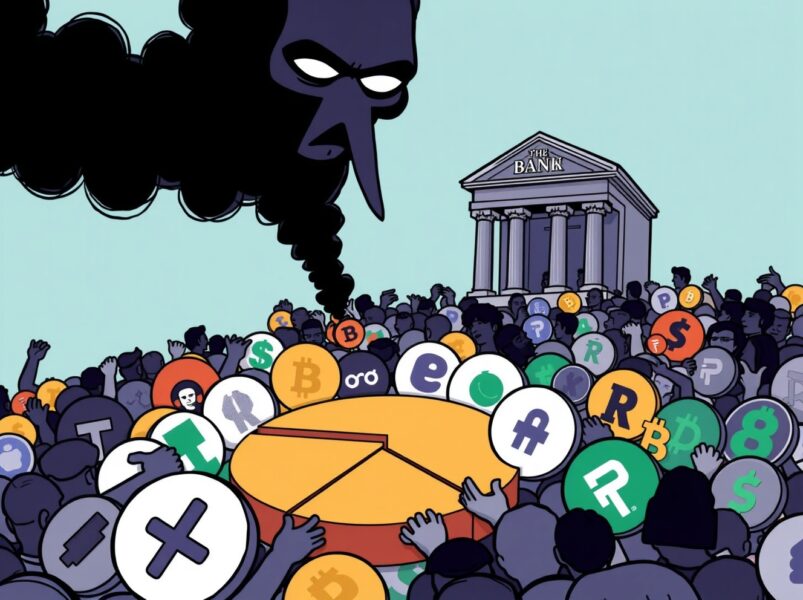
BitcoinWorld Stablecoin Market: Urgent Warning of a Zero-Sum Future A significant warning has emerged from financial giant JPMorgan, signaling a potentially challenging future for the stablecoin market. This isn’t just a minor blip; it’s a stark reminder that the booming world of digital assets faces a critical juncture, especially for those relying on the stability of stablecoins. JPMorgan’s recent research note suggests that unless the broader cryptocurrency market expands dramatically, stablecoin issuers are heading towards a fierce ‘zero-sum game’ scenario. The Alarming Truth About the Stablecoin Market What exactly does a ‘zero-sum game’ mean for the stablecoin market? Essentially, it implies that for one stablecoin to gain market share, another must lose it. This isn’t about overall growth where everyone benefits; it’s about a fixed pie where new entrants only succeed by taking a slice from existing players. JPMorgan analysts point to a rapidly increasing number of new stablecoin projects vying for attention. Tether recently announced its unregulated stablecoin, USAT. Hyperliquid plans to launch USDH, aiming to reduce its dependence on Circle’s USDC. Even traditional fintech powerhouses like Robinhood and Revolut are developing their own stablecoins. This surge of new issuers intensifies competition significantly. While the overall stablecoin market capitalization has reached an impressive $278 billion, its share of the total crypto market has remained stagnant, averaging below 8% since 2020. This stagnation, according to JPMorgan, is a key indicator of the brewing zero-sum challenge. Why is the Stablecoin Market Becoming So Crowded? The influx of new players into the stablecoin market isn’t accidental; it’s driven by various strategic motivations. Many projects aim to gain greater control over their financial infrastructure and reduce reliance on third-party stablecoins. For instance, Hyperliquid’s move to USDH is a clear example of a platform seeking self-sufficiency and potentially lower operational costs. Furthermore, established fintech firms like Robinhood and Revolut see stablecoins as a natural extension of their existing services. They can integrate these digital assets into their platforms, offering new functionalities and potentially attracting a broader user base. However, this expansion comes with a caveat: if the overall crypto market doesn’t grow proportionally, these new offerings will merely fragment the existing demand, making profitability and widespread adoption harder to achieve for all. The core challenge remains the limited expansion of the total crypto market relative to the growing supply of stablecoins. This dynamic creates an environment where innovation must go hand-in-hand with genuine market expansion, not just internal competition. Navigating the Competitive Stablecoin Market Landscape So, what does this intense competition mean for users and the broader crypto ecosystem? For one, it could lead to increased innovation as issuers strive to differentiate their offerings through better features, lower fees, or enhanced security. However, it also presents potential risks, particularly if some stablecoins fail to gain traction or face liquidity issues in a highly competitive environment. Users should exercise caution and conduct thorough due diligence when choosing stablecoins. For existing giants like USDC, the entry of new competitors means they must continue to innovate and maintain their market leadership. Regulatory clarity also plays a crucial role here. As more entities enter the space, the demand for clear, consistent regulations will only grow, potentially shaping the future landscape of the stablecoin market significantly. Ultimately, the long-term health of the stablecoin ecosystem hinges on the ability of the entire cryptocurrency market to attract new capital and users. Without this broader expansion, JPMorgan’s warning of a zero-sum game could become a stark reality. In conclusion, JPMorgan’s recent warning serves as a potent reminder of the escalating competition within the stablecoin market. While innovation and new entrants are exciting, the core challenge lies in the stagnant growth of the broader crypto market. For stablecoins to truly thrive beyond a zero-sum dynamic, a significant influx of new capital and users into the entire cryptocurrency ecosystem is paramount. The future success of these digital anchors depends on collective market expansion, not just internal rivalry. Frequently Asked Questions About the Stablecoin Market Q1: What is a ‘zero-sum game’ in the context of the stablecoin market? A1: A ‘zero-sum game’ means that for one stablecoin to gain market share, another stablecoin must lose an equivalent amount. It implies that the overall market size for stablecoins is not growing, forcing issuers to compete for a fixed pool of users and capital. Q2: Why is JPMorgan concerned about the stablecoin market? A2: JPMorgan is concerned because despite the stablecoin market’s growth in total value, its share of the overall crypto market capitalization has stagnated. With many new entrants, they believe competition will intensify, leading to a zero-sum dynamic unless the broader crypto market significantly expands. Q3: Which new stablecoin issuers are mentioned in the warning? A3: The warning highlights new entrants such as Tether’s unregulated stablecoin USAT, Hyperliquid’s planned USDH, and stablecoins being developed by fintech firms Robinhood and Revolut. Q4: What could be the implications for users of stablecoins? A4: For users, increased competition could lead to more innovative features, potentially lower fees, and better services. However, it also means a greater need for due diligence to assess the stability and reliability of various stablecoins, especially if some struggle in a crowded market. Q5: How can the stablecoin market avoid a zero-sum outcome? A5: According to JPMorgan, avoiding a zero-sum outcome requires significant expansion of the broader cryptocurrency market. This means attracting new capital and users into the entire crypto ecosystem, thereby growing the ‘pie’ rather than just re-dividing existing slices. Did JPMorgan’s warning about the stablecoin market catch your attention? Share this crucial insight with your network and join the conversation about the future of digital assets. Your thoughts and perspectives are invaluable! To learn more about the latest stablecoin market trends, explore our article on key developments shaping stablecoin market institutional adoption. This post Stablecoin Market: Urgent Warning of a Zero-Sum Future first appeared on BitcoinWorld.
Share
Coinstats2025/09/19 15:45