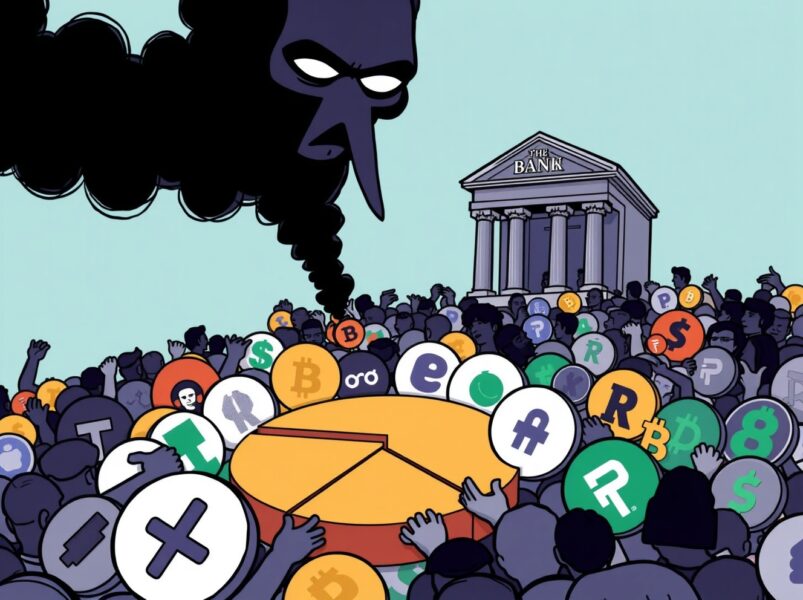
It's 2026 already, and with the market showing a "good start" to the year, who's still playing with NFTs?
Author: Nancy, PANews
It's 2026 already; the story of NFTs should have been over by now.
NFTs that were once auctioned off for sky-high prices have now mostly become small, unwanted images; many NFT project teams have been forced to exit the market in disarray amidst a wave of transformation, sales, and closures; and the once-premier NFT Paris event recently announced its cancellation, even becoming embroiled in refund disputes.
In a downturn that has lasted for many years, hot money has withdrawn and narratives have become ineffective, and the consensus in the market seems to be that "NFTs are dead".
However, in this week of 2026, the NFT market unexpectedly showed signs of recovery, with prices rebounding and transaction volume picking up. Is NFT really back? What are those players who remain committed doing now?
A strong start to the new year, with prices rising "like a lifetime ago."
Entering 2026, the long-dormant NFT market finally showed a long-awaited ripple.
According to CoinGecko data, the overall market capitalization of the NFT market has increased by more than $220 million in the past week since the beginning of 2026. Data from NFT Price Floor further shows that hundreds of NFT projects have seen price rebounds in the past week, with some even recording triple- or quad-digit increases. For players who have experienced years of continuous decline, their illusions have long been shattered, and this market trend seems like a distant memory.
Although this is just a drop in the ocean compared to the historical high, the long-awaited green market is still enough to offer some comfort to players who have held on, compared to the low point at the end of 2025.
However, beneath the surface of rising prices, the current market recovery appears more like a game of existing funds within a very limited scope, rather than a genuine recovery driven by new capital. The extreme lack of liquidity is a fatal flaw that the market cannot ignore.
Looking at weekly transaction volume, among more than 1,700 NFT projects, only 6 reached the million-dollar level, 14 reached the hundreds of thousands of dollars, and only 72 reached the tens of thousands of dollars. Overall, this is extremely rare. Even for top projects with high transaction volumes, the number of actively traded NFTs accounts for only a single-digit percentage of the total supply, with the vast majority of NFTs having only single-digit or even zero transactions.
In fact, The Block's 2025 report also shows that the NFT market did not see strong re-entry of funds throughout the year, speculative enthusiasm cooled significantly, and the multi-chain landscape returned to Ethereum's dominance. The total transaction volume that year dropped to $5.5 billion, a decrease of about 37% compared to 2024; the total market value of NFTs shrank dramatically from about $9 billion to about $2.4 billion.
These data indicate that the so-called recovery has not changed the fact that NFTs have long since died out. Today's NFTs have become "old assets," with only veteran investors trapped, while new funds are no longer interested.
The Great Escape and Survival: Funds Flow into New Battlefields
In this long, deep winter cold snap, from infrastructure to blue-chip projects, everyone is staging their own survival stories in different ways.
For example, OpenSea, a leading NFT exchange, is no longer fixated on JPEG images but is instead transforming into a token trading business through airdrop incentives; Flow, once a mainstream NFT public chain, has begun to explore DeFi growth points; Zora has abandoned the traditional NFT model and turned to the new track of "content as tokens"; even the iconic NFT Paris event was canceled due to running out of funds and was exposed as being unable to refund sponsorship fees, which shows the industry's predicament.
Even the leading NFTs that still have a glimmer of hope are caught in a vicious cycle of "critical acclaim but poor sales," with their successful brand influence failing to translate into a price moat. For example, while Pudgy Penguins has successfully established its IP in the mainstream world and its physical toys are selling like hotcakes, it still cannot escape the pull of a floor price and falling cryptocurrency prices.
The decisive departures of Web2 giants such as Reddit ceasing its NFT service and Nike selling its RTFKT subsidiary have further shattered the market's last illusions about mainstream adoption.
However, the decline of NFTs does not mean the disappearance of demand for collecting and speculation; the funds have simply shifted to a different arena. Compared to virtual images on the blockchain, the physical market for collectible toys, trading cards, and other items outside the blockchain remains highly active. For example, the Pokémon TCG has seen over $1 billion in transaction volume and over $100 million in revenue.
Not only ordinary collectors, but even crypto elites are starting to vote with their feet, returning to physical assets and top-tier collectibles.
For example, crypto artist Beeple turned his attention to creating physical robots, and his robot dogs featuring celebrities like Elon Musk sold out quickly; Wintermute co-founder Yoann Turpin jointly spent $5 million to buy dinosaur fossils; Animoca founder Yat Siu spent $9 million to buy a Stradivarius violin; and Tron founder Justin Sun purchased the banana artwork "Comedian" for a record-breaking $6.2 million.
In the current market environment, ordinary investors need to face the reality of NFT liquidity depletion.
Say goodbye to small image logic, these NFTs are more popular
After the bursting of the bubble, the NFT market did not suffer a complete cash crunch, but instead flowed to assets with high profit-loss ratios or clear value support.
• Speculative and arbitrage demand: Some players believe that the market has bottomed out and buy to capture price mismatches for short-term swing trading. This type of behavior has a high risk-reward ratio.
• "Golden Shovel" Attribute: These are NFTs with the highest market participation and liquidity at present. Essentially, these NFTs are no longer collectibles, but rather financial credentials for receiving future token airdrops, often signifying eligibility for airdrops or whitelisting. However, the anticipated realization of these tokens is often a negative factor. Once the snapshot is complete or the airdrop is distributed, if the project team doesn't provide new value to the NFT, its price often plummets rapidly, even to zero. Therefore, these NFTs are more suitable as short-term investments or arbitrage tools than long-term value storage.
• Celebrity/Top Project Endorsements: The value of these NFTs is driven by the attention economy. Endorsements from celebrities or top projects often significantly boost brand awareness and liquidity, resulting in a short-term premium. For example, the Hypurr NFT series, airdropped to early users by leading DEX HyperLiquid, saw its price rise steadily after launch; similarly, Ethereum founder Vitalik Buterin's recent change of profile picture to the Milady NFT caused its floor price to noticeably increase.
• Top-tier IP: These NFTs have often moved beyond simple hype; the investment logic leans more towards cultural identity and collectible value. Their prices are relatively resilient to decline, possessing a long-term value storage function. For example, CryptoPunks was officially added to the permanent collection of the Museum of Modern Art (MoMA) in New York at the end of last year.
• Acquisition Narrative: When a project is acquired by a more powerful investor, the market reprices it, anticipating that its IP monetization capabilities and brand moat will be strengthened, thus driving up the price. For example, Pudgy Penguins and Moonbirds saw significant price increases after being acquired.
• Integration with real-world assets: By putting real-world assets on the blockchain, NFTs can gain clear physical value backing, while reducing downside risk and enhancing their ability to expand their reach. For example, Collector Crypt and Courtyard, which recently became very popular Pokémon card tokenization platforms, allow users to trade ownership of cards/items on the blockchain, with the physical items held in custody by the platform.
• Practical Functionality: NFTs return to their tool-like nature, serving specific application scenarios. Examples include NFT ticketing, serving as voting rights in DAO decision-making, and providing AI on-chain identities (such as Ethereum ERC-8004 introducing NFT-based AI proxy identities).
Therefore, compared to chasing meaningless small images, NFTs with practical utility or clear upward potential are gradually becoming the focus of capital attention.
You May Also Like

FBI says North Korea’s Kimsuky APT uses malicious QR codes to spearphish U.S. entities

a16z targets AI and crypto after $15B fundraising year in 2025