The post Trump Files $5B JPMorgan Lawsuit Over Jan. 6 Debanking appeared on BitcoinEthereumNews.com. President Donald Trump has filed a sweeping $5 billion lawsuitThe post Trump Files $5B JPMorgan Lawsuit Over Jan. 6 Debanking appeared on BitcoinEthereumNews.com. President Donald Trump has filed a sweeping $5 billion lawsuit

Trump Files $5B JPMorgan Lawsuit Over Jan. 6 Debanking

President Donald Trump has filed a sweeping $5 billion lawsuit against JPMorgan Chase and CEO Jamie Dimon, accusing the country’s largest bank of politically motivated debanking in the wake of the Jan. 6, 2021 unrest.

The lawsuit, filed Thursday morning in Florida state court in Miami by attorney Alejandro Brito, alleges that JPMorgan abruptly and “without warning or remedy” terminated multiple accounts tied to Trump and his hospitality businesses despite the president banking with the institution for decades and conducting “hundreds of millions of dollars” in transactions.

Bank’s Code of Conduct at Center of Complaint

The filing leans heavily on JPMorgan’s own code of conduct, which pledges the bank operates with “the highest level of integrity and ethical conduct” and maintains zero tolerance for unethical behavior.

Trump’s legal team argues that the bank violated those principles by shutting down accounts on Feb. 19, 2021, providing only two months’ notice before closure and no recourse or appeal process. Brito said the day “forever altered the dynamic of the parties’ relationship,” contending the closures came “without warning or provocation.”

The lawsuit also claims that the accounts at issue were in good standing, fully compliant, and actively used, making their termination both “unlawful” and “politically motivated.”

Alleged Blacklisting and Industry-Wide Implications

One of the most explosive allegations is that JPMorgan placed Trump, the Trump Organization, affiliated businesses, and members of the Trump family on an internal blacklist shared among federally regulated banks. The list, the lawsuit says, is typically used for individuals with histories of malfeasance or noncompliance.

The lawsuit calls the alleged inclusion of Trump’s entities “an intentional and malicious falsehood,” claiming it induced other financial institutions to refuse service as well.

Trump’s Public Tease and Banking Fallout

Trump previewed the lawsuit days earlier on Truth Social, saying he would sue JPMorgan for “incorrectly and inappropriately DEBANKING me after the January 6th Protest” and again insisting the 2020 election “was RIGGED.”

Trump’s post (Source: Truth Social)

He has previously stated that JPMorgan gave him a narrow window to move “hundreds of millions of dollars” in early 2021 and that Bank of America later refused to accept large deposits, further restricting his access to traditional banking channels.

JPMorgan Denies Political Motives, Points to Regulatory Pressure

JPMorgan spokesperson Trish Wexler reiterated the bank’s position that “no one’s account should ever be closed because of political or religious beliefs,” adding that the bank supports the current administration’s efforts to address political debanking concerns.

CEO Jamie Dimon has also rejected claims of political targeting, telling lawmakers in 2025, “We don’t debank people because of political or religious affiliations.” He said regulatory burdens, not ideology, are often responsible for account terminations and that “rules and requirements are so onerous” they can inadvertently force debanking.

Other major bank leaders have echoed that sentiment. Bank of America CEO Brian Moynihan, pressed on Trump’s allegations in 2025, simply said: “You’d have to talk to him about that.”

A New Layer: JPMorgan’s Evolving Crypto Posture

In the years since the alleged debanking, Trump family businesses have increasingly experimented with crypto-based fundraising, NFT ventures, and blockchain-driven projects, citing concerns about reliance on traditional banking infrastructure. 

The lawsuit arrives at a time when JPMorgan’s stance on digital assets is undergoing a dramatic shift.

For years, Dimon was among the most outspoken critics of Bitcoin, calling it a “fraud,” dismissing it as a “pet rock,” and even saying governments should “shut it down.” 

But by late 2025, Dimon acknowledged he was “wrong” about aspects of the technology, saying blockchain and stablecoins are real, “legitimate,” and central to the future of finance.

Simultaneously, JPMorgan has begun offering clients exposure to Bitcoin, is exploring crypto trading for institutional clients, and plans to allow Bitcoin and Ether as collateral for loans — a stark contrast to its earlier hostility toward the asset class.

Source: https://coinpaper.com/13968/trump-takes-jp-morgan-to-court-5-b-lawsuit-alleges-post-jan-6-debanking

Disclaimer: The articles reposted on this site are sourced from public platforms and are provided for informational purposes only. They do not necessarily reflect the views of MEXC. All rights remain with the original authors. If you believe any content infringes on third-party rights, please contact service@support.mexc.com for removal. MEXC makes no guarantees regarding the accuracy, completeness, or timeliness of the content and is not responsible for any actions taken based on the information provided. The content does not constitute financial, legal, or other professional advice, nor should it be considered a recommendation or endorsement by MEXC.

You May Also Like

Cashing In On University Patents Means Giving Up On Our Innovation Future

Cashing In On University Patents Means Giving Up On Our Innovation Future

The post Cashing In On University Patents Means Giving Up On Our Innovation Future appeared on BitcoinEthereumNews.com. “It’s a raid on American innovation that would deliver pennies to the Treasury while kneecapping the very engine of our economic and medical progress,” writes Pipes. Getty Images Washington is addicted to taxing success. Now, Commerce Secretary Howard Lutnick is floating a plan to skim half the patent earnings from inventions developed at universities with federal funding. It’s being sold as a way to shore up programs like Social Security. In reality, it’s a raid on American innovation that would deliver pennies to the Treasury while kneecapping the very engine of our economic and medical progress. Yes, taxpayer dollars support early-stage research. But the real payoff comes later—in the jobs created, cures discovered, and industries launched when universities and private industry turn those discoveries into real products. By comparison, the sums at stake in patent licensing are trivial. Universities collectively earn only about $3.6 billion annually in patent income—less than the federal government spends on Social Security in a single day. Even confiscating half would barely register against a $6 trillion federal budget. And yet the damage from such a policy would be anything but trivial. The true return on taxpayer investment isn’t in licensing checks sent to Washington, but in the downstream economic activity that federally supported research unleashes. Thanks to the bipartisan Bayh-Dole Act of 1980, universities and private industry have powerful incentives to translate early-stage discoveries into real-world products. Before Bayh-Dole, the government hoarded patents from federally funded research, and fewer than 5% were ever licensed. Once universities could own and license their own inventions, innovation exploded. The result has been one of the best returns on investment in government history. Since 1996, university research has added nearly $2 trillion to U.S. industrial output, supported 6.5 million jobs, and launched more than 19,000 startups. Those companies pay…
Share
BitcoinEthereumNews2025/09/18 03:26
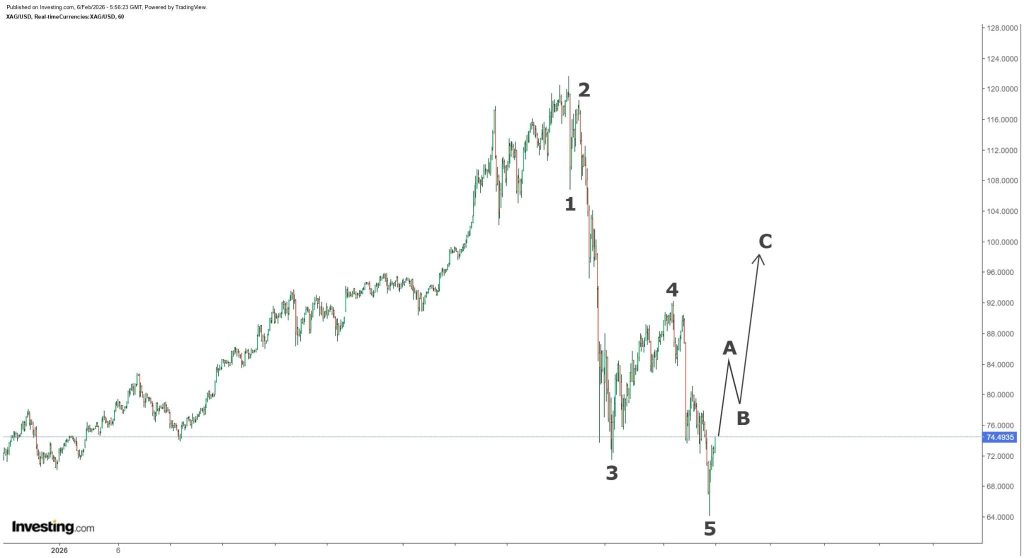
Silver Price Crash Is Over “For Real This Time,” Analyst Predicts a Surge Back Above $90

Silver Price Crash Is Over “For Real This Time,” Analyst Predicts a Surge Back Above $90

Silver has been taking a beating lately, and the Silver price hasn’t exactly been acting like a safe haven. After running up into the highs, the whole move reversed
Share
Captainaltcoin2026/02/07 03:15
Citi Caps Year-End at $4,300, But ETF outflows Challenge Outlook

Citi Caps Year-End at $4,300, But ETF outflows Challenge Outlook

The post Citi Caps Year-End at $4,300, But ETF outflows Challenge Outlook appeared on BitcoinEthereumNews.com. Ethereum Price Prediction: Citi Caps Year-End at $4,300, But ETF outflows Challenge Outlook Disclaimer: The information found on NewsBTC is for educational purposes only. It does not represent the opinions of NewsBTC on whether to buy, sell or hold any investments and naturally investing carries risks. You are advised to conduct your own research before making any investment decisions. Use information provided on this website entirely at your own risk. Related News © 2025 NewsBTC. All Rights Reserved. This website uses cookies. By continuing to use this website you are giving consent to cookies being used. Visit our Privacy Center or Cookie Policy. I Agree Source: https://www.newsbtc.com/news/ethereum/ethereum-price-prediction-citi-caps-year-end-at-4300-but-etf-outflows-challenge-outlook/
Share
BitcoinEthereumNews2025/09/18 14:30