DUBAI, United Arab Emirates, Jan. 24, 2026 (GLOBE NEWSWIRE) -- Mutuum Finance (MUTM) continues to progress toward its first protocol release as developmen DUBAI, United Arab Emirates, Jan. 24, 2026 (GLOBE NEWSWIRE) -- Mutuum Finance (MUTM) continues to progress toward its first protocol release as developmen

Mutuum Finance (MUTM) Nears Protocol Launch Window With Security and Infrastructure Finalized

2026/01/24 22:17
4 min read
For feedback or concerns regarding this content, please contact us at crypto.news@mexc.com

DUBAI, United Arab Emirates, Jan. 24, 2026 (GLOBE NEWSWIRE) --

Mutuum Finance (MUTM) continues to progress toward its first protocol release as development, security, and infrastructure components move into their final stages. The project, positioned as a new crypto protocol in the DeFi lending segment, has been preparing for the launch of its V1 system after completing audits and announcing testnet scheduling. As a result, market observers have begun classifying Mutuum Finance as one of the next crypto assets entering an activation phase rather than remaining in a conceptual design phase.

A Functional Approach to DeFi Lending

Mutuum Finance is building a decentralized lending and borrowing system with two distinct markets. The first is a pooled market where lenders supply assets, and borrowers withdraw from shared liquidity. Lenders receive mtTokens, which represent yield and track interest generated by the protocol.

Borrowers lock collateral at defined loan-to-value levels and repay based on the loan terms. Liquidation rules are built to protect lenders when volatility increases and collateral values fall.

The second market functions as a peer-matching environment. Borrowers and lenders connect directly under the same collateral and liquidation conditions. This model allows the protocol to address two types of market demand at once: pooled liquidity for convenience and peer-matching for more competitive borrowing terms.

Token Mechanics and Revenue Alignment

mtTokens are central to Mutuum Finance’s structure. They allow the protocol to track yield for suppliers and account for interest repayment. mtTokens can also be staked to earn MUTM that is purchased on the open market.

A portion of protocol revenue is used for these purchases, forming a buy-and-distribute mechanism that links token activity to borrowing demand. Analysts describe this as an example of revenue alignment rather than narrative-based token valuation, which has been a focus in earlier DeFi lending models.

Mutuum Finance has also outlined plans for an over-collateralized stablecoin. Stablecoin borrowers often remain in the system longer because they do not need to sell their collateral. This can create steady borrowing demand, which increases fee revenue and improves the consistency of the protocol’s usage metrics.

Security and Infrastructure Validation

Security remains one of the most important components for DeFi crypto platforms that handle collateral and liquidation logic. Mutuum Finance (MUTM) announced that Halborn Security completed an independent audit of the protocol’s V1 contracts. The project also holds a 90/100 token scan score from CertiK and opened a $50K bug bounty to identify any remaining vulnerabilities before mainnet activation.

Mutuum Finance (MUTM) confirmed through its official X account that the protocol’s V1 release is scheduled for the Sepolia testnet in Q1 2026. The testnet phase includes collateral accounting, liquidation logic, debt handling, and mtToken issuance. After testnet evaluation, the team plans to finalize mainnet preparation and activation. This timeline places Mutuum Finance in the transition zone between development and protocol operation, which is a critical phase for DeFi projects seeking to move from design to utility.

Presale Participation

Alongside protocol development, Mutuum Finance has been running a structured presale for the MUTM token. The presale opened in early 2025 at $0.01 and has advanced to Phase 7 at $0.04, reflecting a 300% increase across stages. The official launch price is set at $0.06 according to the project’s pricing framework.

Funding has surpassed $19.9M and more than 18,900 holders have participated. Approximately 830M tokens have been sold so far. From the total 4B MUTM supply, roughly 45.5%, or 1.82B tokens, have been allocated for presale access. Analysts note that this represents a wide distribution footprint compared to more concentrated private placements.

As Mutuum Finance moves toward V1, the protocol has entered a phase where infrastructure, security, and token distribution are largely in place. This positioning has shifted the project into conversations around top crypto candidates for the upcoming DeFi cycle. Unlike speculative new cryptocurrency launches that lack clear execution plans, Mutuum Finance is approaching a deployment window with core components already completed.

For more information about Mutuum Finance (MUTM) visit the links below:
Website: https://www.mutuum.com
Linktree: https://linktr.ee/mutuumfinance

CONTACT: J. Weir Contact@mutuum.com

The post Mutuum Finance (MUTM) Nears Protocol Launch Window With Security and Infrastructure Finalized appeared first on Crypto Reporter.

Disclaimer: The articles reposted on this site are sourced from public platforms and are provided for informational purposes only. They do not necessarily reflect the views of MEXC. All rights remain with the original authors. If you believe any content infringes on third-party rights, please contact crypto.news@mexc.com for removal. MEXC makes no guarantees regarding the accuracy, completeness, or timeliness of the content and is not responsible for any actions taken based on the information provided. The content does not constitute financial, legal, or other professional advice, nor should it be considered a recommendation or endorsement by MEXC.

You May Also Like

Why Ethereum Price Could Drop to $1,500 Despite Record Activity

Why Ethereum Price Could Drop to $1,500 Despite Record Activity

The post Why Ethereum Price Could Drop to $1,500 Despite Record Activity appeared on BitcoinEthereumNews.com. Ethereum network activity has reached record levels
Share
BitcoinEthereumNews2026/03/13 19:40
Why More Teams Are Replacing Pure Agile with PRINCE2 Agile
Why More Teams Are Replacing Pure Agile with PRINCE2 Agile

  Agile once felt like the answer to everything. Simple sprints. Constant feedback. Working software over process. It sounded great and for many, it still is. But
Share
Techbullion2026/03/13 19:41
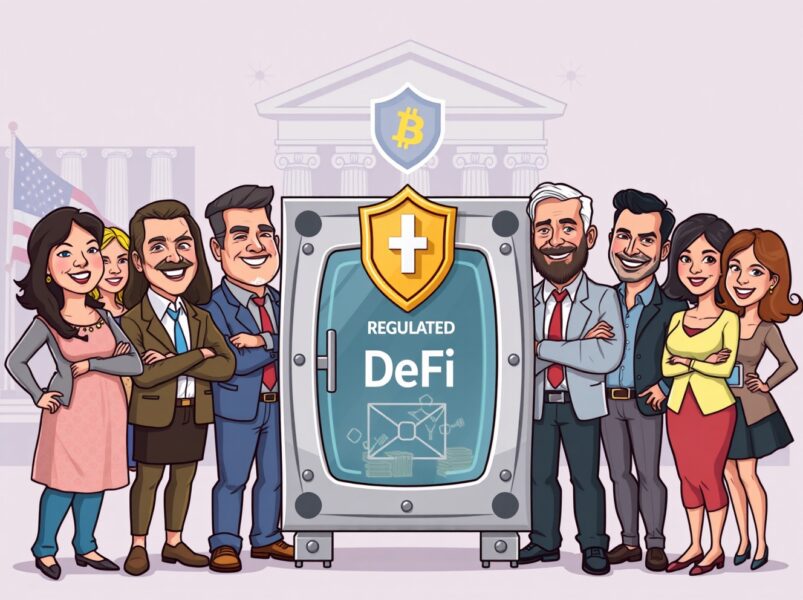
4 in 10 Americans Ready for Regulated DeFi: A Pivotal Survey on DeFi Regulation

4 in 10 Americans Ready for Regulated DeFi: A Pivotal Survey on DeFi Regulation

BitcoinWorld 4 in 10 Americans Ready for Regulated DeFi: A Pivotal Survey on DeFi Regulation The world of decentralized finance, or DeFi, is often seen as a frontier, exciting but perhaps a little wild. However, a groundbreaking survey from the DeFi Education Fund reveals a surprising truth: a significant portion of Americans are ready to embrace DeFi regulation. This isn’t just a niche interest; it’s a clear signal that mainstream adoption hinges on establishing clear, thoughtful rules for this innovative financial ecosystem. What’s the Buzz Around DeFi Regulation? Imagine a financial system that’s open, transparent, and accessible to everyone, everywhere. That’s the promise of DeFi. Yet, for many, the lack of established guidelines has been a major hurdle. The recent survey sheds light on this hesitation, indicating that nearly half of all Americans are willing to dive into DeFi, but only if it operates within a regulated framework. Key Finding: 42% of respondents would use DeFi under a regulated framework. This figure highlights a strong desire for security and clarity. Payment Services Potential: Among those willing, a remarkable 84% expressed readiness to try DeFi-based payment services. This suggests a massive untapped market for innovative payment solutions. This data points to a crucial intersection where innovation meets consumer protection. It suggests that appropriate DeFi regulation could unlock a new era of financial services for millions. Why Are Americans Eyeing Regulated DeFi? It’s not just about curiosity; there’s a deeper reason behind this willingness to engage with regulated DeFi. The survey also uncovered a significant lack of trust in existing financial systems. Only 29% of respondents believe the current U.S. financial system is truly safe. This sentiment is powerful. It indicates that people are actively seeking alternatives that offer greater transparency, security, and fairness. DeFi regulation, when done right, can provide the assurance needed for individuals to confidently explore these new avenues. It’s about building bridges of trust between cutting-edge technology and everyday users. Consider the benefits: enhanced consumer protection, reduced fraud risks, and a level playing field for all participants. These are the pillars upon which a trusted financial system, traditional or decentralized, must stand. The Promise of Regulated DeFi Payments The enthusiasm for DeFi isn’t limited to just financial products like lending or borrowing. A significant portion of the surveyed group expressed a strong interest in using DeFi for everyday transactions. The idea of regulated DeFi-based payment services is particularly appealing. Faster Transactions: Imagine sending money globally in minutes, not days. Lower Fees: Bypassing traditional intermediaries can significantly reduce costs. Greater Control: Users maintain more direct control over their funds. These advantages, combined with the security provided by clear DeFi regulation, could revolutionize how we think about and use money daily. It’s about creating more efficient, inclusive, and user-centric payment experiences. Navigating the Path to Mainstream DeFi Regulation While the demand for regulated DeFi is evident, the path to achieving it is complex. Regulators face the challenge of understanding a rapidly evolving technology while simultaneously protecting consumers and fostering innovation. This isn’t a simple task, but the survey provides a clear mandate for action. Key Considerations for Effective DeFi Regulation: Clarity: Establishing clear definitions and legal frameworks for DeFi protocols and assets. Consumer Protection: Implementing safeguards against scams, hacks, and financial exploitation. Innovation: Crafting rules that don’t stifle technological advancement and growth. Global Coordination: Harmonizing regulations across different jurisdictions to prevent arbitrage and ensure market stability. The future of finance could very well be decentralized, but its widespread adoption depends heavily on thoughtful and effective DeFi regulation. It’s a collaborative effort between innovators, users, and policymakers to build a financial system that serves everyone. Summary: A Clear Call for Action The survey from the DeFi Education Fund delivers a compelling message: Americans are ready for DeFi, but they want it to be safe and sound. The willingness of 4 in 10 respondents to engage with regulated DeFi, coupled with the strong interest in payment services, underscores the immense potential of this technology. It also highlights a critical opportunity for regulators to step up and provide the clarity and oversight necessary to unlock DeFi’s full promise. The future of finance is evolving, and DeFi regulation will be a cornerstone of its mainstream success. Frequently Asked Questions About Regulated DeFi Q1: What is DeFi? A1: DeFi, or decentralized finance, refers to financial services built on blockchain technology. These services, like lending, borrowing, and trading, operate without traditional intermediaries such as banks, using smart contracts instead. Q2: Why do Americans want DeFi to be regulated? A2: Americans desire regulation for DeFi primarily for security and trust. Many are wary of unregulated financial systems due to potential risks like fraud, hacks, and lack of consumer protection. Regulation can provide a framework of safety and legitimacy. Q3: What benefits could regulated DeFi offer? A3: Regulated DeFi could offer several benefits, including enhanced consumer protection, reduced risks of scams, greater transparency, potentially faster and cheaper financial services (especially payments), and increased trust, leading to broader adoption. Q4: How does DeFi regulation compare to traditional finance regulation? A4: Traditional finance operates under well-established, comprehensive regulatory frameworks. DeFi regulation is still evolving and aims to apply similar principles of consumer protection and market integrity to a decentralized, blockchain-based environment, often requiring new approaches due to its unique technological characteristics. Q5: What are the challenges in implementing DeFi regulation? A5: Challenges include the decentralized and global nature of DeFi, which makes enforcement difficult; the rapid pace of technological innovation; defining which entities are responsible for compliance; and ensuring regulations foster innovation rather than stifling it. Found this article insightful? Share it with your friends, colleagues, and anyone interested in the future of finance and the exciting potential of regulated DeFi! Your shares help spread awareness and foster important conversations. To learn more about the latest crypto market trends, explore our article on key developments shaping DeFi institutional adoption. This post 4 in 10 Americans Ready for Regulated DeFi: A Pivotal Survey on DeFi Regulation first appeared on BitcoinWorld.
Share
Coinstats2025/09/18 17:30