Silvio Micali is a technologist and MIT professor who is well-known for founding Algorand, a Layer-1 (L1) autonomous and decentralized blockchain network. Most recently, Micali has been working hard on developing a new technology called “Fiat Chain.” While Micali has been relatively quiet about Fiat Chain, he recently spoke about the technology during Paris Blockchain Week 2025. In his keynote, the technologist revealed that fiat chain is a public blockchain geared towards institutions. Cryptonews was fortunate to sit down with Micali for an exclusive interview during Proof of Talk 2025 to further discuss Fiat Chain to understand how the technology works, its use cases, and how it may relate to Algorand. I spoke with the one & only @silviomicali about his new project, Fiat Chain. I’m super excited to share his insights with y’all… stay tuned! 💯💯 @Algorand @proofoftalk pic.twitter.com/80S7OrgrbI — Rachel Wolfson (@Rachelwolf00) June 9, 2025 Cryptonews: What exactly is “Fiat Chain?” Silvio Micali: Fiat Chain is a blockchain network that is secure and public. There is no cryptocurrency associated with Fiat Chain. I’m a big believer in public chains. A private blockchain without cryptocurrency is possible, but this is not what the world needs. Secondly, fiat chain has an architecture that allows it to be self-stable long-term, so that consensus can go on forever. CN: Please explain why you’ve created “Fiat Chain.” SM: Institutions have not yet come on-chain, even though blockchain is the perfect vehicle for institutions seeking transparency, efficiency, and more. I started thinking about this problem and considered three reasons as to why this is the case. One is regulatory—the crypto and blockchain market is still unregulated. I think that the Trump administration wants to regulate the industry , but they have not yet done it. Regulation prevents regulated entities from touching crypto. Secondly, security remains an issue, especially for institutions. The third challenge is sovereignty. For instance, if you have a nation with a sovereign currency, the last thing you want to do is tell citizens to buy a foreign currency, like cryptocurrency, to access a national currency. These three things are all preventing blockchain from serving the assets of the world. CN: Is Fiat Chain part of Algorand? SM: Fiat Chain is a separate technology from Algorand. However, while Fiat Chain would benefit all blockchain networks, it could be particularly beneficial to Algorand. Given that Fiat Chain has a consensus mechanism and ability to interact with other blockchains, we can eventually bring all the world’s assets on-chain. This would mean that everybody in the blockchain ecosystem benefits. Once you have a blockchain that can bring in institutions to deploy their assets on-chain, then you can bridge with other blockchain networks where assets are best served for what an institution wants to do. I think that is going to be big for different blockchains, but more so for Algorand. Algorand has a strong decentralized network, and connected to Fiat Chain, it has the potential to become the preferred gateway for bridging. CN: If Fiat Chain doesn’t use cryptocurrency, how does it work, and what are the use cases? SM: The use case for Fiat Chain is really to bring institutional assets on-chain. If you bring institutional assets to a blockchain, the developers will then follow. There are great use cases for blockchain today that are unfortunately only leveraged for simple applications. Most of these are creative, but if you don’t have real assets on-chain, the entire industry is going to remain crypto-to-crypto. The application here is to bring assets on-chain and to develop a tokenization and issuance platform that is going to be very useful. CN: Can you please give an example of an institutional asset? SM: Yes—just imagine you are a token company that wants to issue a bond. However, it’s a problem for the company to touch crypto because it’s regulated. The market wants certainty. Companies are better off issuing a bond on blockchain because the blockchain is unbeatable for tokenization. If I were an institution and wanted to issue a bond, I would use blockchain if I was sure that the consensus behind the network was long-term and accessible. Once you have bonds on-chain, everyone will benefit no matter what. Our worst enemy is keeping assets off-chain. CN: Would you say that tokenization of institutional assets is the main goal behind Fiat Chain? SM: No, it is just one goal. I want to create a blockchain where there can be developers working alongside big institutions. Every blockchain currently welcomes developers, but the institutions are not coming. We can partly blame regulations. Fiat Chain aims to solve this problem. CN: How does Fiat Chain use blockchain without cryptocurrency? SM: It’s not so easy. Every blockchain has a cryptocurrency associated with it because of security. For instance, a public blockchain is not permissioned, meaning anyone can join the network and the consensus of the chain. Also, while the blockchain network is public, no one knows who is running the chain. So if the actors of the chain begin to take actions that are detrimental, there is no remedy. The most dangerous action here is that you can’t pin down the bad actors, so they can easily harm the network. This is why the industry created a consensus that hand and glove matched with a cryptocurrency. If you want to participate in the consensus of a network, you must have a good number of native tokens matching the consensus. So if you hurt the chain, you hurt your own crypto holdings. This is the reason why every public chain has a cryptocurrency—it’s a security reason. But unfortunately, this security solution has introduced all types of challenges. For instance, if crypto assets become volatile, anyone may be able to buy all assets, weakening the security of the chain. There must be another way to secure consensus other than the traditional method for proof-of-stake public blockchains . Fiat Chain has a consensus mechanism without cryptocurrency. You also can’t replace consensus with fiat currency. CN: So, what is the consensus mechanism for Fiat Chain? SM: It’s easier to describe the tip of the iceberg right now. Fiat Chain will have a board of validators that will last for at least one quarter—every quarter there will be a new board of validators or individuals who want to reapply again. You also need to pay a fee to become a validator. Validators make money off network fees paid in stablecoins. Fiat Chain replaces gas with stablecoins. We can then look at all the stablecoins that have been paid from fees over the last quarter. If the fees are going to be the same during the next quarter, then validators can know if they will earn a significant amount. But this isn’t enough—there is a specific formula to determine how many validators are needed each quarter. For instance, assume the network fees are large, then we can determine how much validators will earn. But, what if the fees in the next quarter drop by at least 50 percent? Fees are approximate for usage of the chain, and the chain is essentially an infrastructure that is not volatile. Therefore, you can look at the previous quarter and establish a formula for how many validators the network will need. Now, assume that fees have increased by 10 percent—then you need 10 percent more validators than last time. We will also need a loyalty program for validators. We will first ask previous validators if they want to opt in and be validators. If the majority decides to continue, that is great, but the network must still carefully choose its board members. This means the network has to choose validators at random. This is where Algorand comes in. Algorand has a verifiable random function, which is a way to make random choices and then prove it’s the correct random choice for a specific input. Fiat Chain will have a verifiable lottery to decide who should come in and protect the network. I also believe that Fiat Chain will have an honest majority of validators each time network fees increase. CN: Will Fiat Chain have a crypto associated with it? SM: The fees associated with Fiat Chain need to be paid in stablecoins. If there are trillions of real-world assets on-chain, you will need to buy and sell those using stablecoins. This will also create an even bigger demand for stablecoins. I am also agnostic in terms of what stablecoin will be used with Fiat Chain. You can imagine two different worlds here, one where a dollar-backed stablecoin is used and the other where a euro-backed stablecoin is used. You can have two separate chains and bridge these, or there can be an oracle that both parties trust with a pool of dollars or euros. I am being very agnostic here, as Fiat Chain doesn’t care which stablecoin is used. It should just be able to bridge in a decentralized manner with trusted witnesses. CN: Would Fiat Chain have its own stablecoin? SM: Fiat chain is just a technology. It is a public chain that is self-stabilizing forever, that doesn’t become insecure with a cryptocurrency that falters. However, if I were a stablecoin provider, I’d be delighted to see that there was a blockchain that works independently without the ups and downs or security issues associated with cryptocurrency. I am agnostic and welcome different stablecoins. CN: Is Fiat Chain just a concept for now? SM: It’s a technology, currently. I still have to explain the technology and let people understand it. I think people are more open to a new technology if you take the time to absorb it. Currently, I am focused on developing the technology—deploying it is the next step. CN: Why did you come up with Fiat Chain, and was it a recent development? SM: Fiat Chain is a recent development. I got frustrated by the fact that there is all this beautiful technology, yet none have been as successful as I had expected. As soon as I became frustrated by all assets not being on-chain, I felt as if the technology was the missing element. CN: Are you still focused on Algorand? SM: I think that the founders of decentralized technology have to let the ecosystem take over in order for it to remain decentralized.Silvio Micali is a technologist and MIT professor who is well-known for founding Algorand, a Layer-1 (L1) autonomous and decentralized blockchain network. Most recently, Micali has been working hard on developing a new technology called “Fiat Chain.” While Micali has been relatively quiet about Fiat Chain, he recently spoke about the technology during Paris Blockchain Week 2025. In his keynote, the technologist revealed that fiat chain is a public blockchain geared towards institutions. Cryptonews was fortunate to sit down with Micali for an exclusive interview during Proof of Talk 2025 to further discuss Fiat Chain to understand how the technology works, its use cases, and how it may relate to Algorand. I spoke with the one & only @silviomicali about his new project, Fiat Chain. I’m super excited to share his insights with y’all… stay tuned! 💯💯 @Algorand @proofoftalk pic.twitter.com/80S7OrgrbI — Rachel Wolfson (@Rachelwolf00) June 9, 2025 Cryptonews: What exactly is “Fiat Chain?” Silvio Micali: Fiat Chain is a blockchain network that is secure and public. There is no cryptocurrency associated with Fiat Chain. I’m a big believer in public chains. A private blockchain without cryptocurrency is possible, but this is not what the world needs. Secondly, fiat chain has an architecture that allows it to be self-stable long-term, so that consensus can go on forever. CN: Please explain why you’ve created “Fiat Chain.” SM: Institutions have not yet come on-chain, even though blockchain is the perfect vehicle for institutions seeking transparency, efficiency, and more. I started thinking about this problem and considered three reasons as to why this is the case. One is regulatory—the crypto and blockchain market is still unregulated. I think that the Trump administration wants to regulate the industry , but they have not yet done it. Regulation prevents regulated entities from touching crypto. Secondly, security remains an issue, especially for institutions. The third challenge is sovereignty. For instance, if you have a nation with a sovereign currency, the last thing you want to do is tell citizens to buy a foreign currency, like cryptocurrency, to access a national currency. These three things are all preventing blockchain from serving the assets of the world. CN: Is Fiat Chain part of Algorand? SM: Fiat Chain is a separate technology from Algorand. However, while Fiat Chain would benefit all blockchain networks, it could be particularly beneficial to Algorand. Given that Fiat Chain has a consensus mechanism and ability to interact with other blockchains, we can eventually bring all the world’s assets on-chain. This would mean that everybody in the blockchain ecosystem benefits. Once you have a blockchain that can bring in institutions to deploy their assets on-chain, then you can bridge with other blockchain networks where assets are best served for what an institution wants to do. I think that is going to be big for different blockchains, but more so for Algorand. Algorand has a strong decentralized network, and connected to Fiat Chain, it has the potential to become the preferred gateway for bridging. CN: If Fiat Chain doesn’t use cryptocurrency, how does it work, and what are the use cases? SM: The use case for Fiat Chain is really to bring institutional assets on-chain. If you bring institutional assets to a blockchain, the developers will then follow. There are great use cases for blockchain today that are unfortunately only leveraged for simple applications. Most of these are creative, but if you don’t have real assets on-chain, the entire industry is going to remain crypto-to-crypto. The application here is to bring assets on-chain and to develop a tokenization and issuance platform that is going to be very useful. CN: Can you please give an example of an institutional asset? SM: Yes—just imagine you are a token company that wants to issue a bond. However, it’s a problem for the company to touch crypto because it’s regulated. The market wants certainty. Companies are better off issuing a bond on blockchain because the blockchain is unbeatable for tokenization. If I were an institution and wanted to issue a bond, I would use blockchain if I was sure that the consensus behind the network was long-term and accessible. Once you have bonds on-chain, everyone will benefit no matter what. Our worst enemy is keeping assets off-chain. CN: Would you say that tokenization of institutional assets is the main goal behind Fiat Chain? SM: No, it is just one goal. I want to create a blockchain where there can be developers working alongside big institutions. Every blockchain currently welcomes developers, but the institutions are not coming. We can partly blame regulations. Fiat Chain aims to solve this problem. CN: How does Fiat Chain use blockchain without cryptocurrency? SM: It’s not so easy. Every blockchain has a cryptocurrency associated with it because of security. For instance, a public blockchain is not permissioned, meaning anyone can join the network and the consensus of the chain. Also, while the blockchain network is public, no one knows who is running the chain. So if the actors of the chain begin to take actions that are detrimental, there is no remedy. The most dangerous action here is that you can’t pin down the bad actors, so they can easily harm the network. This is why the industry created a consensus that hand and glove matched with a cryptocurrency. If you want to participate in the consensus of a network, you must have a good number of native tokens matching the consensus. So if you hurt the chain, you hurt your own crypto holdings. This is the reason why every public chain has a cryptocurrency—it’s a security reason. But unfortunately, this security solution has introduced all types of challenges. For instance, if crypto assets become volatile, anyone may be able to buy all assets, weakening the security of the chain. There must be another way to secure consensus other than the traditional method for proof-of-stake public blockchains . Fiat Chain has a consensus mechanism without cryptocurrency. You also can’t replace consensus with fiat currency. CN: So, what is the consensus mechanism for Fiat Chain? SM: It’s easier to describe the tip of the iceberg right now. Fiat Chain will have a board of validators that will last for at least one quarter—every quarter there will be a new board of validators or individuals who want to reapply again. You also need to pay a fee to become a validator. Validators make money off network fees paid in stablecoins. Fiat Chain replaces gas with stablecoins. We can then look at all the stablecoins that have been paid from fees over the last quarter. If the fees are going to be the same during the next quarter, then validators can know if they will earn a significant amount. But this isn’t enough—there is a specific formula to determine how many validators are needed each quarter. For instance, assume the network fees are large, then we can determine how much validators will earn. But, what if the fees in the next quarter drop by at least 50 percent? Fees are approximate for usage of the chain, and the chain is essentially an infrastructure that is not volatile. Therefore, you can look at the previous quarter and establish a formula for how many validators the network will need. Now, assume that fees have increased by 10 percent—then you need 10 percent more validators than last time. We will also need a loyalty program for validators. We will first ask previous validators if they want to opt in and be validators. If the majority decides to continue, that is great, but the network must still carefully choose its board members. This means the network has to choose validators at random. This is where Algorand comes in. Algorand has a verifiable random function, which is a way to make random choices and then prove it’s the correct random choice for a specific input. Fiat Chain will have a verifiable lottery to decide who should come in and protect the network. I also believe that Fiat Chain will have an honest majority of validators each time network fees increase. CN: Will Fiat Chain have a crypto associated with it? SM: The fees associated with Fiat Chain need to be paid in stablecoins. If there are trillions of real-world assets on-chain, you will need to buy and sell those using stablecoins. This will also create an even bigger demand for stablecoins. I am also agnostic in terms of what stablecoin will be used with Fiat Chain. You can imagine two different worlds here, one where a dollar-backed stablecoin is used and the other where a euro-backed stablecoin is used. You can have two separate chains and bridge these, or there can be an oracle that both parties trust with a pool of dollars or euros. I am being very agnostic here, as Fiat Chain doesn’t care which stablecoin is used. It should just be able to bridge in a decentralized manner with trusted witnesses. CN: Would Fiat Chain have its own stablecoin? SM: Fiat chain is just a technology. It is a public chain that is self-stabilizing forever, that doesn’t become insecure with a cryptocurrency that falters. However, if I were a stablecoin provider, I’d be delighted to see that there was a blockchain that works independently without the ups and downs or security issues associated with cryptocurrency. I am agnostic and welcome different stablecoins. CN: Is Fiat Chain just a concept for now? SM: It’s a technology, currently. I still have to explain the technology and let people understand it. I think people are more open to a new technology if you take the time to absorb it. Currently, I am focused on developing the technology—deploying it is the next step. CN: Why did you come up with Fiat Chain, and was it a recent development? SM: Fiat Chain is a recent development. I got frustrated by the fact that there is all this beautiful technology, yet none have been as successful as I had expected. As soon as I became frustrated by all assets not being on-chain, I felt as if the technology was the missing element. CN: Are you still focused on Algorand? SM: I think that the founders of decentralized technology have to let the ecosystem take over in order for it to remain decentralized.

“Fiat Chain is a Technology – It’s a Public Blockchain Without A Cryptocurrency,” Says Silvio Micali

9 min read

Silvio Micali is a technologist and MIT professor who is well-known for founding Algorand, a Layer-1 (L1) autonomous and decentralized blockchain network. Most recently, Micali has been working hard on developing a new technology called “Fiat Chain.”

While Micali has been relatively quiet about Fiat Chain, he recently spoke about the technology during Paris Blockchain Week 2025. In his keynote, the technologist revealed that fiat chain is a public blockchain geared towards institutions.

Cryptonews was fortunate to sit down with Micali for an exclusive interview during Proof of Talk 2025 to further discuss Fiat Chain to understand how the technology works, its use cases, and how it may relate to Algorand.

Cryptonews: What exactly is “Fiat Chain?”

Silvio Micali: Fiat Chain is a blockchain network that is secure and public. There is no cryptocurrency associated with Fiat Chain.

I’m a big believer in public chains. A private blockchain without cryptocurrency is possible, but this is not what the world needs.

Secondly, fiat chain has an architecture that allows it to be self-stable long-term, so that consensus can go on forever.

CN: Please explain why you’ve created “Fiat Chain.”

SM: Institutions have not yet come on-chain, even though blockchain is the perfect vehicle for institutions seeking transparency, efficiency, and more. I started thinking about this problem and considered three reasons as to why this is the case.

One is regulatory—the crypto and blockchain market is still unregulated. I think that the Trump administration wants to regulate the industry, but they have not yet done it. Regulation prevents regulated entities from touching crypto.

Secondly, security remains an issue, especially for institutions. The third challenge is sovereignty. For instance, if you have a nation with a sovereign currency, the last thing you want to do is tell citizens to buy a foreign currency, like cryptocurrency, to access a national currency.

These three things are all preventing blockchain from serving the assets of the world.

CN: Is Fiat Chain part of Algorand?

SM: Fiat Chain is a separate technology from Algorand. However, while Fiat Chain would benefit all blockchain networks, it could be particularly beneficial to Algorand.

Given that Fiat Chain has a consensus mechanism and ability to interact with other blockchains, we can eventually bring all the world’s assets on-chain. This would mean that everybody in the blockchain ecosystem benefits.

Once you have a blockchain that can bring in institutions to deploy their assets on-chain, then you can bridge with other blockchain networks where assets are best served for what an institution wants to do.

I think that is going to be big for different blockchains, but more so for Algorand. Algorand has a strong decentralized network, and connected to Fiat Chain, it has the potential to become the preferred gateway for bridging.

CN: If Fiat Chain doesn’t use cryptocurrency, how does it work, and what are the use cases?

SM: The use case for Fiat Chain is really to bring institutional assets on-chain. If you bring institutional assets to a blockchain, the developers will then follow.

There are great use cases for blockchain today that are unfortunately only leveraged for simple applications. Most of these are creative, but if you don’t have real assets on-chain, the entire industry is going to remain crypto-to-crypto.

The application here is to bring assets on-chain and to develop a tokenization and issuance platform that is going to be very useful.

CN: Can you please give an example of an institutional asset?

SM: Yes—just imagine you are a token company that wants to issue a bond. However, it’s a problem for the company to touch crypto because it’s regulated. The market wants certainty. Companies are better off issuing a bond on blockchain because the blockchain is unbeatable for tokenization. If I were an institution and wanted to issue a bond, I would use blockchain if I was sure that the consensus behind the network was long-term and accessible.

Once you have bonds on-chain, everyone will benefit no matter what. Our worst enemy is keeping assets off-chain.

CN: Would you say that tokenization of institutional assets is the main goal behind Fiat Chain?

SM: No, it is just one goal. I want to create a blockchain where there can be developers working alongside big institutions. Every blockchain currently welcomes developers, but the institutions are not coming. We can partly blame regulations. Fiat Chain aims to solve this problem.

CN: How does Fiat Chain use blockchain without cryptocurrency?

SM: It’s not so easy. Every blockchain has a cryptocurrency associated with it because of security. For instance, a public blockchain is not permissioned, meaning anyone can join the network and the consensus of the chain.

Also, while the blockchain network is public, no one knows who is running the chain. So if the actors of the chain begin to take actions that are detrimental, there is no remedy. The most dangerous action here is that you can’t pin down the bad actors, so they can easily harm the network.

This is why the industry created a consensus that hand and glove matched with a cryptocurrency. If you want to participate in the consensus of a network, you must have a good number of native tokens matching the consensus. So if you hurt the chain, you hurt your own crypto holdings. This is the reason why every public chain has a cryptocurrency—it’s a security reason.

But unfortunately, this security solution has introduced all types of challenges. For instance, if crypto assets become volatile, anyone may be able to buy all assets, weakening the security of the chain. There must be another way to secure consensus other than the traditional method for proof-of-stake public blockchains.

Fiat Chain has a consensus mechanism without cryptocurrency. You also can’t replace consensus with fiat currency.

CN: So, what is the consensus mechanism for Fiat Chain?

SM: It’s easier to describe the tip of the iceberg right now. Fiat Chain will have a board of validators that will last for at least one quarter—every quarter there will be a new board of validators or individuals who want to reapply again.

You also need to pay a fee to become a validator. Validators make money off network fees paid in stablecoins. Fiat Chain replaces gas with stablecoins. We can then look at all the stablecoins that have been paid from fees over the last quarter. If the fees are going to be the same during the next quarter, then validators can know if they will earn a significant amount.

But this isn’t enough—there is a specific formula to determine how many validators are needed each quarter. For instance, assume the network fees are large, then we can determine how much validators will earn. But, what if the fees in the next quarter drop by at least 50 percent? Fees are approximate for usage of the chain, and the chain is essentially an infrastructure that is not volatile.

Therefore, you can look at the previous quarter and establish a formula for how many validators the network will need.

Now, assume that fees have increased by 10 percent—then you need 10 percent more validators than last time. We will also need a loyalty program for validators. We will first ask previous validators if they want to opt in and be validators. If the majority decides to continue, that is great, but the network must still carefully choose its board members.

This means the network has to choose validators at random. This is where Algorand comes in. Algorand has a verifiable random function, which is a way to make random choices and then prove it’s the correct random choice for a specific input.

Fiat Chain will have a verifiable lottery to decide who should come in and protect the network. I also believe that Fiat Chain will have an honest majority of validators each time network fees increase.

CN: Will Fiat Chain have a crypto associated with it?

SM: The fees associated with Fiat Chain need to be paid in stablecoins. If there are trillions of real-world assets on-chain, you will need to buy and sell those using stablecoins. This will also create an even bigger demand for stablecoins.

I am also agnostic in terms of what stablecoin will be used with Fiat Chain. You can imagine two different worlds here, one where a dollar-backed stablecoin is used and the other where a euro-backed stablecoin is used. You can have two separate chains and bridge these, or there can be an oracle that both parties trust with a pool of dollars or euros.

I am being very agnostic here, as Fiat Chain doesn’t care which stablecoin is used. It should just be able to bridge in a decentralized manner with trusted witnesses.

CN: Would Fiat Chain have its own stablecoin?

SM: Fiat chain is just a technology. It is a public chain that is self-stabilizing forever, that doesn’t become insecure with a cryptocurrency that falters.

However, if I were a stablecoin provider, I’d be delighted to see that there was a blockchain that works independently without the ups and downs or security issues associated with cryptocurrency. I am agnostic and welcome different stablecoins.

CN: Is Fiat Chain just a concept for now?

SM: It’s a technology, currently. I still have to explain the technology and let people understand it. I think people are more open to a new technology if you take the time to absorb it. Currently, I am focused on developing the technology—deploying it is the next step.

CN: Why did you come up with Fiat Chain, and was it a recent development?

SM: Fiat Chain is a recent development. I got frustrated by the fact that there is all this beautiful technology, yet none have been as successful as I had expected. As soon as I became frustrated by all assets not being on-chain, I felt as if the technology was the missing element.

CN: Are you still focused on Algorand?

SM: I think that the founders of decentralized technology have to let the ecosystem take over in order for it to remain decentralized.

Market Opportunity
DAR Open Network Logo
DAR Open Network Price(D)
$0.01197
$0.01197$0.01197
-0.08%
USD
DAR Open Network (D) Live Price Chart
Disclaimer: The articles reposted on this site are sourced from public platforms and are provided for informational purposes only. They do not necessarily reflect the views of MEXC. All rights remain with the original authors. If you believe any content infringes on third-party rights, please contact service@support.mexc.com for removal. MEXC makes no guarantees regarding the accuracy, completeness, or timeliness of the content and is not responsible for any actions taken based on the information provided. The content does not constitute financial, legal, or other professional advice, nor should it be considered a recommendation or endorsement by MEXC.

You May Also Like

Three dormant wallets, suspected to belong to the same entity, purchased 5,970 ETH eight hours ago.
Three dormant wallets, suspected to belong to the same entity, purchased 5,970 ETH eight hours ago.

PANews reported on February 4 that, according to Lookonchain monitoring, three wallets that had been dormant for four years (likely controlled by the same entity
Share
PANews2026/02/04 11:36
NVIDIA Stock Price Analysis as OpenAI Issues Concerns About its Chips

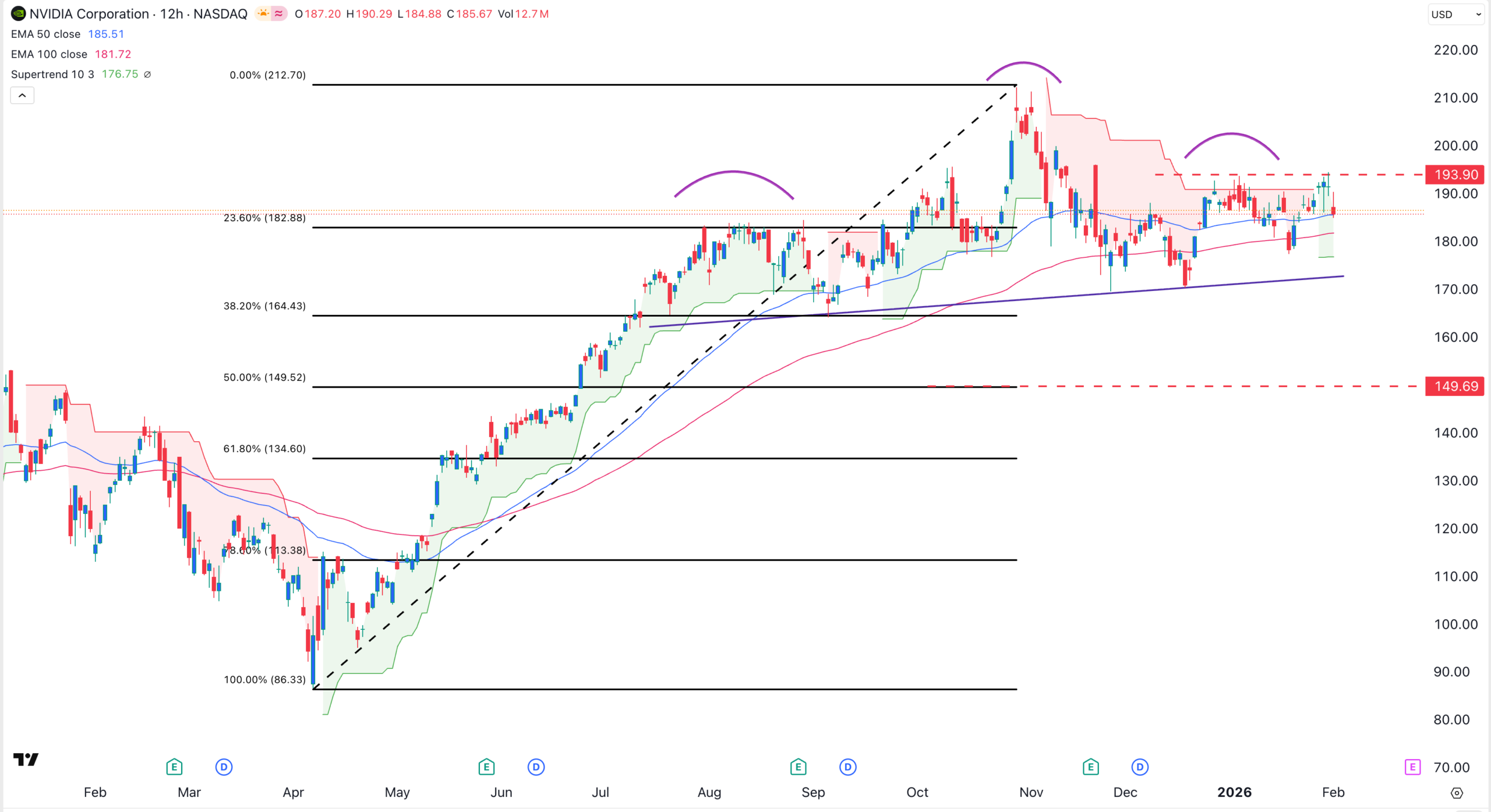
NVIDIA Stock Price Analysis as OpenAI Issues Concerns About its Chips

Key Insights NVIDIA stock started the week in the red. It crashed by over 2%. Meanwhile, the S&P 500, Dow Jones, and Nasdaq 100 moved close to their all-time highs
Share
Themarketperiodical2026/02/04 11:27
Ondo Finance Launches USDY Yieldcoin on Stellar, Bringing Tokenized U.S. Treasuries to Users

Ondo Finance Launches USDY Yieldcoin on Stellar, Bringing Tokenized U.S. Treasuries to Users

Ondo Finance, a U.S.-based digital asset firm specializing in bringing traditional financial products on-chain through tokenization, is expanding its yieldcoin USDY to the Stellar network. This lates update marks a step forward in merging tokenized real-world assets with a global payments infrastructure, unlocking new opportunities for users worldwide. The announcement was made at the Stellar Meridian event in Copacabana, Rio de Janeiro, on September 17. USDY Joins the Stellar Ecosystem Ondo Finance, a recognized leader in tokenized real-world assets, announced the deployment of United States Dollar Yield (USDY) on Stellar, the payments-focused blockchain known for speed and low transaction costs. USDY is the most widely available “yieldcoin,” offering investors access to onchain assets backed by U.S. Treasuries. This launch allows Stellar’s global user base to tap into permissionless, yield-bearing assets tied to one of the safest financial instruments in the world. It also aligns with Stellar’s mission of driving fast, affordable cross-border payments. Combining Yield with Payments Infrastructure “Stablecoins unlocked global access to the U.S. dollar. With USDY, we’re taking the next step by bringing U.S. Treasuries onchain in a form that combines stability, liquidity, and yield,” said Ian De Bode, Chief Strategy Officer at Ondo Finance. “Fast, affordable cross-border payments are at the center of what Stellar was designed to do. The global reach of the Stellar ecosystem combined with a yield-bearing asset like USDY levels up what is possible onchain, allowing wallets and businesses to offer yield opportunities to their users,” said Denelle Dixon, CEO of the Stellar Development Foundation. Ondo claims by pairing USDY with Stellar’s infrastructure, new possibilities open up in treasury management, collateralization, and everyday financial applications. Unlocking Institutional and Retail Use Cases USDY currently manages over $650 million in total value locked (TVL) across nine blockchains and offers a 5.3% APY. By launching on Stellar, Ondo Finance extends these benefits to global retail and institutional users. The firm explains balances on Stellar can now become productive, supporting use cases such as onchain savings, institutional treasury strategies, cost-efficient collateral for DeFi protocols, and remittance flows that carry yield rather than remaining static. A Milestone for Tokenized Treasuries With the integration of USDY, Stellar users gain more than just access to stable-value assets—they gain access to institutional-grade yield. For investors outside the U.S., the launch represents a new way to combine the safety of Treasuries with the accessibility of blockchain technology. As tokenization accelerates globally, Ondo Finance’s decision to deploy USDY on Stellar reinforces the narrative that blockchain is not just about speculation, but about reimagining the global financial system through secure, yield-bearing digital assets
Share
CryptoNews2025/09/18 00:46
