

Trump Kharg Island Airstrike: Unprecedented US Military Operation Shakes Middle East Security
BitcoinWorld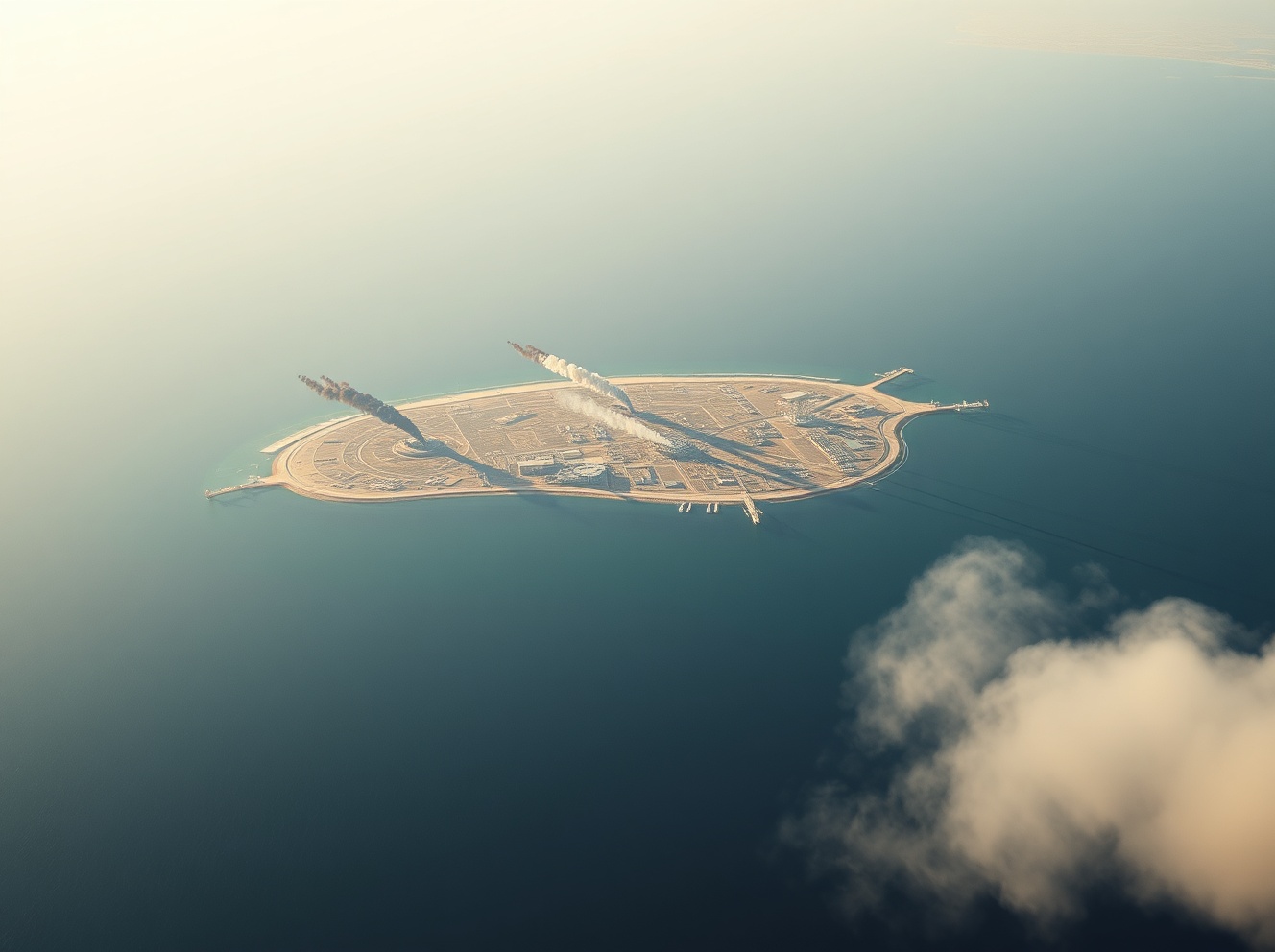
Trump Kharg Island Airstrike: Unprecedented US Military Operation Shakes Middle East Security
WASHINGTON, D.C. – In a dramatic escalation of Middle Eastern tensions, former President Donald Trump announced via Truth Social that U.S. Central Command executed his orders to destroy all military targets on Iran’s strategic Kharg Island. This operation represents what Trump described as the most powerful large-scale airstrike in regional history, fundamentally altering security dynamics in the Persian Gulf.
Trump Kharg Island Airstrike: Strategic Military Operation
U.S. Central Command reportedly conducted precision strikes against Iranian military installations on Kharg Island. Consequently, this operation targeted anti-aircraft missile bases and defense systems. The island serves as Iran’s primary crude oil export terminal, handling approximately 90% of the nation’s petroleum shipments. Therefore, military planners carefully avoided damaging oil infrastructure during the operation.
Strategic analysts immediately noted several critical aspects of this development:
- Geographic Significance: Kharg Island sits 25 kilometers off Iran’s coast in the Persian Gulf
- Economic Importance: The facility processes over 3 million barrels of oil daily
- Military Value: Iranian forces positioned air defense systems to protect vital economic assets
- Navigation Control: The island overlooks shipping lanes through the Strait of Hormuz
Historical Context of Persian Gulf Tensions
Regional conflicts have simmered for decades in the Persian Gulf. Previously, Iran established military presence on Kharg Island following the 1980-1988 Iran-Iraq War. During that conflict, both nations targeted oil infrastructure extensively. Furthermore, recent years witnessed multiple incidents involving commercial shipping and military vessels in nearby waters.
The following timeline illustrates key events leading to current tensions:
| Date | Event | Significance |
|---|---|---|
| 2019 | Attacks on oil tankers near Strait of Hormuz | Heightened regional security concerns |
| 2020 | U.S. drone strike kills Iranian General Qasem Soleimani | Major escalation in U.S.-Iran relations |
| 2023 | Iran accelerates uranium enrichment activities | Increased nuclear program tensions |
| 2024 | Multiple incidents involving Iranian speedboats and U.S. Navy | Growing naval confrontations |
Expert Analysis of Military Implications
Military strategists emphasize the operation’s technical complexity. Specifically, neutralizing integrated air defense systems requires sophisticated electronic warfare capabilities. Modern U.S. aircraft likely employed advanced stealth technology and precision-guided munitions. Additionally, satellite intelligence probably provided real-time targeting data throughout the mission.
Regional security experts highlight several immediate consequences:
- Iranian Response: Tehran faces limited military options against superior U.S. capabilities
- Oil Markets: Global petroleum prices may experience volatility despite intact infrastructure
- Alliance Dynamics: Gulf Cooperation Council states must reassess security arrangements
- Navigation Security: Commercial shipping through the Strait requires enhanced protection
Economic and Energy Market Impacts
Global energy markets reacted cautiously to the announcement. Significantly, Trump explicitly stated that oil facilities remained operational. However, insurance premiums for vessels transiting the Persian Gulf may increase substantially. Meanwhile, alternative shipping routes could experience greater traffic as companies assess risk.
The global economy depends heavily on Persian Gulf oil exports:
- Approximately 20% of world petroleum consumption passes through the Strait of Hormuz
- Asian economies import over 65% of their oil from Gulf producers
- European energy security remains vulnerable to regional disruptions
- Strategic petroleum reserves in consuming nations provide limited buffer capacity
International Law and Diplomatic Considerations
Legal experts debate the operation’s compliance with international norms. The United Nations Charter generally prohibits using force against sovereign states. However, nations sometimes invoke self-defense provisions under Article 51. Additionally, the Trump administration previously designated Iran’s Islamic Revolutionary Guard Corps as a terrorist organization.
Diplomatic channels face significant strain following the announcement. Several key developments merit attention:
- European powers previously attempted to revive the Joint Comprehensive Plan of Action
- Regional powers like Saudi Arabia and Israel maintain complex relationships with both nations
- China and Russia typically support Iranian positions in international forums
- The United Nations Security Council may convene emergency sessions
Technological and Military Capability Assessment
Modern warfare increasingly relies on technological superiority. The United States maintains overwhelming advantage in several key areas. Specifically, fifth-generation fighter aircraft, drone surveillance systems, and cyber capabilities provide distinct operational edges. Conversely, Iran developed asymmetric warfare tactics including speedboat swarms and missile systems.
Military analysts identify several capability disparities:
| Capability Area | United States Advantage | Iranian Response Options |
|---|---|---|
| Air Superiority | Overwhelming with stealth aircraft | Limited to ground-based air defense |
| Naval Power | Carrier strike groups in region | Asymmetric tactics and coastal missiles |
| Intelligence | Satellite and signals intelligence | Human intelligence and regional proxies |
| Cyber Warfare | Offensive and defensive capabilities | Disruptive attacks on infrastructure |
Conclusion
The Trump Kharg Island airstrike represents a pivotal moment in Middle Eastern security dynamics. This operation demonstrates continued U.S. military dominance while highlighting persistent regional tensions. Furthermore, the decision to spare oil infrastructure indicates calculated restraint amid significant escalation. Global markets and diplomatic channels now face complex challenges as nations assess implications. Ultimately, the incident underscores the delicate balance between military action and economic stability in strategically vital regions.
FAQs
Q1: What is Kharg Island’s strategic importance?
Kharg Island serves as Iran’s primary oil export terminal, handling most petroleum shipments through vulnerable Persian Gulf shipping lanes. Its location provides military control over nearby waters.
Q2: Why did the operation target military installations but spare oil infrastructure?
Military planners sought to degrade Iranian defensive capabilities while minimizing global economic disruption. Oil market stability remains crucial for worldwide energy security.
Q3: How might Iran respond to these airstrikes?
Iran possesses limited conventional military options against U.S. forces. Potential responses include asymmetric tactics, proxy actions, cyber operations, or diplomatic initiatives through international organizations.
Q4: What are the implications for global oil prices?
Prices may experience short-term volatility despite intact infrastructure. However, insurance costs and risk premiums for Persian Gulf shipping could increase substantially, affecting long-term energy economics.
Q5: How does this operation affect nuclear non-proliferation efforts?
The incident complicates diplomatic engagement on Iran’s nuclear program. Trump explicitly stated Iran would never obtain nuclear weapons, suggesting continued pressure through military and economic means.
This post Trump Kharg Island Airstrike: Unprecedented US Military Operation Shakes Middle East Security first appeared on BitcoinWorld.
You May Also Like

IP Hits $11.75, HYPE Climbs to $55, BlockDAG Surpasses Both with $407M Presale Surge!
Prediction markets price rising Trump impeachment risks amid Iran conflict. What it signals for 2026 economic uncertainty?
