

Gold Price Stagnates as Central Bank Decisions and Inflation Risks Create Market Uncertainty

BitcoinWorld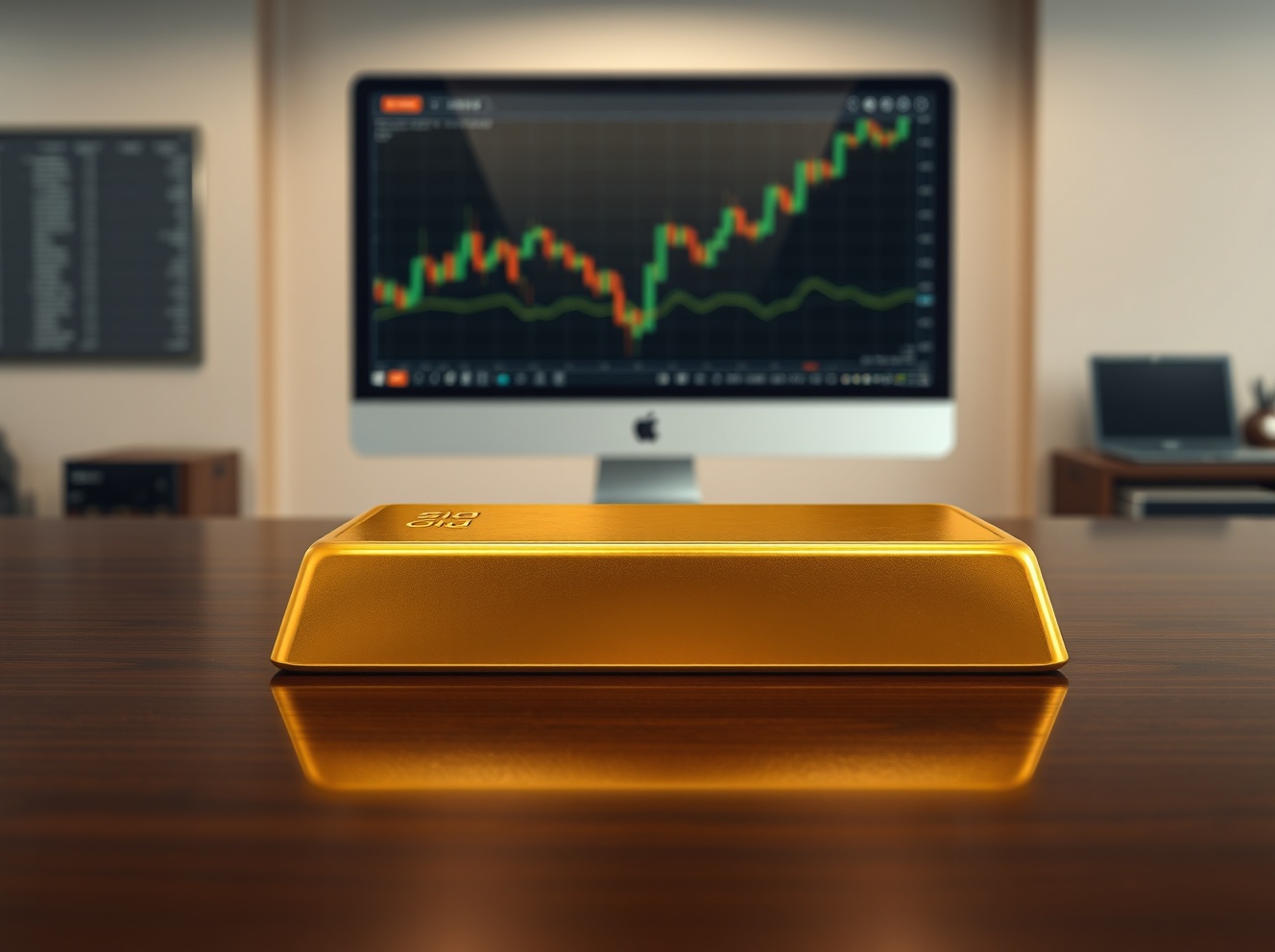
Gold Price Stagnates as Central Bank Decisions and Inflation Risks Create Market Uncertainty
Gold prices remained remarkably stable during early 2025 trading sessions, hovering near $2,150 per ounce as conflicting economic forces created market equilibrium. The precious metal’s unusual flat trading pattern reflects competing pressures from global central bank policy shifts and persistent inflation concerns. Market analysts observe this stability with particular interest, noting how gold typically responds to monetary policy announcements with greater volatility. Consequently, this current period of price consolidation suggests deeper market uncertainty about future economic directions.
Gold Price Stability Amid Central Bank Policy Shifts
The Federal Reserve’s recent policy statement created immediate market reactions across multiple asset classes. However, gold demonstrated surprising resilience against typical volatility triggers. The Federal Open Market Committee maintained its current interest rate framework while signaling potential adjustments later in 2025. This cautious approach reflects ongoing concerns about inflation persistence despite recent cooling measures. Meanwhile, the European Central Bank faces similar policy dilemmas with different regional economic conditions. Their upcoming decisions will significantly influence global capital flows toward safe-haven assets like gold.
Asian central banks present another crucial factor in gold market dynamics. The People’s Bank of China continues its strategic gold accumulation program, adding approximately 12 tons to reserves during the last reporting period. This consistent purchasing provides underlying support for gold prices despite apparent market stagnation. Furthermore, other emerging market central banks maintain similar diversification strategies away from traditional reserve currencies. These institutional buyers create a price floor that prevents significant downward movements even during periods of apparent market disinterest.
Global Inflation Risks and Their Impact on Precious Metals
Recent inflation data from major economies reveals persistent underlying pressures despite headline improvements. The United States Consumer Price Index showed modest deceleration in core categories, but service sector inflation remains stubbornly elevated. This creates complex challenges for monetary policymakers attempting to balance growth and stability objectives. Gold historically performs well during periods of sustained inflation, particularly when real interest rates remain negative or low. Current conditions suggest this relationship continues influencing investor behavior, though with less intensity than during previous inflationary spikes.
Energy price volatility adds another dimension to inflation concerns and gold market calculations. Geopolitical tensions in key production regions create uncertainty about future energy costs. Since energy represents a significant component of production and transportation expenses, these fluctuations eventually translate into broader price pressures. Gold often serves as a hedge against such unpredictable cost increases, though the relationship isn’t always immediate or linear. Market participants currently weigh these factors against potential economic slowdown scenarios that could reduce inflation naturally.
Expert Analysis of Current Market Conditions
Financial institutions provide valuable insights through their regular market commentary and research publications. According to recent analysis from major investment banks, gold’s current price stability reflects sophisticated market positioning rather than simple disinterest. Institutional investors maintain significant gold allocations within diversified portfolios, viewing the metal as strategic insurance against multiple risk scenarios. These positions create market inertia that dampens price movements during normal trading conditions. However, analysts note that this stability could evaporate quickly with unexpected economic developments or policy surprises.
Historical comparisons offer useful context for understanding current market behavior. During similar periods of policy uncertainty in previous decades, gold frequently exhibited comparable consolidation patterns before significant directional moves. The duration of these consolidation phases varied considerably based on external economic developments. Current technical analysis suggests gold remains within a well-defined trading range, with support around $2,100 and resistance near $2,200. Breakouts from this range typically require substantial catalyst events or sustained shifts in market sentiment.
Comparative Analysis of Precious Metals Performance
Other precious metals demonstrate different responses to current economic conditions, providing useful comparison points. Silver shows greater volatility due to its dual role as monetary metal and industrial commodity. Platinum and palladium face additional pressures from automotive industry transitions toward electric vehicles. The following table illustrates recent performance differences:
| Metal | Price Change (30 Days) | Primary Market Driver |
|---|---|---|
| Gold | +0.8% | Central bank policies |
| Silver | -2.1% | Industrial demand concerns |
| Platinum | -3.4% | Automotive sector transition |
| Palladium | -5.2% | Supply improvements |
These performance divergences highlight gold’s unique position within the precious metals complex. Unlike its counterparts, gold maintains stronger monetary characteristics with less dependence on industrial applications. This distinction becomes particularly important during periods of manufacturing slowdown or technological transition. Consequently, gold often demonstrates relative strength when other metals face specific sector challenges.
Monetary Policy Divergence and Currency Impacts
Currency market movements significantly influence gold pricing for international investors. The U.S. dollar index shows moderate strength against major currency pairs, creating headwinds for dollar-denominated gold prices. However, this relationship has shown unusual decoupling in recent months. Typically, dollar strength corresponds with gold weakness as the metal becomes more expensive for non-dollar holders. The current deviation suggests other factors outweigh normal currency dynamics, including:
- Geopolitical reserve diversification: Central banks reducing dollar exposure
- Inflation hedging demand: Real asset protection needs
- Technical positioning: Institutional portfolio rebalancing
- Market sentiment shifts: Changing risk perceptions
Japanese monetary policy creates additional complexity for global currency relationships. The Bank of Japan maintains ultra-accommodative policies despite inflation exceeding targets. This policy divergence with other major central banks affects yen valuation and, consequently, gold pricing in Asian markets. Since Japan represents a significant gold-consuming region, these dynamics influence global supply-demand calculations.
Supply Chain Considerations for Physical Gold
Physical gold markets operate with different dynamics than paper or derivative markets. Mine production shows modest increases from primary producing regions, though significant new discoveries remain limited. Recycling activity increases during periods of price strength, adding to available supply. However, transportation and refining logistics face ongoing challenges from geopolitical tensions and regulatory changes. These physical market factors create subtle influences on overall price discovery mechanisms.
Investment product flows provide another important market indicator. Exchange-traded funds tracking gold prices show mixed activity, with some regions experiencing outflows while others see renewed interest. This regional variation reflects different economic conditions and investor preferences across markets. Physical bar and coin demand remains robust among retail investors, particularly in markets with currency volatility or capital control concerns. These diverse demand sources contribute to gold’s current price stability despite apparent contradictory signals.
Conclusion
Gold price action during early 2025 reflects sophisticated market equilibrium between competing economic forces. Central bank decisions create policy uncertainty while inflation risks maintain hedging demand. The precious metal’s unusual stability suggests markets await clearer directional signals before committing to significant positions. However, underlying support from institutional buyers and strategic reserve managers prevents substantial declines. Consequently, gold remains positioned as a crucial portfolio component despite its current flat trading pattern. Future price movements will likely depend on inflation trajectory clarity and monetary policy resolution across major economies.
FAQs
Q1: Why is gold trading flat despite economic uncertainty?
Gold exhibits price stability due to offsetting market forces. Central bank policy uncertainty creates selling pressure while inflation concerns generate buying interest. These competing factors currently balance each other, resulting in limited price movement.
Q2: How do central bank decisions affect gold prices?
Central bank policies influence gold through multiple channels. Interest rate changes affect opportunity costs of holding non-yielding assets. Currency policies impact dollar valuation and gold’s international pricing. Reserve management decisions directly affect physical demand from institutional buyers.
Q3: What inflation indicators most impact gold markets?
Core inflation measures excluding volatile components provide the clearest signals. Service sector inflation persistence particularly concerns policymakers. Real interest rates (nominal rates minus inflation) represent the most direct relationship with gold valuation.
Q4: How does gold performance compare to other inflation hedges?
Gold demonstrates different characteristics than alternative inflation hedges. Unlike Treasury Inflation-Protected Securities (TIPS), gold carries no credit risk. Compared to real estate or commodities, gold offers greater liquidity and storage convenience despite lacking income generation.
Q5: What could break gold out of its current trading range?
Substantial catalyst events typically trigger range breakouts. Unexpected inflation spikes, major policy surprises, or significant geopolitical developments could provide necessary momentum. Sustained movements in either direction require confirmation through trading volume increases and technical pattern completion.
This post Gold Price Stagnates as Central Bank Decisions and Inflation Risks Create Market Uncertainty first appeared on BitcoinWorld.
You May Also Like

Bitcoin ETFs Surge with 20,685 BTC Inflows, Marking Strongest Week

Steel Dynamics (STLD) Stock Dips Following Disappointing Q1 Earnings Forecast

