Dapp

Dapps are digital applications that run on a P2P network of computers rather than a single server, typically utilizing smart contracts to ensure transparency and uptime. In 2026, Dapps have achieved mass-market appeal through Account Abstraction, allowing for a "Web2-like" user experience with the security of Web3. This tag covers the entire ecosystem of decentralized software—from social media and productivity tools to governance platforms and identity management.

5027 Articles
Created: 2026/02/02 18:52
Updated: 2026/02/02 18:52
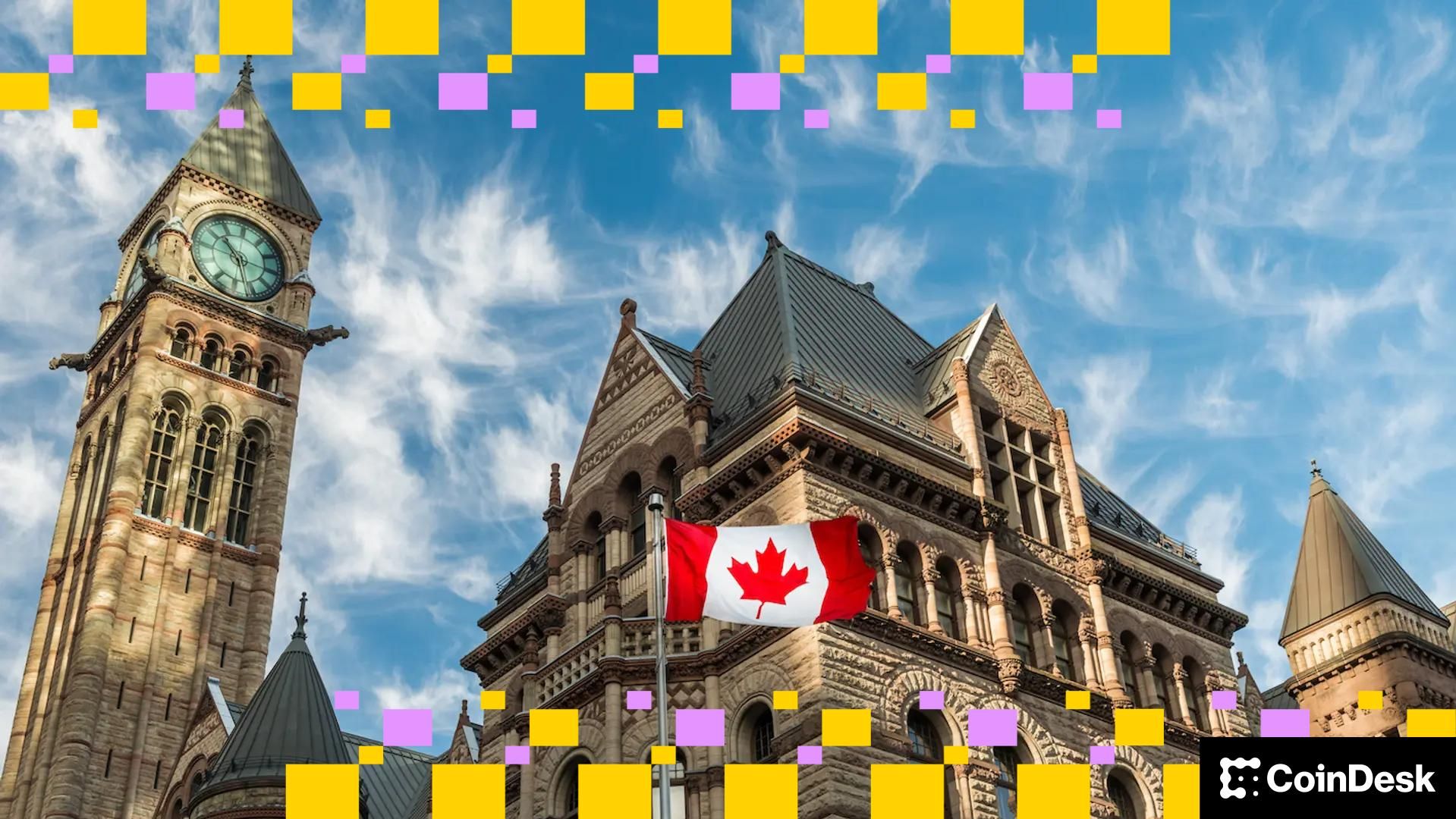
40% of Canadian Crypto Users Flagged for Tax Evasion Risk, Canadian Tax Authority Reveals

40% of Canadian Crypto Users Flagged for Tax Evasion Risk, Canadian Tax Authority Reveals

Policy Partager Partager cet article

Copier le lienX (Twitter)LinkedInFacebookEmail
40% of Canadian Crypto Us

Author: Coindesk
Sonami Introduces Solana’s First Layer 2 Token To Boost Network Stability And Eliminate Congestion

Sonami Introduces Solana’s First Layer 2 Token To Boost Network Stability And Eliminate Congestion

The post Sonami Introduces Solana’s First Layer 2 Token To Boost Network Stability And Eliminate Congestion appeared on BitcoinEthereumNews.com. Advertisement &nbsp &nbsp Disclaimer: The below article is sponsored, and the views in it do not represent those of ZyCrypto. Readers should conduct independent research before taking any actions related to the project mentioned in this piece. This article should not be regarded as investment advice. In a major leap forward for Solana’s scalability, Sonami ($SNMI) has launched the blockchain’s first Layer 2 token, introducing a next-generation transaction bundling system designed to keep the network lightning-fast even during explosive surges in user activity.  The debut marks a significant upgrade for one of the world’s most performance-driven blockchains, positioning Sonami as the key infrastructure layer that will safeguard Solana’s speed as mainstream adoption accelerates.  Although Solana is known for its high transaction capacity, the network occasionally faces slowdowns when user activity spikes — such as during NFT launches, rapid trading cycles, or sudden meme-coin rallies. These moments draw massive participation but can temporarily strain the system, creating backlogs that frustrate users and limit dApp performance. Sonami proposes a long-term solution based on a Layer 2 architecture centered on transaction bundling. Instead of processing interactions individually, Sonami’s system aggregates multiple user actions into a single, streamlined transaction before routing it to Solana’s base layer. This design reduces pressure on Layer 1, keeping the network responsive even during periods of exceptional demand. Commenting on the project, Zakit Mobad, founder of Sonami Foundation, stated:  Advertisement &nbsp “The expectation in Web3 is quickly shifting from ‘fast most of the time’ to ‘fast all the time. Sonami is committed to being the performance multiplier that unlocks Solana’s full potential. By integrating a Layer 2 solution, we ensure developers can build more ambitious real-time apps and users can enjoy a seamless experience, even during periods of high market volatility.” Strengthening Solana for High-Speed Applications The…

Author: BitcoinEthereumNews
Will the Price Hold Above the $124 Support Level?

Will the Price Hold Above the $124 Support Level?

The post Will the Price Hold Above the $124 Support Level? appeared on BitcoinEthereumNews.com. Key Insights: Solana struggles near $135 support, risking a drop to $124 and $115 if breached. DApps on Solana generated over $17M in revenue, showcasing blockchain activity amid volatility. Bollinger Bands indicate high volatility, with traders focused on Solana’s ability to hold critical support. Solana Potential Drop: Will the Price Hold Above the $124 Support Level? As of the time of writing, Solana is testing the $135 support zone, with a 24-hour trading volume of over $5.17 billion. The cryptocurrency is up 6.21% in the last 24 hours, but market watchers remain cautious. As $SOL hovers near the lower band of the Bollinger Bands (BB) indicator, the market appears to be in a phase of heightened volatility. Technical Indicators Show Increased Market Volatility Solana has seen a notable decline from its peak of $245 in recent months. The price is now approaching the critical support zone of $135, which traders are watching closely. The Bollinger Bands have been widening, signaling increased volatility and uncertainty. Analysts are particularly focused on whether Token can maintain support around $135. The 20-day simple moving average (SMA) currently sits below the price, which suggests that the overall market sentiment is cautious. Source: TradingView  Despite this, the price’s resilience in staying above the lower band has kept traders hopeful for a potential rebound. Analyst Ali pointed out that if SOL can hold the $135 support zone, it could avoid a steeper decline. If it fails, the price could face further downward pressure toward key support levels, including the $124 and $115 areas. Solana DApp Performance and Volatility Meanwhile, the ecosystem shows strong activity in its decentralized applications (DApps). Over the past week, DApps have generated over $17 million in revenue. Among the top performers, Pumpfun has led with over $9.80 million in earnings, while Axiom generated…

Author: BitcoinEthereumNews
4 Tokens to Watch If a Pro-Crypto Fed Chair Arrives – Digitap ($TAP) Tops Best Crypto Presale Lists

4 Tokens to Watch If a Pro-Crypto Fed Chair Arrives – Digitap ($TAP) Tops Best Crypto Presale Lists

The post 4 Tokens to Watch If a Pro-Crypto Fed Chair Arrives – Digitap ($TAP) Tops Best Crypto Presale Lists appeared on BitcoinEthereumNews.com. Crypto Projects Discover 4 tokens to watch if a pro-crypto Fed Chair takes office, with Digitap ($TAP) leading the best crypto presale lists for substantial 2026 returns. A pro-crypto Fed Chair could improve the way digital assets interact with traditional finance, creating new opportunities for innovative projects. Platforms like DeepSnitch AI and Bitcoin Hyper are pushing the boundaries with automated trading and Layer 2 solutions, while LivLive gamifies real-world experiences. On the other hand, Digitap ($TAP) offers a fully functional omnibank that merges fiat and crypto. It enables instant cross-asset payments, Visa card spending, and multi-currency account management. With its rapidly growing ecosystem and utility-driven token, $TAP could potentially be the best crypto to buy now for 2026. Here are 4 promising tokens to watch if a pro-crypto Fed Chair arrives: Digitap ($TAP): An omnibank bridging fiat and crypto with seamless cross-asset payments. DeepSnitch AI ($DSNT): Autonomous agents for trading, portfolio rebalancing, and sentiment tracking. Bitcoin Hyper ($HYPER): Bitcoin Layer 2 rollup enabling dApps, NFTs, and DeFi with fast, low-cost transactions. LivLive ($LIV): Gamified “live-to-earn” platform rewarding real-world activity on-chain. Digitap: Fostering Seamless Cross-Asset Management Digitap is a next-gen financial ecosystem merging traditional banking with blockchain technology. It offers a seamless experience for both fiat and cryptocurrency users, enabling instant, secure, and compliant cross-asset transactions. With its multi-rail architecture, Digitap integrates on-chain crypto transfers across major blockchains like Ethereum and Bitcoin, alongside off-chain fiat payment systems like SWIFT and ACH. This makes it easy for users to manage multi-currency personal and business accounts, pay globally, and access advanced privacy and security features. The platform’s AI-enhanced currency routing and multi-asset management tools provide a frictionless global payments experience, ensuring cost-efficiency, speed, and compliance. As a result, several crypto enthusiasts believe that Digitap could potentially be one of the best crypto presales…

Author: BitcoinEthereumNews
Is BlockchainFX Beating Hedera and Tron? Analysts Reveal the Best Crypto to Buy 2025 for Maximum Upside

Is BlockchainFX Beating Hedera and Tron? Analysts Reveal the Best Crypto to Buy 2025 for Maximum Upside

Is BlockchainFX outperforming Hedera and Tron? Analysts explain why its $11.9M presale and trading platform make it the best crypto to buy in 2025.

Author: Blockchainreporter
Ethereum Daily Fees Plunge to a 6-Year Low: What’s Behind the Stunning Drop?

Ethereum Daily Fees Plunge to a 6-Year Low: What’s Behind the Stunning Drop?

BitcoinWorld Ethereum Daily Fees Plunge to a 6-Year Low: What’s Behind the Stunning Drop? In a surprising turn of events, the cost of using the Ethereum network has quietly retreated to levels not seen for over half a decade. According to on-chain data from Glassnode, the 90-day simple moving average of Ethereum daily fees has dipped below 300 ETH, marking the most affordable period since July 2017. This dramatic […] This post Ethereum Daily Fees Plunge to a 6-Year Low: What’s Behind the Stunning Drop? first appeared on BitcoinWorld.

Author: bitcoinworld
Ozak AI Could Surpass $5 Billion Market Cap if Phase 7 Continues Strong, Turning Small $0.014 Investments Into Massive Gains by 2027

Ozak AI Could Surpass $5 Billion Market Cap if Phase 7 Continues Strong, Turning Small $0.014 Investments Into Massive Gains by 2027

The post Ozak AI Could Surpass $5 Billion Market Cap if Phase 7 Continues Strong, Turning Small $0.014 Investments Into Massive Gains by 2027 appeared first on Coinpedia Fintech News The Ozak AI presale entered Phase 7 this week with exceptional acceleration, as investors continued flooding into the project at its current token price of $0.014. According to the latest presale dashboard, the platform has already sold 1,035,842,173.47 $OZ tokens, bringing the total raised to an impressive $4,901,828.35. With the next phase approaching and a …

Author: CoinPedia
Cwallet Integrates Kava to Expand Global Web3 Access and Strengthen Cross-Chain Financial Services

Cwallet Integrates Kava to Expand Global Web3 Access and Strengthen Cross-Chain Financial Services

With Kava integrated in, Cwallet allows seamless trading and transfers, increased cross-chain access, and unlocks new Web3 financial tools to users worldwide.

Author: Blockchainreporter
Web3 scaling demands P2P clearing, not bigger blockchains

Web3 scaling demands P2P clearing, not bigger blockchains

The post Web3 scaling demands P2P clearing, not bigger blockchains appeared on BitcoinEthereumNews.com. Disclosure: The views and opinions expressed here belong solely to the author and do not represent the views and opinions of crypto.news’ editorial. There is a common misconception in the current narrative on web3 scaling that mass adoption requires faster, bigger, and more powerful blockchains. Every cycle, a new generation of chains emerges, promising millions of transactions per second and near-zero fees.  Summary Chasing massive TPS mirrors the failed 1980s single-core “faster clock” mindset; blockchains were built for final settlement, not high-frequency clearing, making monolithic L1/L2 designs fundamentally misaligned with real-world usage. Gas fees create psychological and economic friction; liquidity is fragmented across chains, fueling $2B+ in 2025 bridge exploits; and developers are forced to handle cross-chain complexity that degrades UX and slows innovation. Off-chain, trustless L3 clearing layers — akin to banking’s TrustFi model — enable gasless user interactions, unified liquidity without risky bridges, and parallelized scaling through specialization rather than brute-force blockspace. In the history of computing, one million instructions per second (1 MIPS) was achieved by supercomputers in 1964, minicomputers in 1977, and by 1984, the average Intel home processor had caught up, pushing around 1-3 MIPS. Today, modern computing operates in Teraflops (trillions of operations), and with supercomputers, we are experiencing Peta or Exaflops (quadrillions and quintilions of operations), all while blockchains still continue to discuss millions in TPS, from a bygone era. This emphasis on throughput is a technological dead end, eerily similar to a fundamental mistake made in the early days of computing — the 1984 Processor Problem. L1 blockchains bring back the 1984 problem In the 1980s, computer engineers were obsessed with increasing the clock speed of single-core processors. The belief was that a faster clock led to a faster computer. They pushed the physical limits of silicon until they hit a technological…

Author: BitcoinEthereumNews
How to Fix 401 Unauthorized Errors in Dockerized Azure Functions

How to Fix 401 Unauthorized Errors in Dockerized Azure Functions

Dockerized Azure Functions often fail with 401 errors because the container cannot access file-based secret storage. The fix is to switch to blob-based secret storage, keep the container stateless, and let Azure handle key decryption. This restores authentication without breaking your build.

Author: Hackernoon