Dapp

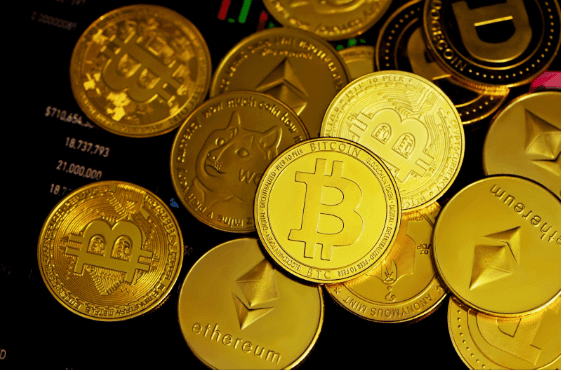
Dapps are digital applications that run on a P2P network of computers rather than a single server, typically utilizing smart contracts to ensure transparency and uptime. In 2026, Dapps have achieved mass-market appeal through Account Abstraction, allowing for a "Web2-like" user experience with the security of Web3. This tag covers the entire ecosystem of decentralized software—from social media and productivity tools to governance platforms and identity management.

5017 Articles
Created: 2026/02/02 18:52
Updated: 2026/02/02 18:52
Cardano’s Biggest Governance Vote Arrives After Network Scare

Cardano’s Biggest Governance Vote Arrives After Network Scare

The post Cardano’s Biggest Governance Vote Arrives After Network Scare appeared on BitcoinEthereumNews.com. Cardano’s key founding entities have proposed a 70 million ADA governance budget, seeking approval from the network’s treasury to fund major infrastructure integrations as the blockchain rebounds from a recent chain split. This proposal comes at an important juncture for the Cardano ecosystem. The network recently demonstrated resilience after resolving a disruption caused by an AI-generated malformed transaction earlier this month. Sponsored Sponsored Critical Infrastructure Funding Targets 2026 Ecosystem Expansion The Cardano Critical Integrations Budget proposal unites Input Output, EMURGO, Cardano Foundation, Intersect, and the Midnight Foundation. Their goal is to address gaps that limit Cardano’s scaling. The 70 million ADA allocation would support tier-one stablecoin integrations, institutional-grade digital asset custody, cross-chain bridges, pricing oracles, and on-chain analytics platforms. These integrations are designed to enhance Cardano’s DeFi ecosystem, attract institutional investors, and drive real-world asset tokenization. While discussions have occurred with integration partners, the proposal’s advancement depends on community approval through Cardano’s governance system. Intersect will administer the initiative, ensuring transparency and accountability. Approval is required from both Delegated Representatives (DReps) and the Constitutional Committee, crucial components of Cardano’s decentralized governance. According to documentation, Cardano’s treasury holds about 1.7 billion ADA and receives approximately 25.92 million ADA monthly through protocol mechanisms. Community members are scrutinizing the proposal’s actual cost. Some suggest the total expense could surpass the requested sum by a wide margin. Given all the different numbers that I’ve seen floated around, I personally suspect that in-all this roster of superpowers will cost way more, maybe double or triple what is being asked for. I assume that means that the founding entities have some agreement to cover the rest of… https://t.co/XY8CN63Sa2 — Quantumplation | Pi Lanningham (@Quantumplation) November 27, 2025 The post also speculated that founding entities might cover extra costs out of pocket, a detail that voters should…

Author: BitcoinEthereumNews
Tom Lee $100K Bitcoin Prediction Wakes Sleeping Whales for Bitcoin Hyper

Tom Lee $100K Bitcoin Prediction Wakes Sleeping Whales for Bitcoin Hyper

What to Know: Tom Lee’s $100K Bitcoin target reinforces the idea that this cycle still has upside, pushing traders toward higher-beta plays beyond BTC itself. Bitcoin’s core limitations (slow throughput, variable fees, and no native smart contract) are driving intense interest in Layer 2 designs that unlock scalable, programmable $BTC liquidity. Competing Bitcoin L2 approaches now range from EVM sidechains to rollups and SVM-based execution layers, each trying to capture the next wave of $BTC-driven on-chain activity. Bitcoin Hyper introduces an SVM-powered Bitcoin Layer 2 with extremely low-latency execution and $BTC-settled smart contracts, targeting DeFi, payments, and gaming use cases. When Fundstrat’s Tom Lee publicly floats a $100K Bitcoin target before year end, it doesn’t just light a fire under $BTC. It revives the idea that this cycle still has serious upside left, and that the most aggressive upside often comes from narrative-driven plays orbiting Bitcoin rather than $BTC itself. If you’ve traded previous bull markets, you’ve seen this movie before. As soon as big-name analysts turn openly bullish, attention turns from Bitcoin into higher-beta sectors. This includes leverage products, Bitcoin Layer 2s, and infrastructure tokens that can outperform if $BTC actually makes that leg higher. That’s where Bitcoin Hyper ($HYPER) starts to make more sense on trader watchlists. Instead of being ‘just another alt,’ it’s pitched as a direct way to amplify a renewed Bitcoin move. How? By unlocking the one thing $BTC has never had at scale: fast, programmable blockspace tied back to Bitcoin’s settlement layer. In that context, Bitcoin Hyper isn’t competing with Bitcoin. It’s monetizing the gap between Bitcoin’s perks (security, brand, liquidity) and trader demands: sub-second execution, low fees, and a place to deploy real DeFi and dApps around $BTC. As more readers dig into Tom Lee’s thesis, expect a growing chunk of them to ask not only ‘Can Bitcoin hit $100K?’ but also ‘What could ride its coattails the hardest if it does?’ That’s the funnel where narrative-heavy infrastructure plays like Bitcoin Hyper tend to live. You can read a dedicated breakdown in our ‘what is Bitcoin Hyper’ guide. Why Bitcoin Layer 2 Narratives Heat Up In Late-Cycle Rallies The structural problem hasn’t changed: Bitcoin settles around 7-10 transactions per second on L1, with variable fees and no native smart contracts. That’s fine for long-term holders. But the building potential is capped without a Layer 2 that handles high-throughput execution. As price targets like Lee’s $100K call re-enter the discourse, that technical ceiling becomes a trading angle. If $BTC does break higher, on-chain activity and speculative demand for ‘Bitcoin-adjacent’ yield, DeFi, and leverage historically spike. Infrastructure that can absorb that flow (Lightning, sidechains, and new L2s) tends to capture outsized attention relative to its actual maturity. You’re already seeing a mini arms race: Bitcoin rollup experiments, EVM sidechains pegged to $BTC, and Solana-style high-throughput designs aimed at Bitcoin liquidity. Bitcoin Hyper slots in as one of those options: a Bitcoin Layer 2 that leans on the Solana Virtual Machine rather than EVM. It tries to offer Solana-like speed while staying anchored to $BTC. For traders, it’s another way to express a view that ‘this time, Bitcoin’s upside should come with usable blockspace.’ Here’s a step-by-step guide to buy $HYPER now. Inside Bitcoin Hyper’s Bet On SVM-Powered Bitcoin Blockspace $HYPER’s architecture is modular: Bitcoin L1 for settlement and finality, and a real-time SVM Layer 2 where high-frequency smart contracts and DeFi logic actually run. The thesis is simple: if you can get Solana-style performance, which includes low-latency transaction processing, sub-second confirmation, and fees closer to fractions of a cent), but with $BTC as the underlying asset and settlement layer, then you potentially unlock a very different flavor of the Bitcoin ecosystem. High-speed payments in wrapped $BTC, AMMs, lending markets, NFT platforms, and gaming dApps can all execute on SVM while periodically anchoring state back to Bitcoin. Technically, Bitcoin Hyper uses a single trusted sequencer with periodic state anchoring to Bitcoin, plus a Decentralized Canonical Bridge for $BTC transfers into the L2. SPL-compatible tokens are modified for this environment, letting Solana-native devs port Rust-based code and tooling into a Bitcoin-centric context with relatively low friction. For builders used to Solana’s SVM, that’s a powerful on-ramp. On the token side, the presale has already raised $28.6M, with tokens currently priced at $0.013345. Smart money is moving as well: one whale bought $500K $HYPER two weeks ago. If you’re betting that Bitcoin’s next leg includes not just higher prices but more sophisticated on-chain activity, Bitcoin Hyper is effectively a leveraged play on that thesis via SVM-powered blockspace. Join the $HYPER presale now for a 40% staking APY. This article is for informational purposes only and does not constitute financial, investment, or trading advice; always do your own research. Authored by Elena Bistreanu, NewsBTC – https://www.newsbtc.com/news/tom-lee-100k-bitcoin-target-puts-bitcoin-hyper-on-watchlists

Author: NewsBTC
Ethereum’s 2026 Scaling Plans May Boost Gas Limit 5x to Bridge Solana Gap

Ethereum’s 2026 Scaling Plans May Boost Gas Limit 5x to Bridge Solana Gap

The post Ethereum’s 2026 Scaling Plans May Boost Gas Limit 5x to Bridge Solana Gap appeared on BitcoinEthereumNews.com. Ethereum scaling plans for 2026 include a targeted 5x increase in the gas limit, as outlined by co-founder Vitalik Buterin. This follows the Fusaka upgrade in December 2025, aiming to boost transaction throughput, lower Layer 2 fees, and enhance network efficiency while managing node demands. Ethereum’s current gas limit stands at 60 million per block, supporting higher transaction volumes without compromising security. The Pectra upgrade in 2025 improved validator efficiency and Layer 2 scalability, setting the stage for further optimizations. Average transaction fees on Ethereum have dropped to about $0.31 in late 2025, narrowing the cost gap with competitors like Solana. Ethereum scaling plans for 2026 promise a 5x gas limit boost to enhance throughput and reduce fees. Discover how these upgrades position Ethereum against rivals like Solana and what it means for users and developers. Stay informed on the latest blockchain advancements. What Are Ethereum’s Scaling Plans for 2026? Ethereum scaling plans for 2026 focus on targeted efficiency improvements, including a potential 5x increase in the gas limit, as shared by Ethereum co-founder Vitalik Buterin in a recent post on X. This initiative builds on the momentum from the 2025 Pectra upgrade and the upcoming Fusaka activation in early December, aiming to process more transactions per block while maintaining network stability. By prioritizing efficient operations, these plans will help lower costs for users on Layer 2 solutions without overwhelming node operators. In an X post, Vitalik Buterin emphasized the need for “targeted growth” in the gas limit to support Ethereum’s evolving ecosystem. For context, the gas limit determines the computational capacity of each block, directly influencing how many transactions can be included. Source: X Increasing the gas limit allows for more operations per block, which translates to higher throughput and reduced fees on Layer 2 networks. However, Buterin noted…

Author: BitcoinEthereumNews
Ethereum Price Action Uncertain As Whales Shift Capital Toward Remittix’s Expanding Ecosystem

Ethereum Price Action Uncertain As Whales Shift Capital Toward Remittix’s Expanding Ecosystem

Ethereum holds key support as whales rotate into Remittix, boosting momentum for its growing PayFi ecosystem and upcoming major listings.

Author: Blockchainreporter
News Flash: Ethereum and TRON Lead Market, Blazpay Phase 4 Emerges Among the Best Crypto Coins to Buy

News Flash: Ethereum and TRON Lead Market, Blazpay Phase 4 Emerges Among the Best Crypto Coins to Buy

The cryptocurrency market continues to see dynamic shifts as investors explore early-stage opportunities alongside established assets. As of late November 2025, Ethereum (ETH) is trading at approximately $2,946.31, while TRON (TRX) holds a price near $0.2745. Both networks remain solid investment options for long-term exposure, offering reliability, liquidity, and strong ecosystem growth. Amid these mature […] The post News Flash: Ethereum and TRON Lead Market, Blazpay Phase 4 Emerges Among the Best Crypto Coins to Buy appeared first on TechBullion.

Author: Techbullion
Only 11 Networks Cross $100K Weekly Threshold

Only 11 Networks Cross $100K Weekly Threshold

The post Only 11 Networks Cross $100K Weekly Threshold appeared on BitcoinEthereumNews.com. Did you know that only a handful of blockchain networks are truly profitable? Recent data reveals a startling truth about blockchain fee revenue – just 11 public chains managed to generate over $100,000 in weekly fees. This exclusive insight comes from crypto analytics firm Nansen, highlighting the concentrated nature of blockchain economic activity. Which Blockchains Dominate Fee Revenue? The blockchain fee revenue landscape shows clear winners and surprising gaps. Among the elite group, six chains stood out by crossing the $1 million mark in weekly fees. This demonstrates how blockchain fee revenue becomes increasingly concentrated among top performers. Let’s examine the top blockchain fee revenue generators: Tron (TRX): $6.16 million Ethereum: $3.87 million Solana: $2.94 million BNB Chain: $2.65 million Bitcoin: $1.78 million Base: $1.13 million Why Does Blockchain Fee Revenue Matter? Blockchain fee revenue serves as a crucial health indicator for any network. It reflects real usage and economic activity rather than speculative interest. When blockchain fee revenue remains consistently high, it signals strong network utility and user adoption. Moreover, sustainable blockchain fee revenue supports network security and development. This revenue funds protocol improvements and ensures long-term viability. Therefore, tracking blockchain fee revenue provides valuable insights into which networks are actually being used versus those merely generating hype. What Challenges Affect Blockchain Fee Revenue? Several factors influence blockchain fee revenue generation. Network congestion, transaction volume, and fee structures all play significant roles. Some networks optimize for low fees to attract users, while others prioritize security through higher fee models. The concentration of blockchain fee revenue among few networks raises important questions about decentralization. However, it also demonstrates market efficiency – users naturally gravitate toward networks providing the best value and utility. Actionable Insights from Blockchain Fee Revenue Data This blockchain fee revenue report offers valuable guidance for investors and…

Author: BitcoinEthereumNews
Surprising Blockchain Fee Revenue: Only 11 Networks Cross $100K Weekly Threshold

Surprising Blockchain Fee Revenue: Only 11 Networks Cross $100K Weekly Threshold

BitcoinWorld Surprising Blockchain Fee Revenue: Only 11 Networks Cross $100K Weekly Threshold Did you know that only a handful of blockchain networks are truly profitable? Recent data reveals a startling truth about blockchain fee revenue – just 11 public chains managed to generate over $100,000 in weekly fees. This exclusive insight comes from crypto analytics firm Nansen, highlighting the concentrated nature of blockchain economic activity. Which Blockchains […] This post Surprising Blockchain Fee Revenue: Only 11 Networks Cross $100K Weekly Threshold first appeared on BitcoinWorld.

Author: bitcoinworld
SKY Price Surges 10% on Buybacks and Staking Boost, Potential Rally to $0.0620

SKY Price Surges 10% on Buybacks and Staking Boost, Potential Rally to $0.0620

The post SKY Price Surges 10% on Buybacks and Staking Boost, Potential Rally to $0.0620 appeared on BitcoinEthereumNews.com. The SKY price has surged over 10% in the last 24 hours, driven by increased buybacks totaling 1.395 billion tokens worth $65.64 million, a 78% rise in daily trading volume to $23.55 million, heightened staking at 35.94% of supply, and a breakout above a key descending trendline, signaling potential recovery toward $0.0620. Buybacks boost: SKY’s token repurchase program has accumulated 1.395 billion tokens valued at $65.64 million since early November, supporting price stability and upward momentum. Staking surge enhances network security, with 35.94% of SKY supply staked, equivalent to $385.48 million in value. Volume increase of 78% to $23.55 million reflects growing market interest, per data from DefiLlama, alongside quarterly fees reaching $26.75 million. Discover why SKY price is rising today amid buybacks and staking growth. Explore key metrics and chart analysis for insights into this crypto recovery. Stay updated on SKY trends now! Why is SKY price up today? The SKY price experienced a notable increase of more than 10% over the past 24 hours, fueled by robust ecosystem developments including token buybacks and elevated trading activity. This rally coincides with SKY regaining a $1 billion market capitalization, as the network sees widespread upgrades and penalty accumulations. Key factors such as a 78% jump in daily volume and significant staking participation have contributed to this positive momentum. How are buybacks and staking influencing SKY price action? Token buybacks for SKY have been on an upward trajectory since early November, reaching a total of 1.395 billion tokens valued at $65.64 million as of the latest updates from SKY Money. This follows the recent addition of 6.21 million tokens to the program, though the pace has moderated slightly, with a recent drop of 2,250 SKY in ongoing transactions averaging around $10,000 each. These buybacks help reduce circulating supply, providing a supportive…

Author: BitcoinEthereumNews
Why SKY crypto’s 10% rally faces test amid $65M buyback wave

Why SKY crypto’s 10% rally faces test amid $65M buyback wave

The post Why SKY crypto’s 10% rally faces test amid $65M buyback wave appeared on BitcoinEthereumNews.com. Key Takeaways What’s driving SKY price action up? SKY price rose from the surge in buybacks, daily trading volume, staking activity, and market structure shifts. Will SKY hold up to the uptrend? If the price stays above the broken trendline, SKY could rally back to the $0.0620 level. Sky [SKY] has potentially started its recovery, regaining the $1 billion market cap. The ecosystem is racking up penalties, with more than 84% upgraded to SKY. This comes with a 10,000 MKR upgrade in the past month, accumulating about $100K in fees. In the past 24 hours, SKY price rallied by more than 10%, driven by volume and the buyback program. The daily volume increased by 78%, indicating more trading activity, according to CoinMarketCap. Why is SKY’s price up today?  According to SKY Money, buybacks have been steadily rising since early November. At press time, the total buybacks stood at 1.395 billion tokens, valued at $65.64 million, following the addition of 6.21 million tokens. However, currently, the buybacks have slowed, dropping by 2,250 SKY despite being only halfway complete. On average, each transaction has been worth about $10,000, based on SKY Money data. Source: SKY Money Furthermore, the altcoin was seeing a surge in staking, which meant increased network security. About 35.94%, equivalent to $385.48 million, of SKY was staked. According to DefiLlama, daily volume rose by $10 million to $23.55 million, an increase of 1.7% from the previous day’s $13.44 million. Source: DefiLlama Additionally, the fees for the fourth quarter were $26.75 million. Nevertheless, this was less than the $45.3 million recorded in the previous quarter. Will TVL hinder price appreciation? SKY broke above a descending trendline on the 4-hour charts and confirmed with a retest. The trendline has been in play for the last two weeks, which indicates seller dominance…

Author: BitcoinEthereumNews
Top 7 Crypto to Invest In Before 2026 – Blazpay, Bitcoin, Ethereum, Solana, Cardano, Avalanche, TRON

Top 7 Crypto to Invest In Before 2026 – Blazpay, Bitcoin, Ethereum, Solana, Cardano, Avalanche, TRON

The cryptocurrency market in November 2025 is experiencing renewed activity, as tokens across DeFi, multichain ecosystems, and presale projects gain traction. Investors are increasingly focused on platforms offering perpetual trading, gamified rewards, and unified services, while early-stage presales provide opportunities for high upside. Among these, Blazpay’s Phase 4 presale has emerged as a standout project, […] The post Top 7 Crypto to Invest In Before 2026 – Blazpay, Bitcoin, Ethereum, Solana, Cardano, Avalanche, TRON appeared first on TechBullion.

Author: Techbullion