DeFi

DeFi eliminates intermediaries by using smart contracts on blockchains to provide financial services like lending, borrowing, and trading. In 2026, the "DeFi 3.0" era is defined by Institutional DeFi and the integration of Real-World Assets (RWA). From liquidity provisioning on Uniswap to advanced lending on Aave, this tag tracks the evolution of autonomous financial systems, yield optimization, and the rise of AI-driven portfolio management in the decentralized economy.

68309 Articles
Created: 2026/02/02 18:52
Updated: 2026/02/02 18:52
Michael Saylor Flips on MSTR Stock Issuance Rules As Strategy Loses Bitcoin Premium

Michael Saylor Flips on MSTR Stock Issuance Rules As Strategy Loses Bitcoin Premium

The post Michael Saylor Flips on MSTR Stock Issuance Rules As Strategy Loses Bitcoin Premium appeared on BitcoinEthereumNews.com. In a month, Strategy executive chairman Michael Saylor has relaxed the company’s financing rule for MSTR stock issuance, for purchasing more Bitcoin. This comes amid the stock underperformance over the past few months, thereby losing the premium over Bitcoin it once enjoyed. As per the latest revision, the company will issue stock under the mNAV of 2.5 to fund its latest BTC purchases. Michael Saylor Eases Strategy Stock Issuance Within three weeks, Michael Saylor is easing the funding limits for MSTR stock issuance to fund his new Bitcoin purchases. In late July, Strategy assured investors it would avoid issuing new shares at a price below 2.5 times the value of its Bitcoin holdings. Saylor dubs it as the “mNAV premium,” which has crashed from 3.4x since November 24, to now at 1.6x. Strategy (NASDAQ: MSTR) shareholders have long argued against the share dilution. However, the management has justified the recent flip by calling it “management flexibility,” as per the Bloomberg report. The change provides Saylor greater flexibility to raise cash and cover expenses as the company’s formerly large premium over its Bitcoin holdings narrows. The recent flip in the stand comes after MicroStrategy purchased Bitcoins, worth $51 million, on Monday, August 18. Over the past few weeks, the pace of BTC purchases has dropped from billions to a few million dollars as MicroStrategy’s market value-to-Bitcoin holdings ratio (mNAV) fell below 2.5x, a bearish signal for the MSTR stock. Acknowledging this shift, Saylor revised his strategy to allow issuing additional MSTR shares even when mNAV is below the 2.5x threshold. This marks a reversal from his earlier stand, of not opting for share dilution.  Brian Dobson, managing director for Disruptive Technology Equity Research at Clear Street said: “I think the additional language in the guidance gives them more leeway with issuing…

Author: BitcoinEthereumNews
Chamath Palihapitiya Launches $250M SPAC Targeting DeFi, AI, and Defense

Chamath Palihapitiya Launches $250M SPAC Targeting DeFi, AI, and Defense

The post Chamath Palihapitiya Launches $250M SPAC Targeting DeFi, AI, and Defense appeared first on Coinpedia Fintech News SPAC King, Chamath Palihapitiya, is back in the blank check game with a $250 million initial public offering for American Exceptionalism Acquisition Corp. A. According to the filing with the US Securities and Exchange Commission (SEC) on Monday, the firm is targeting decentralized finance, AI, energy, and defense.   Palihapitiya Bets on Decentralized Finance Instead of …

Author: CoinPedia
PEPE Made Headlines, Now Traders Are Investors to This DeFi Gem Under $0.04

PEPE Made Headlines, Now Traders Are Investors to This DeFi Gem Under $0.04

The post PEPE Made Headlines, Now Traders Are Investors to This DeFi Gem Under $0.04 appeared first on Coinpedia Fintech News Pepe Coin (PEPE) grabbed global attention with its viral rise, transforming meme power into multimillion-dollar returns. At one point, traders who bought in early saw massive gains in days, and the coin quickly cemented itself as one of the standout meme tokens of the year. But fast-forward to today, and PEPE’s momentum has noticeably cooled. …

Author: CoinPedia
$Hyper Raises $10.2M as Bitcoin Tests New ATHs

$Hyper Raises $10.2M as Bitcoin Tests New ATHs

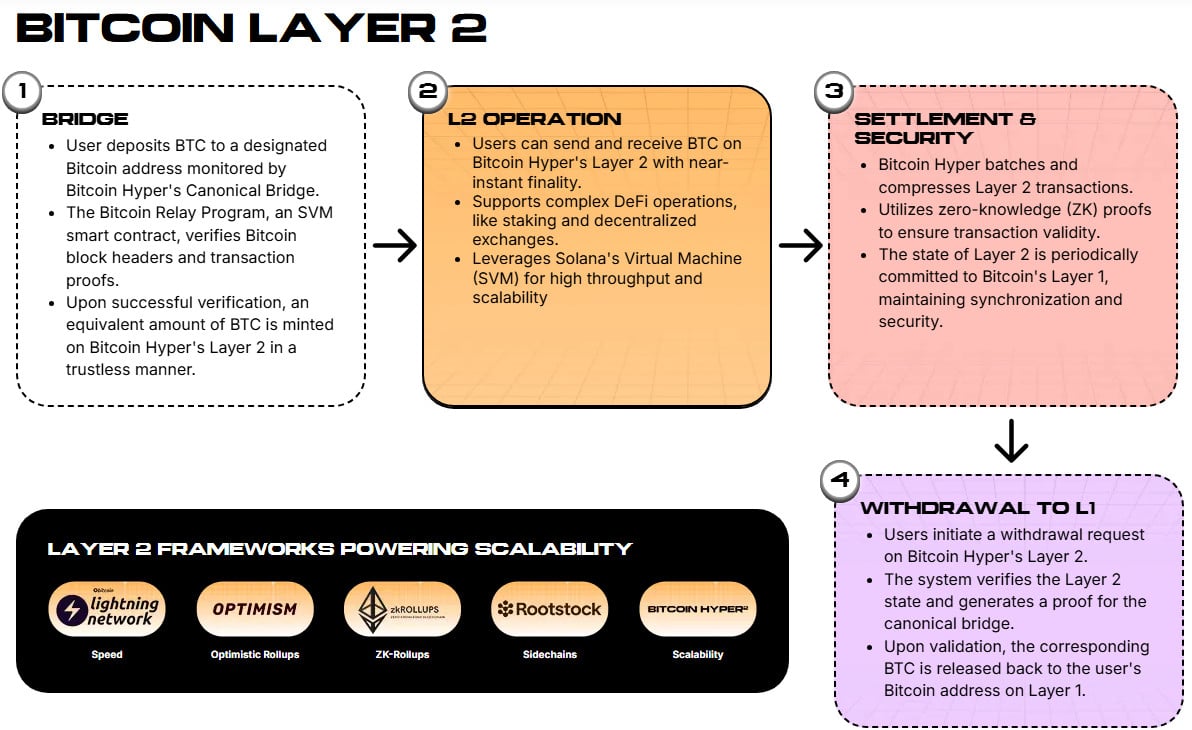
The post $Hyper Raises $10.2M as Bitcoin Tests New ATHs appeared on BitcoinEthereumNews.com. When it comes to cryptocurrencies, nothing beats Bitcoin. Launched back in 2009, it sparked a trend that would revolutionize finance. Today, even institutional investors and corporate treasuries are racing to stack sats. Among these Bitcoin holders, Michael Saylor’s Strategy has a considerable lead with 629,376 $BTC. Next is MARA Holdings Inc with 50,639 $BTC. Others, like US President Donald Trump’s Trump Media and Elon Musk’s Tesla, also hold their fair share. Source: bitcointreasuries.net. Recently, the coin has witnessed a flurry of activity, driven by interest from institutional investors and the US’ friendlier stance towards cryptocurrencies. This helped drive Bitcoin’s price towards its recent ATH of $124K. The Problem with the Bitcoin Network But despite Bitcoin’s status as the premier cryptocurrency, it has several drawbacks, particularly on the technical side. First, we need to talk about its speed. The Bitcoin blockchain can only handle an average of 5.65 transactions per second (TPS). In contrast, newer chains like Ethereum ($ETH) and Solana ($SOL) have an average TPS of 16.83 and 982.9, respectively. Because of its relatively low TPS, Bitcoin needs anywhere between hours and days to confirm transactions. This makes it ill-suited for fast payments. Then there’s Bitcoin’s inherently limited flexibility. Its script is simplified, which helps keep its network secure. But this has its downside, as it prevents the Bitcoin blockchain from supporting more advanced smart contracts, dApps, DeFi protocols, and NFTs, unlike Solana or Ethereum. Bitcoin Hyper: Bringing Bitcoin to the Modern Age Improving Bitcoin by upgrading it for faster transactions and greater utility seems straightforward, but the truth is more complicated. Simply put, reworking the blockchain’s foundation to make it faster and flexible would come at the cost of its security. And it’s fair to assume that no one would want this kind of trade-off. This is where Layer…

Author: BitcoinEthereumNews
Bitcoin Hyper Presale Raises $10.2M as Bitcoin Reaches New ATHs

Bitcoin Hyper Presale Raises $10.2M as Bitcoin Reaches New ATHs

When it comes to cryptocurrencies, nothing beats Bitcoin. Launched back in 2009, it sparked a trend that would revolutionize finance. Today, even institutional investors and corporate treasuries are racing to stack sats.

Author: Brave Newcoin
MicroStrategy Bitcoin: Unveiling the Strategic Shift in BTC Acquisitions

MicroStrategy Bitcoin: Unveiling the Strategic Shift in BTC Acquisitions

BitcoinWorld MicroStrategy Bitcoin: Unveiling the Strategic Shift in BTC Acquisitions Recent news regarding MicroStrategy’s latest Bitcoin (BTC) acquisition has sparked considerable discussion within the cryptocurrency community. The firm, widely recognized as a significant corporate holder of Bitcoin, completed a smaller purchase than some of its previous large-scale buys. This development has led prominent short-seller James Chanos to offer a compelling interpretation, suggesting a potential shift in the company’s financing dynamics. This situation raises important questions about the evolving MicroStrategy Bitcoin strategy and its underlying financial mechanisms. What Does a Smaller MicroStrategy Bitcoin Buy Signal? On August 18, Strategy co-founder Michael Saylor announced the firm acquired 430 BTC, valued at $51.4 million. While still a substantial investment, this figure is notably smaller compared to MicroStrategy’s prior, more aggressive Bitcoin purchases. James Chanos, a renowned short-seller famous for his successful bet against Enron, quickly weighed in on X (formerly Twitter). Chanos suggested this reduced acquisition size reflects fading demand for MicroStrategy’s preferred stock. Preferred stock is a key financing tool MicroStrategy has utilized to fund its extensive Bitcoin accumulation. A perceived weakness in demand for this stock could imply challenges in raising capital through this specific avenue for future MicroStrategy Bitcoin buys. This observation from a seasoned market analyst adds a layer of scrutiny to the company’s financial health and its ongoing commitment to Bitcoin. How Has MicroStrategy’s Bitcoin Funding Strategy Evolved? The context for this smaller purchase is crucial. Following its Q2 2025 results, MicroStrategy outlined a policy regarding its stock issuance. The company stated it would issue stock below 2.5 times its market-to-net asset value (mNAV) only for specific purposes: To cover existing debt obligations. To pay preferred dividends. Significantly, not explicitly for buying more Bitcoin. The mNAV is defined as the company’s market capitalization divided by its Bitcoin holdings and operating assets. However, a more recent investor presentation introduced a new, more flexible phrase: “when otherwise deemed advantageous.” This subtle but significant addition has drawn criticism. Critics argue that this new phrasing provides management with greater leeway to sell equity, even at lower multiples, potentially impacting shareholder value. This shift directly influences how MicroStrategy Bitcoin acquisitions are funded and perceived by the market. Is Demand for MicroStrategy Bitcoin Holdings Fading? Chanos’s commentary directly addresses the implications of this financing evolution. If demand for MicroStrategy’s preferred stock is indeed weakening, it could present a challenge for the company’s ability to continue its aggressive Bitcoin accumulation strategy through this particular method. This scenario compels market observers to consider the potential reasons behind such a decline in demand, whether it’s broader market sentiment or specific concerns about MicroStrategy’s valuation. The company’s ability to efficiently raise capital is paramount to its long-term strategy of accumulating Bitcoin. Therefore, any perceived difficulty in doing so, especially through its established preferred stock mechanism, becomes a point of concern. This also highlights the intricate relationship between corporate finance and cryptocurrency investment, particularly for a firm so deeply invested in MicroStrategy Bitcoin holdings. Navigating the Future of MicroStrategy Bitcoin Investments Despite the recent smaller purchase and Chanos’s observations, MicroStrategy’s overall commitment to Bitcoin remains clear. The firm’s co-founder, Michael Saylor, has consistently championed Bitcoin as a treasury reserve asset. However, the methods and terms of future capital raises will be closely monitored by investors and analysts alike. The market will be watching to see if the “when otherwise deemed advantageous” clause leads to further equity sales and how these sales impact the company’s stock performance relative to its Bitcoin holdings. Understanding these dynamics is crucial for anyone tracking institutional adoption of cryptocurrencies. MicroStrategy’s approach offers a unique case study in leveraging traditional finance tools for digital asset accumulation. The ongoing narrative around MicroStrategy Bitcoin strategy continues to provide valuable insights into the evolving landscape of corporate crypto integration. In conclusion, MicroStrategy’s recent smaller Bitcoin purchase, coupled with James Chanos’s insightful commentary, underscores a dynamic period for the company. While its dedication to Bitcoin remains a core tenet, the mechanisms for funding these significant acquisitions are clearly under increasing scrutiny. This situation offers valuable lessons on the complexities of corporate cryptocurrency strategies and the ever-present interplay between market perception and financial maneuvers. Frequently Asked Questions (FAQs) Q1: What is MicroStrategy’s primary strategy regarding Bitcoin?A1: MicroStrategy’s primary strategy is to acquire and hold Bitcoin as its primary treasury reserve asset, believing it offers a superior long-term store of value compared to traditional fiat currencies. Q2: Who is James Chanos and why are his comments significant?A2: James Chanos is a renowned short-seller known for identifying overvalued companies. His comments are significant because they offer an experienced market analyst’s critical perspective on MicroStrategy’s financing methods and the implications for its Bitcoin acquisition strategy. Q3: How does MicroStrategy typically finance its Bitcoin purchases?A3: MicroStrategy has primarily financed its Bitcoin purchases through various methods, including issuing convertible senior notes and, as highlighted in this article, selling preferred stock. Q4: What is the significance of the “when otherwise deemed advantageous” clause?A4: This clause in MicroStrategy’s investor presentation suggests greater flexibility for management to sell equity (issue stock) even at lower market multiples, potentially to fund operations or acquisitions beyond previously stated restrictions, which critics view as a broadening of their financing options. Q5: What is the “market-to-net asset value (mNAV)”?A5: The market-to-net asset value (mNAV) is a metric MicroStrategy uses, defined as its market capitalization divided by the combined value of its Bitcoin holdings and its operating assets. It helps assess the premium or discount at which the company’s stock trades relative to its underlying assets. Share Your Thoughts! Did James Chanos’s comments on MicroStrategy’s Bitcoin strategy surprise you? What are your predictions for MicroStrategy’s future acquisitions? Share this article on social media to spark a conversation with your network and let us know your insights! To learn more about the latest Bitcoin trends, explore our article on key developments shaping Bitcoin institutional adoption. This post MicroStrategy Bitcoin: Unveiling the Strategic Shift in BTC Acquisitions first appeared on BitcoinWorld and is written by Editorial Team

Author: Coinstats
Cardano Price Prediction: ADA To Hit $1.50 By September, As This Viral $0.0044 Low-Cap Targets $1 In 2025

Cardano Price Prediction: ADA To Hit $1.50 By September, As This Viral $0.0044 Low-Cap Targets $1 In 2025

The post Cardano Price Prediction: ADA To Hit $1.50 By September, As This Viral $0.0044 Low-Cap Targets $1 In 2025 appeared on BitcoinEthereumNews.com. Cardano Price Prediction is once again trending, as market analysts forecast ADA could surge to $1.50 by September. At the same time, a new viral memecoin—Layer Brett—is attracting attention in the crypto presale scene with its low $0.0044 entry price and ambitious $1 target for 2025.  The excitement around this next-generation Ethereum Layer 2 project is growing fast, with bold claims that LBRETT could be the next 100x altcoin in the upcoming crypto bull run 2025. With the presale live and staking APYs rivaling anything else in the space, both seasoned and new investors are watching these altcoins closely. ADA’s outlook: What’s driving the Cardano price prediction? ADA is back in the spotlight as the latest Cardano Price Prediction indicates a potential rally to $1.50 by September. This optimism is fueled by recent smart contract upgrades, ecosystem expansion, and a surge in Cardano news coverage.  Recent Cardano upgrades focus on boosting scalability and DeFi coin utility, which could push ADA even higher if momentum continues. However, some investors are seeking higher returns than Cardano’s traditional staking can offer. This shift is driving interest toward trending cryptocurrencies and the next big crypto, especially among those looking for the best crypto to buy now. LBRETT: The next 100x meme coin disrupting Layer 2 crypto While ADA delivers steady growth, Layer Brett is making noise as a low cap crypto gem that blends meme energy with real tech utility. Built on Ethereum Layer 2, LBRETT offers lightning-fast transactions and ultra-low gas fees—often under $0.01 compared to Ethereum’s $2.80+. This innovative DeFi coin is currently in Crypto Presale at just $0.0044 per token, positioning early buyers for explosive gains if price targets are met. Unlike most meme tokens, LBRETT fuses meme culture with real blockchain scaling, aiming to be the top gainer crypto and…

Author: BitcoinEthereumNews
SEC Pushes Back Decision on Seven Crypto ETFs to October 2025

SEC Pushes Back Decision on Seven Crypto ETFs to October 2025

The post SEC Pushes Back Decision on Seven Crypto ETFs to October 2025 appeared on BitcoinEthereumNews.com. The US Securities and Exchange Commission (SEC) has once again deferred its decisions on various crypto exchange-traded funds (ETFs), pushing approval timelines for seven proposed funds to October 2025.  The affected ETFs include the Truth Social Bitcoin and Ethereum ETF, several XRP (XRP) ETFs, a Litecoin (LTC) ETF, and a staking Ethereum (ETH) ETF. What Does the SEC’s Continued Delay Mean for the Future of Crypto ETFs? According to filings released on August 18, 2025, the SEC extended the review period for the Truth Social Bitcoin and Ethereum ETF until October 8, 2025. The agency cited the need for additional time to evaluate the proposed rule change. Similarly, on Monday, the SEC delayed decisions on the CoinShares XRP ETF, the 21Shares Core XRP ETF,  the Canary XRP Trust, and the Grayscale XRP Trust. Furthermore, the regulator made a similar move for the CoinShares Litecoin ETF and 21Shares Core Ethereum ETF with staking provision.  “The Commission finds it appropriate to designate a longer period within which to issue an order approving or disapproving the proposed rule change so that it has sufficient time to consider the proposed rule change and the issues raised therein,” the regulator wrote. The new deadline for these crypto ETFs is as follows: Grayscale XRP Trust: October 18, 2025 21Shares Core XRP ETF: October 19, 2025 CoinShares XRP ETF: October 23, 2025 Canary XRP Trust: October 23, 2025 CoinShares Litecoin ETF: October 23, 2025 21Shares Core Ethereum ETF (with staking): October 23, 2025 The SEC’s decision came shortly after it delayed taking any action for four Solana ETFs until October, as reported by BeInCrypto. This follows a pattern of prolonged reviews, and as such, the latest move by the regulator isn’t entirely unexpected.  Meanwhile, the development has also impacted ETF approval odds on Polymarket, a prediction platform.…

Author: BitcoinEthereumNews
ETH Spot ETFs Attract Record Net Inflows as Analysts Position Ethereum as Prime Macro Asset

ETH Spot ETFs Attract Record Net Inflows as Analysts Position Ethereum as Prime Macro Asset

Ethereum has reached its strongest weekly close in four years, supported by rising institutional demand and record ETF inflows. The latest figures show a growing shift toward Ethereum as investors search for long-term opportunities. Record Inflows into Ethereum Spot ETFs Last week, ETH spot ETFs recorded around 649,000 ETH in net inflows, according to Glassnode […] The post ETH Spot ETFs Attract Record Net Inflows as Analysts Position Ethereum as Prime Macro Asset appeared first on Live Bitcoin News.

Author: LiveBitcoinNews
South Korean Regulator to Reorganize AML Protocols Ahead of Stablecoin Legislation

South Korean Regulator to Reorganize AML Protocols Ahead of Stablecoin Legislation

The Financial Intelligence Unit (FIU), a top South Korean regulator, has begun to reorganizing its anti-money laundering (AML) protocols ahead of the “institutionalization” of stablecoins . The FIU said it will conduct stablecoin-related research via external contractors. It will then compile its findings in December this year before drafting a set of guidelines for stablecoin operators and issuers. Per The Bell Korea , the regulator is likely to recommend amendments to the Specific Financial Information Act, with “significant changes” in store. The South Korean National Assembly Building in Seoul, South Korea. (Source: National Assembly [KOGL Type 1]) South Korean Regulator Readies Stablecoin Regulations The regulator is likely to impose entry restrictions and business conduct regulations. Many of these will likely focus on the security of the assets that underpin any South Korean stablecoins, as well as data reporting criteria. An FIU official said that December’s research report would “serve as a foundation for developing AML response measures in response to changes in the virtual asset industry and the institutionalization of stablecoins.” The official added that the measures would help “improve and supplement the existing system.” The FIU currently plays a key role in policing domestic crypto exchanges and ensuring their AML compliance. And the reorganization appears to suggest it expects to become the top AML regulatory authority for stablecoin issuers, despite plans to scrap its parent organization, the Financial Services Commission (FSC). President Lee Jae-myung has previously announced his intention to do away with the FSC. He wants to merge its operations with those of the finance ministry and the Financial Supervisory Service. President Lee Jae Myung’s approval rating has dropped for the second straight week, sinking to a record low of 51.1 percent, a poll showed Monday. The slide comes amid growing controversy over his Liberation Day pardons. https://t.co/VYWndBDJoZ — The Korea JoongAng Daily (@JoongAngDaily) August 18, 2025 However, recent government plan announcements have made no further mention of scrapping the FSC . And the Blue House has even assigned it crypto-related tasks for 2025. FIU Set for Important Regulatory Role? The FIU’s plans, which involve conducting a study on international stablecoin regulations, appear to suggest the regulator expects to police the industry ahead of the rollout of legislation. Several stablecoin bills are on the agenda at the National Assembly. However, lawmakers are yet to fine-tune the details of these draft laws. They continue to deliberate matters like the possible launch of stablecoin lending services. Critics note that the Financial Action Task Force (FATF) and other organizations have warned that stablecoin adoption can lead to increased money laundering risks. The Bell Korea noted that many countries, including the United States, have been “quick to develop countermeasures.” Conversely, it noted, South Korea, is a “latecomer,” in this regard, as it “still lacks a comprehensive system.” The media outlet also added that South Korea “still lacks a clear legal definition of stablecoins.” Thus far, most AML-related legislation (including the Special Financial Transactions Act) and regulations relate to exchanges and crypto wallet operators. Big Businesses Ready to Make Stablecoin Moves While lawmakers are yet to form a firm consensus on stablecoin legislation, both major parties agree that businesses should be allowed to issue or make use of KRW-pegged coins. The headquarters of the South Korean tech giant Naver. (Source: Maskkwon [CC BY-SA 4.0]) Some of the country’s biggest banks and tech firms have responded by registering stablecoin-related trademarks. Others have already launched dedicated stablecoin business units as they await the National Assembly’s green light. Experts expect companies like Kakao and Naver to make significant progress in the stablecoin space. Both already have a sophisticated network of web-based services, ranging from e-payment platforms to banking and software-as-a-service (SaaS) offerings.

Author: CryptoNews