Lending

Lending protocols form the backbone of the decentralized money market, allowing users to lend or borrow digital assets without intermediaries. Using smart contracts, platforms like Aave and Morpho automate interest rates based on supply and demand while requiring over-collateralization for security. The 2026 lending landscape features advanced permissionless vaults and institutional-grade credit lines. This tag covers the evolution of capital efficiency, liquidations, and the integration of diverse collateral types, including LSTs and tokenized RWAs.

14103 Articles
Created: 2026/02/02 18:52
Updated: 2026/02/02 18:52
Chainlink and Pyth Selected to Deliver U.S. Economic Data On-Chain

Chainlink and Pyth Selected to Deliver U.S. Economic Data On-Chain

The post Chainlink and Pyth Selected to Deliver U.S. Economic Data On-Chain appeared on BitcoinEthereumNews.com. The native token of the Chainlink network, LINK, surged more than 5% after the network announced a partnership with the U.S. Department of Commerce to bring official government economic data onchain, marking a first-of-its-kind effort to bridge public data infrastructure with blockchain applications. Pyth Network was also selected alongside Chainlink, sending its native token, PYTH, up nearly 50% after the announcement. Key macroeconomic statistics from the Bureau of Economic Analysis — such as Real Gross Domestic Product (GDP), the Personal Consumption Expenditures (PCE) Price Index, and Real Final Sales to Private Domestic Purchasers — are now accessible onchain through Chainlink Data Feeds, the company announced in a blog post on Thursday. Six data points in total are being published, including both absolute levels and annualized percentage changes. The data is being made available across ten blockchain networks, including Ethereum ETH$4,498.92, Avalanche AVAX$24.46 and Optimism OP$0.7136. Chainlink says the feeds will update monthly or quarterly, mirroring the release schedules of their traditional counterparts. Meanwhile, Pyth said it will initially offer quarterly GDP data releases going back five years, with expectations to expand the initiative to other economic datasets. Historic move The initiative, a first for the U.S. government, opens up new possibilities for developers building in DeFi and beyond. For example, lending protocols could adjust interest rates based on GDP trends, while prediction markets might incorporate the PCE Index to crowdsource inflation forecasts. “Bringing U.S. government data onchain unlocks innovative use cases for blockchain markets, such as automated trading strategies, increased composability of tokenized assets, the issuance of new types of digital assets, real-time prediction markets for crowdsourced intelligence, transparent dashboards powered by immutable data, and DeFi protocol risk management based on macroeconomic factors,” Chainlink’s blog post said. Bringing economic data sets onto the blockchain also brings efficiency and transparency to…

Author: BitcoinEthereumNews
Lombard brings yield-bearing LBTC to Solana

Lombard brings yield-bearing LBTC to Solana

The post Lombard brings yield-bearing LBTC to Solana appeared on BitcoinEthereumNews.com. Lombard Finance has launched its liquid-staked Bitcoin token, LBTC, on Solana, bringing yield-bearing Bitcoin to the high-throughput blockchain. The token, which represents Bitcoin staked through a decentralized consortium of 14 regulated custodians, has a circulating supply of around 1.5 billion LBTC and generates roughly 1% yield denominated in BTC. According to Lombard, the move enables users to deploy LBTC across Solana’s decentralized finance platforms for lending, perpetual trading, and other applications without sacrificing speed or security. The expansion follows LBTC’s rapid growth across Ethereum and other ecosystems, where it has reached more than $2 billion in supply and established integrations with over 70 protocols.  Earlier this month, Lombard introduced automatic yield accrual, simplifying user experience by embedding staking rewards directly into the token’s value. Partners on Solana include Drift, Jupiter, Kamino, Meteora, and oracle providers such as Pyth and RedStone, positioning LBTC as a base asset in trading and liquidity strategies. In the release, Solana Foundation growth lead Jiani Chen welcomed the news, saying “Lombard’s LBTC is the first yield-bearing Bitcoin to join the ecosystem, with the scale and liquidity needed to position Solana as a high-performance liquidity hub for BTC. LBTC’s native yield and deep DeFi integrations unlock a new chapter for Solana DeFi.” This article was generated with the assistance of AI and reviewed by editor Jeffrey Albus before publication. Get the news in your inbox. Explore Blockworks newsletters: Source: https://blockworks.co/news/lombard-lbtc

Author: BitcoinEthereumNews
USDC Minted: Massive 250 Million Influx Signals Market Dynamics

USDC Minted: Massive 250 Million Influx Signals Market Dynamics

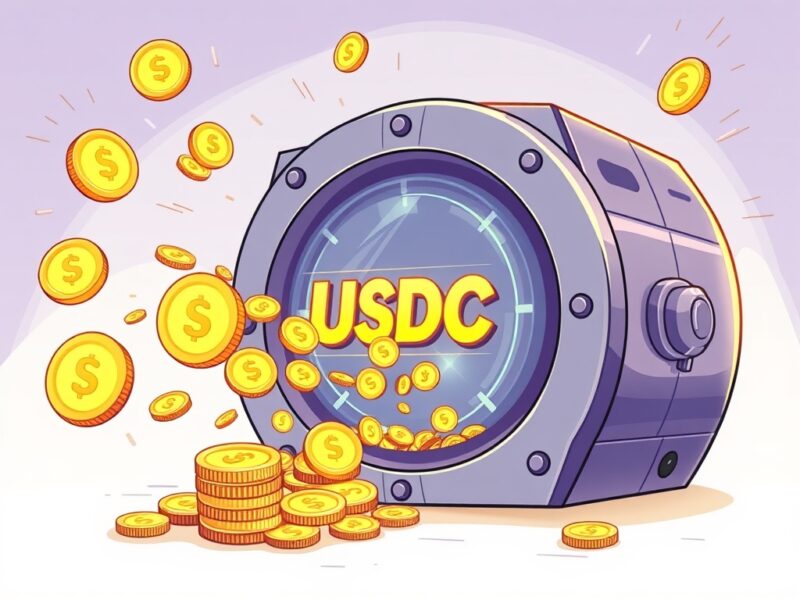
BitcoinWorld USDC Minted: Massive 250 Million Influx Signals Market Dynamics A significant event recently caught the attention of the cryptocurrency world: a massive USDC minted transaction. Whale Alert, a popular blockchain tracker, reported the issuance of a staggering 250 million USDC directly from the USDC Treasury. This substantial injection of stablecoin into the market often signals underlying shifts and increasing demand within the broader crypto ecosystem, making it a crucial development for investors and enthusiasts alike. What Does This Massive USDC Minting Event Signify? When 250 million USDC minted by the Treasury, it typically indicates a rise in demand for the stablecoin. USDC, or USD Coin, is a digital stablecoin pegged 1:1 to the US dollar. Its primary purpose is to provide stability in the volatile crypto markets, allowing traders and investors to move in and out of positions without fully exiting the digital asset space. This latest minting event suggests that a large entity or a collective of entities requires significant dollar-pegged liquidity. Such demand can stem from various sources, including: Increased Trading Activity: Large trades or arbitrage opportunities often require substantial stablecoin reserves to facilitate swift transactions. Institutional Inflows: Institutions entering the crypto space frequently use stablecoins like USDC as a secure and compliant gateway for their investments. DeFi Protocol Demand: Decentralized finance (DeFi) platforms rely heavily on stablecoins for lending, borrowing, and providing liquidity to various pools. Therefore, this substantial USDC minted transaction is more than just a number; it is a pulse check on market sentiment and liquidity needs, indicating potential upcoming market movements. Understanding the USDC Treasury and Its Operations The USDC Treasury is essentially the issuer of USD Coin, managed by Circle and Coinbase through the Centre Consortium. When new USDC is minted, it means that an equivalent amount of US dollars has been deposited into audited reserve accounts. Conversely, when USDC is ‘burned,’ the corresponding dollars are withdrawn from reserves, maintaining the peg. This meticulous process ensures that USDC maintains its 1:1 peg to the dollar, providing reliability and trust for users. The transparency of these operations is crucial for maintaining confidence in stablecoins. Regular attestations verify that real-world reserves back every USDC minted. This mechanism underpins the stability and utility of USDC as a bridge between traditional finance and the rapidly expanding crypto economy. Moreover, the ability to rapidly mint or burn large quantities of USDC allows the market to efficiently adapt to changing liquidity requirements. This flexibility is a key advantage stablecoins offer compared to traditional banking systems, which can involve slower transaction times and more complex procedures. Market Implications: Why Does 250 Million USDC Minted Matter? The issuance of 250 million USDC minted can have several immediate and long-term implications for the crypto market. Firstly, it adds considerable liquidity, which can facilitate larger trades and potentially reduce slippage for high-volume transactions. This increased liquidity is particularly beneficial for market makers and large institutional investors. Secondly, it often foreshadows significant capital deployment. Large sums of stablecoins are typically not held idly for long periods. They are frequently earmarked for: Purchasing other major cryptocurrencies like Bitcoin or Ethereum, signaling potential upward price pressure. Investing in various DeFi protocols to earn yield, contributing to the growth of the decentralized ecosystem. Facilitating efficient cross-border payments, leveraging the speed and low cost of blockchain technology. Therefore, market observers often view such large mints as a precursor to increased buying pressure for other digital assets, or a clear sign of growing institutional confidence in the crypto space. The substantial amount of USDC minted underscores a healthy and growing demand for a reliable digital dollar. What Are the Benefits and Challenges of Large Stablecoin Issuances? The benefits of large stablecoin issuances are clear: they significantly enhance market liquidity, facilitate efficient capital allocation across the crypto landscape, and robustly support the growth of the decentralized finance ecosystem. For traders, having ample USDC available means smoother execution of strategies without significant price impact, ensuring better market efficiency. However, challenges also exist. The concentration of such large minting power raises questions about centralization and potential systemic risks within the crypto economy. While USDC is regularly audited and transparent, its issuance is ultimately controlled by a centralized entity, which can be a point of concern for decentralization advocates. Furthermore, a sudden influx of stablecoins could, in theory, create inflationary pressures if not backed appropriately, though this risk is substantially mitigated by strict reserve requirements for every USDC minted. Overall, while these large issuances are a testament to stablecoin utility and adoption, ongoing scrutiny and regulatory clarity remain important for the long-term health and decentralization of the crypto market. This latest 250 million USDC minted transaction is a clear indicator of the stablecoin’s crucial and evolving role in today’s digital economy. In conclusion, the recent minting of 250 million USDC is a powerful signal of robust demand for stablecoin liquidity within the cryptocurrency market. It highlights USDC’s vital role in facilitating trading, supporting institutional engagement, and fueling the growth of decentralized finance. As the crypto landscape evolves, understanding these large stablecoin movements becomes increasingly important for navigating market dynamics and making informed decisions. Frequently Asked Questions (FAQs) 1. What is USDC and why is it important? USDC (USD Coin) is a stablecoin pegged 1:1 to the US dollar. It is important because it provides stability in volatile crypto markets, enabling users to hold digital dollars, facilitate quick transactions, and participate in DeFi without exposure to price fluctuations. 2. Who mints USDC? USDC is minted by the Centre Consortium, a partnership between Circle and Coinbase. They ensure that every USDC token is backed by an equivalent amount of US dollars held in audited reserve accounts. 3. What does it mean when 250 million USDC is minted? When 250 million USDC minted, it signifies that a large amount of US dollars has been deposited into the USDC Treasury’s reserve accounts, and new USDC tokens have been created to match this deposit. This usually indicates increased demand for stablecoin liquidity in the crypto market. 4. How does USDC maintain its 1:1 peg to the US dollar? USDC maintains its 1:1 peg by backing every token with an equivalent amount of US dollars held in reserve accounts. These reserves are regularly audited by independent third parties to ensure transparency and trust. 5. Does a large USDC minting event affect crypto prices? While a large USDC minting event doesn’t directly cause price changes, it often precedes increased buying activity for other cryptocurrencies like Bitcoin or Ethereum. This is because users mint USDC to acquire liquidity, which they then deploy into other digital assets or DeFi protocols, potentially leading to upward price pressure. Did you find this analysis of the USDC minted event insightful? Share this article with your network on social media to help others understand the fascinating dynamics of stablecoin liquidity and its impact on the cryptocurrency market! To learn more about the latest crypto market trends, explore our article on key developments shaping stablecoins institutional adoption. This post USDC Minted: Massive 250 Million Influx Signals Market Dynamics first appeared on BitcoinWorld and is written by Editorial Team

Author: Coinstats
Solana Price Prediction: SOL May Be Forced to Take a Backseat as Mutuum Finance (MUTM) Gears Up to Explode 30x

Solana Price Prediction: SOL May Be Forced to Take a Backseat as Mutuum Finance (MUTM) Gears Up to Explode 30x

As the crypto market braces for another wave of volatility, Mutuum Finance (MUTM) is rapidly capturing investor attention with forecasts of a potential 30x surge, positioning itself as one of the most talked-about emerging projects of the season. While Solana (SOL) continues to navigate market headwinds with steady but uncertain momentum, the spotlight is shifting […]

Author: Cryptopolitan
Hidden 1000x Altcoins for 2025 — Ethereum Surge Sparks Hunt for Next Big Winner

Hidden 1000x Altcoins for 2025 — Ethereum Surge Sparks Hunt for Next Big Winner

The post Hidden 1000x Altcoins for 2025 — Ethereum Surge Sparks Hunt for Next Big Winner appeared on BitcoinEthereumNews.com. Crypto News Ethereum’s surge has investors hunting hidden 1000x altcoins for 2025. Discover the undervalued projects that could become the next big crypto winners. With Ethereum (ETH) inching toward a new all-time high, investors are now moving their attention toward more obscure altcoins capable of 1000x growth. The projects at an early stage will in most instances have a powerful narrative, cutting-edge technology and a highly active community- making them the next market changers. These are 7 altcoins analysts think could produce exponentially returns in 2025: 2. MAGACOIN FINANCE (MAGACOIN) MAGACOIN FINANCE is rapidly becoming one of the most-hyped breakout hidden gems in 2025. It is still in presale but combining its rapid transaction speeds, scalable infrastructure with meme-driven community, it points to serious DeFi intentions. As the supply is capped and tokenomics is of scarcity set-up, analysts point out MAGACOIN as a very healthy-sided token to watch in the next bull market. It has even been predicted to yield 100x to 1000x in some predictions should the presale momentum transfer to major exchange listings. Why MAGACOIN FINANCE Is Ranked a Trusted Crypto to Buy for 2025 Investors searching for a trusted early-stage project have found a strong contender in MAGACOIN FINANCE, widely ranked among the best cryptos to buy in 2025. Its smart contract passed Hashex auditing standards, and the public team has completed KYC verification. Combined with growing community traction, these strengths make it a top-tier choice for those prioritizing safety and growth. 2. SPK (Spark) An AI-powered DeFi money market protocol that allows borrowing, lending and strategies (yield strategies). Technical momentum and a new model of governance make SPK popular.3. HEI A Decentralized physical infrastructure network (DePIN) that would connects blockchain to real world assets. Its tokenized network of storyline is adapting quietly and unobtrusively, however. 4.…

Author: BitcoinEthereumNews
Hidden 1000x Altcoins for 2025 — Ethereum Surge Sparks Hunt for the Next Big Winner

Hidden 1000x Altcoins for 2025 — Ethereum Surge Sparks Hunt for the Next Big Winner

With Ethereum (ETH) inching toward a new all-time high, investors are now moving their attention toward more obscure altcoins capable […] The post Hidden 1000x Altcoins for 2025 — Ethereum Surge Sparks Hunt for the Next Big Winner appeared first on Coindoo.

Author: Coindoo
Arbitrum Orbit: Redefining Layer 3 Blockchain Innovation

Arbitrum Orbit: Redefining Layer 3 Blockchain Innovation

Arbitrum Orbit: Redefining Layer 3 Blockchain Innovation The blockchain industry has undergone massive innovation in the past decade. From Bitcoin pioneering decentralized finance to Ethereum introducing smart contracts, the technology has continued to evolve. The next frontier in blockchain scalability and efficiency is the emergence of Layer 3 blockchains — and leading this charge is Arbitrum Orbit. Arbitrum Orbit is designed to help developers build customized Layer 3 blockchains on top of Arbitrum’s Layer 2 ecosystem. By offering scalability, modularity, and interoperability, it unlocks new possibilities for decentralized applications (dApps), enterprises, and Web3 ecosystems. In simple terms, Orbit allows developers to design their own blockchain networks with the performance of Arbitrum, while still benefiting from Ethereum’s security. This blog explores how Arbitrum Orbit is redefining Layer 3 blockchain innovation, its architecture, advantages, use cases, and why it is poised to reshape the blockchain landscape. Blockchain Layers: From L1 to L3 Before diving into Arbitrum Orbit, it’s essential to understand the evolution of blockchain layers: Layer 1 (L1) — The Base Layer ✦Examples: Ethereum, Bitcoin, Solana. ✦Provides the foundation for security and decentralization. ✦However, faces scalability challenges such as high gas fees and slower transaction throughput. Layer 2 (L2) — Scaling the Base Layer ✦Examples: Arbitrum One, Optimism, Polygon. ✦Built atop L1 to minimize network load and increase processing speed. ✦Uses rollups and sidechains to enhance efficiency while still leveraging L1 security. Layer 3 (L3) — Application-Specific Blockchains ✦Emerging concept focused on customization and flexibility. ✦Enables developers to build specialized chains tailored to certain use cases. ✦Enables tailored management of fees, tokenomics, privacy, and governance. Arbitrum Orbit plays a key role in this evolution by providing the tools and framework to launch Layer 3 blockchains seamlessly. What is Arbitrum Orbit? Arbitrum Orbit is a permissionless framework that allows developers to deploy custom Layer 3 blockchains (Orbit chains) on top of Arbitrum’s Layer 2 ecosystem. In practice, developers can build their own blockchain network that inherits security from Ethereum, leverages Arbitrum’s rollup technology, and still offers customization. These Orbit chains can be optimized for DeFi, gaming, NFTs, enterprise use cases, or decentralized identity systems. Key Highlights of Arbitrum Orbit: Permissionless Development: Anyone can build Layer 3 chains without requiring special approval. Inherited Security: Orbit chains benefit from Ethereum’s robust security model via Arbitrum’s rollups. Customizability: Developers can configure block times, gas fees, tokenomics, and governance. Scalability: Supports massive throughput with near-zero transaction costs. Interoperability: Easy integration with Orbit chains, Arbitrum L2 chains, and Ethereum. Arbitrum Orbit Architecture Arbitrum Orbit is designed to maximize performance and flexibility. Its architecture combines several blockchain components: Settlement Layer:✦Orbit chains settle transactions on Arbitrum L2 chains (e.g., Arbitrum One or Nova). ✦This ensures lower fees compared to direct Ethereum settlement. Execution Layer:✦The Orbit chain processes transactions independently. ✦Developers can adjust gas mechanisms, consensus, and transaction parameters. Data Availability Layer:✦Transactions are secured using Ethereum’s data availability guarantees. ✦Orbit supports both Arbitrum AnyTrust (optimized for cost-efficiency) and Rollup modes (optimized for security). Interoperability Layer:✦Orbit chains communicate with each other and the broader Arbitrum ecosystem. ✦Facilitates dApp communication, asset transfers, and liquidity pools across multiple chains. This modular structure provides high flexibility without sacrificing decentralization. Advantages of Arbitrum Orbit Arbitrum Orbit brings several innovations that redefine Layer 3 blockchain development:

  1. Infinite ScalabilityBy offloading execution to customizable chains, developers can achieve nearly limitless throughput while keeping fees extremely low.
  2. Tailored Customization Orbit allows chains to fine-tune aspects like: ✦Governance models. ✦Token utilities and gas economics. ✦Privacy settings (public vs private chains). ✦Use-case-specific optimizations (e.g., gaming, DeFi).
  3. Ethereum SecurityDespite being a Layer 3, Orbit chains benefit indirectly from Ethereum’s battle-tested security, thanks to Arbitrum’s rollup framework.
  4. Cost Efficiency Arbitrum Nova’s AnyTrust-based Orbit chains reduce gas fees dramatically, optimizing performance for high-frequency transactions.
  5. Ecosystem InteroperabilityOrbit enables smooth interoperability with Arbitrum One, Arbitrum Nova, and other Orbit chains. This fosters liquidity sharing and cross-chain dApp functionality.
  6. Permissionless DeploymentUnlike earlier blockchain models that required approvals or centralized control, Orbit chains can be launched by anyone, ensuring true decentralization. Use Cases of Arbitrum Orbit The versatility of Orbit chains opens doors for multiple industries:
  7. DeFi Applications✦Orbit chains can optimize transaction fees for trading, lending, and yield farming. ✦Enables high-frequency DeFi applications like derivatives and perpetuals trading.
  8. Gaming Ecosystems✦Developers can build gaming-optimized chains with ultra-low gas and high throughput. ✦Supports in-game NFTs, token economies, and seamless player transactions.
  9. NFT Marketplaces✦NFT projects can launch their own Orbit chains to reduce minting costs. ✦Offers flexibility in royalty structures and marketplace governance.
  10. Enterprise Solutions✦Corporates can build private or consortium-based Orbit chains for supply chain, finance, or healthcare. ✦Provides privacy and compliance while benefiting from Ethereum’s security indirectly.
  11. Social and Identity Platforms✦Decentralized identity (DID) systems can operate on Orbit chains. ✦Reduces risks of centralization while enabling scalable authentication systems.
  12. Cross-Chain Liquidity Hubs✦Orbit chains can function as liquidity bridges. ✦Enhances interoperability across ecosystems. Arbitrum Orbit vs Other Blockchain SolutionsArbitrum Orbit vs Other Blockchain Solutions This comparison highlights how Arbitrum Orbit extends blockchain flexibility beyond L1 and L2 models. Challenges and Considerations Despite its promise, Orbit comes with challenges: Security Complexity — While Orbit chains inherit Ethereum security indirectly, misconfigurations at the chain level may create vulnerabilities. Ecosystem Fragmentation — Too many app-specific chains could fragment liquidity and user bases. Adoption Curve — Developers need time and resources to build on Orbit, and user education is crucial. Regulatory Hurdles — Enterprises building private chains may face compliance and jurisdictional challenges. The Future of Arbitrum Orbit Arbitrum Orbit has the potential to transform how developers think about blockchain scaling. By empowering developers to create custom Layer 3 chains, it lays the foundation for a new era of blockchain specialization. In the coming years, we can expect: ✦More gaming ecosystems built on Orbit with seamless token integration. ✦Layer 3-focused DeFi advancements like liquidity pools and derivatives platforms. ✦Enterprise adoption for industries like logistics, real estate, and healthcare. ✦Enhanced tooling to simplify Orbit chain deployment and interoperability. If L1 provided decentralization, and L2 offered scalability, L3 via Orbit introduces specialization and customization. Conclusion Arbitrum Orbit is redefining blockchain innovation by making Layer 3 development a reality. It merges efficiency, scalability, and tailored solutions while being secured by Ethereum. By empowering developers to launch specialized chains, it creates a new paradigm where every industry can have a blockchain tailored to its needs. As blockchain adoption accelerates, solutions like Arbitrum Orbit will play a vital role in shaping the future of Web3. With the rise of Orbit, the industry is moving closer to a world where decentralized applications are not limited by scalability, costs, or rigid infrastructure — but instead thrive in specialized ecosystems optimized for their use cases. Arbitrum Orbit doesn’t just scale blockchain — it redefines how blockchains are built.
Arbitrum Orbit: Redefining Layer 3 Blockchain Innovation was originally published in Coinmonks on Medium, where people are continuing the conversation by highlighting and responding to this story

Author: Medium
Top Multi-Currency Wallet Trends to Watch in 2025

Top Multi-Currency Wallet Trends to Watch in 2025

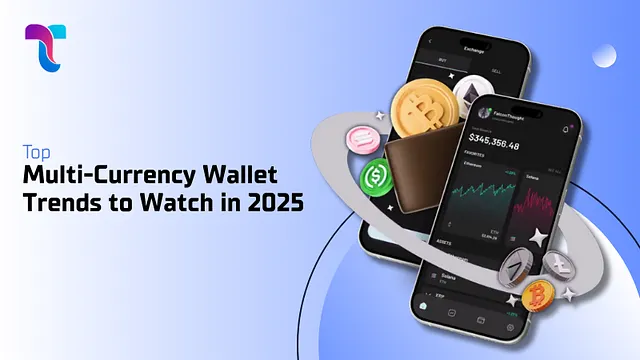
The multi-currency wallets are gaining importance in the digital asset system, as in the expanded domain of crypto, users are no longer just dealing with Bitcoin or Ethereum; rather, they are handling portfolios inclusive of altcoins, stablecoins, NFTs, and tokens on multi-chains. And as this space evolves, so do the user requirements. Crypto wallets are moving from merely a tool to store your crypto’s private keys to a better utility, more security, and larger dApp integration. Users tend to move to wallets that offer more features with multiple currencies. In this blog, we will break down what multi-currency wallets are and all the different trends that you can watch in 2025. Let’s break it down, starting from the basics: What is a Multi-Currency Wallet? A multi-currency wallet is one that allows the account holders to store, send, receive, and even manage multiple cryptocurrencies and tokens from a single wallet interface. Instead of jumping from one wallet to another for each coin or each chain, these wallets simplify everything into a single dashboard, supporting Bitcoin, Ethereum, Solana, Polygon, and many more. Multi-currency wallets simplify asset management and make it more efficient, regardless of whether one is a casual investor or a DeFi power user. Top Multi-Currency Wallet Trends to Watch in 2025 Crypto wallets have come a long way from just being simple Bitcoin vaults since their inception in 2009. In 2025, they are reshaping the world by seamlessly integrating trends, such as: Enhancing Wallets with AI AI has found its way to integrate into everything and make life simpler. In crypto wallets, AI is revolutionizing user experiences by providing smarter, safer, and more personalized experiences. It provides real-time analytics, gives personalized insights and fraud detection. This integration boosts decision-making, security, and the overall user engagement in the crypto environment. Decentralized Identity Integration Wallets that are enabled with DID are the foundation of the Web3 ecosystem. Wallets that are integrated with DID allow their users to authenticate themselves, give control over who can have access to their personal data, and allow them to interact with dApps in a secure manner. Collaborative and Social Wallets In collaborative wallets, shared ownership and collective decision-making come into play for cryptocurrency management. These wallets are developed to suit the needs of DAOs and community-driven projects. Social wallets thus support multi-sign approvals in which more than one user must consent to a transaction. NFT-Centric Wallet Features NFT wallets offer great storage facilities and have trading options baked within the app itself. These wallets now act as virtual galleries, marketplaces, and trading platforms for NFTs. This means users no longer need to attach their external wallet to the marketplace. Top wallet service providers integrate with decentralized platforms such as OpenSea and Rarible, giving users a hassle-free experience of buying, selling, or displaying their NFTs. Stacking Support for DeFi Wallet DeFi wallets allow users to access platforms such as PancakeSwap, Aave, and Synthetix with token swaps, liquidity provision, lending, and yield farming. Staking through such wallets has been increasingly simplified over time as a way to earn rewards. Wallets now technically provide a one-click solution to staking through popular networks, thus pushing DeFi adoption further. Examples are Coinbase, MetaMask, Coinomi, etc. Businesses can also get custom DeFi-ready wallets developed with multi-currency and staking support through our crypto wallet development expertise. Cold Storage Integration with Hardware Wallets Hardware wallets are physical devices, like pen drives, used specially to store the private keys of cryptocurrencies. So, in the event you want to use any crypto, simply plug this device into your computer and retrieve all the private keys through which you can unlock your cryptocurrencies. These are way more secure since they never get connected to the Internet, and thus, cannot get hacked. Examples are Ledger Nano S Plus and Trezor. Gamifying the Crypto Wallets Gamification is really bringing a change to how users engage with crypto wallets while also making asset management a fun and rewarding experience. The reward systems of the wallet include point systems, loyalty programs, badges, and cashback rewards to incentivize users to interact. These incentives keep users for long-term engagement and retention. Environmentally Friendly and Sustainable Wallets Proof of Work (PoW) mechanisms, such as those used by Bitcoin, consume an unsustainable amount of energy and thus contribute to global warming. Some wallets donate a portion of their transaction fees towards NGOs that work towards environmental causes to balance the effects of the wallet. Wallets that feature projects like Chia and Algorand promote low-energy consensus mechanisms. Conclusion The multi-currency wallets in 2025 have geared toward all-in-one hubs for security, multi-chain access, DeFi tools, NFT features, and even environmental benefits. Choosing the right wallet boils down to a combination of good user experience and innovation. If you wish to get a custom multi-currency wallet for your firm, then you should contact a company that has been in this field for a long time. Technoloader is a cryptocurrency wallet development company that has been building next-gen crypto wallets for more than 8 years. They make custom wallets that support multiple currencies, which are designed to keep up with these trends to ensure the businesses are ahead in the ever-moving pace of the crypto world. Contact them today and build your own wallet! Top Multi-Currency Wallet Trends to Watch in 2025 was originally published in Coinmonks on Medium, where people are continuing the conversation by highlighting and responding to this story

Author: Medium
Chainlink Partners with US Government to Bring Economic Data On-Chain

Chainlink Partners with US Government to Bring Economic Data On-Chain

In a landmark move, Chainlink has partnered with the U.S. Department of Commerce (DOC) to deliver key macroeconomic data from the Bureau of Economic Analysis on-chain. This initiative makes information surrounding Real Final Sales to Private Domestic Purchasers, real GDP, and the Personal Consumption Expenditures Price Index available to developers and protocols within blockchain ecosystems. The data, updated monthly or quarterly, will initially be accessible across ten networks. They include Ethereum, Avalanche, Arbitrum, Botanix, Base, Optimism, Linea, Sonic, Mantle, and ZKsync. Chainlink Expands Use Cases for Blockchain Markets By delivering trusted government statistics on-chain, Chainlink is opening the door to new applications in DeFi and beyond. Potential use cases include automated trading strategies, tokenized asset management, prediction markets, and risk analysis for lending protocols. Developers can now integrate these feeds directly through Chainlink’s infrastructure. This marks a major step toward merging traditional economic data with decentralized markets. It enables greater transparency, efficiency, and real-time responsiveness. Notably, the Chainlink–U.S. government partnership comes after months of speculation about the U.S. government adopting a blockchain network to enhance transparency. The initial secrecy around which chain would be adopted led to multiple rounds of speculation within the crypto community. As a result, the recent announcement has sparked an industry-wide reaction. Reacting to the news, Nate Geraci, president of ETFStore, remarked that the crypto ecosystem is evolving faster than many can keep pace with. https://twitter.com/NateGeraci/status/1961071332889710597 Chainlink's native token, LINK, is fast benefiting from the momentum. The coin has surged 5% at press time, despite a largely stagnant crypto market. Strengthening Ties with US Regulators Meanwhile, this partnership builds on Chainlink’s engagement with U.S. policymakers. In recent years, the project has collaborated with the SEC and participated in high-level discussions with lawmakers, including Senator Tim Scott and the President’s Working Group on Digital Assets. Chainlink’s role was also recognized during the signing of the GENIUS Act—the landmark federal framework for stablecoins—where co-founder Sergey Nazarov joined government and industry leaders. Priding itself as the industry-standard oracle provider, Chainlink said it secures billions in value across DeFi and has partnered with institutions such as SWIFT, Fidelity International, and UBS. With the DOC collaboration, Chainlink is now further showing how oracles can serve as critical infrastructure for connecting government data with blockchain markets. This move marks a major advancement in on-chain innovation. It also shows growing recognition of blockchain’s role in financial infrastructure at the highest levels of government.

Author: The Crypto Basic
Coinfest Asia 2025 Unites 10,000 Crypto Enthusiasts in Bali as the World’s Largest Crypto Festival

Coinfest Asia 2025 Unites 10,000 Crypto Enthusiasts in Bali as the World’s Largest Crypto Festival

Coinfest Asia 2025, the world’s largest crypto festival, officially opened at Nuanu Creative City in Bali, bringing together 10,000 attendees from more than 90 countries. With 300 speakers and 100 side events, the opening day underscored Southeast Asia’s role as a key driver of Web3 adoption, blending industry insights, culture, and community into one immersive experience. L’article Coinfest Asia 2025 Unites 10,000 Crypto Enthusiasts in Bali as the World’s Largest Crypto Festival est apparu en premier sur Cointribune.

Author: Coinstats