Oracle

Oracles are essential infrastructure components that feed real-time, off-chain data (such as price feeds, weather, or sports results) into blockchain smart contracts. Without decentralized oracles like Chainlink and Pyth, DeFi could not function. In 2026, oracles have evolved to support verifiable randomness and cross-chain data synchronization. This tag covers the technical evolution of data availability, tamper-proof price feeds, and the critical role oracles play in ensuring the deterministic execution of complex decentralized applications.

5106 Articles
Created: 2026/02/02 18:52
Updated: 2026/02/02 18:52
Best crypto to buy now: 2025 altcoins poised for a Shiba Inu–style 2021 mega rally

Best crypto to buy now: 2025 altcoins poised for a Shiba Inu–style 2021 mega rally

Remittix is quickly emerging as the dark horse of this cycle, drawing heavy interest from Cardano (ADA), Stellar (XLM), and XRP investors who favor real utility over hype. With its price still at $0.1166 and analysts calling for a potential 50x run, RTX is becoming the most talked-about early-stage project of 2025. Remittix is surging […] The post Best crypto to buy now: 2025 altcoins poised for a Shiba Inu–style 2021 mega rally appeared first on CoinJournal.

Author: Coin Journal
Best Crypto To Buy Now: Smart Money Rotation Points Toward These Tokens (Why Remittix Is #1)

Best Crypto To Buy Now: Smart Money Rotation Points Toward These Tokens (Why Remittix Is #1)

Meme coins stay volatile as traders rotate into presales. Maxi Doge raises over $4M and gains traction with staking rewards and high risk appeal despite sector weakness.

Author: Blockchainreporter
Apple Supplier Foxconn Bets Billions on OpenAI Hardware Partnership

Apple Supplier Foxconn Bets Billions on OpenAI Hardware Partnership

TLDR Foxconn and OpenAI announced a partnership to design and manufacture AI data center hardware in the United States Foxconn plans to invest $1 billion to $5 billion in expanding its US manufacturing operations The partnership will focus on co-designing server racks, cabling, power systems, and cooling equipment for AI data centers Foxconn expects to [...] The post Apple Supplier Foxconn Bets Billions on OpenAI Hardware Partnership appeared first on CoinCentral.

Author: Coincentral
Gate Founder Dr. Han Speaks in Malta

Gate Founder Dr. Han Speaks in Malta

The post Gate Founder Dr. Han Speaks in Malta appeared on BitcoinEthereumNews.com. On the evening of November 20, Gate Founder and CEO Dr. Han delivered a keynote address at the Gate Europe Exclusive VIP Dinner in Malta, sharing the platform’s global strategic roadmap and insights into industry development. In his speech, Dr. Han reviewed Gate’s evolution since its founding in 2013 and explained how the company has built a worldwide crypto ecosystem guided by its three core principles: transparency, security, and compliance, while offering an in-depth outlook on future growth. A Twelve-Year Journey of Global Expansion Dr. Han noted that since its establishment in 2013, Gate has evolved from a small, early-stage team into a global crypto ecosystem platform. Beginning with spot trading as its core business and driven by user demand and continuous innovation, the platform has gradually developed a stable and reliable trading infrastructure, and extended it to the Web3 product system, covering trading, custody, payments, and on-chain services, and a wide range of ecosystem products. Today, Gate operates a comprehensive ecosystem that spans trading, custody, payments, and on-chain services. He emphasized that this development reflects not only Gate’s long-term commitment to technological innovation but also its strategic planning in global market expansion and diversified services. Through these efforts, Gate provides users worldwide with secure, efficient, and holistic crypto asset management solutions. Global Brand Partnerships: Strengthening International Presence Dr. Han highlighted Gate’s strategic partnerships with world-renowned brands, including the Oracle Red Bull Racing in F1 and FC Internazionale Milano. These collaborations have significantly strengthened Gate’s international brand visibility and further solidified its leadership position in the global crypto market. By working with global top-tier partners, Gate continues to bring its technological innovation and ecosystem vision to broader audiences, enhancing both user trust and industry recognition. Industry Insights: Growth and Opportunities in Crypto Markets According to Dr. Han, the crypto industry…

Author: BitcoinEthereumNews
RWA Weekly: HSBC to offer tokenized deposit services to select customers; Ant International and UBS to collaborate on blockchain-based cross-border payment and settlement.

RWA Weekly: HSBC to offer tokenized deposit services to select customers; Ant International and UBS to collaborate on blockchain-based cross-border payment and settlement.

Highlights of this episode This week's weekly report covers the period from November 14th to November 20th, 2025. The RWA market showed signs of a phase of adjustment this week, with the total on-chain market capitalization slightly increasing to $35.67 billion, a significant slowdown in growth. However, the number of holders bucked the trend, reflecting a shift in the market from scale expansion to cultivating existing users. The total market capitalization of stablecoins declined slightly, while transaction volume and monthly active addresses remained high, highlighting the rigid demand for on-chain payment settlement, indicating the market has entered a "stock optimization" phase. Regulatory oversight continues to improve: the US FDIC is working on guidelines for tokenized deposit insurance, and a Russian court will rule on the property rights of USDT, solidifying the legal foundation for stablecoins and RWA from both judicial and insurance perspectives. At the project level, companies under Jack Ma are making frequent moves: Alibaba's cross-border business unit plans to launch a stablecoin-like payment system, Ant International and UBS will cooperate in the field of cross-border payment settlement, and Ondo Finance has received EU approval to operate, indicating the industry is entering a phase of business integration and institutional convergence. Data Perspective RWA Track Panorama According to the latest data disclosed by RWA.xyz, as of November 21, 2025, the total market capitalization of RWA on-chain reached US$35.67 billion, a slight increase of 2.91% compared to the same period last month. The growth rate slowed significantly compared to the previous month, indicating a weakening growth momentum. The total number of asset holders increased against the trend to 539,900, a 9.54% increase compared to the same period last month. The total number of asset issuers was 251, with almost zero growth. The investor base expanded, but the asset supply stagnated. Stablecoin Market The total market capitalization of stablecoins reached $297.72 billion, a slight decrease of 0.47% compared to the same period last month; monthly transaction volume remained high at $4.94 trillion, a significant increase of 18.44% compared to the same period last month; the total number of monthly active addresses further increased to 39.85 million, a significant increase of 32.56% compared to the same period last month; and the total number of holders steadily increased to 203 million, a slight increase of 3.03% compared to the same period last month. Both of these factors jointly verify the continuous optimization of market operating efficiency—despite a slight contraction in scale, the efficiency of capital turnover and user activity remain strong, highlighting the rigidity of on-chain payment and settlement demand. Data indicates that the market has entered a phase of stock optimization. The steady growth in transaction volume and the increase in active addresses demonstrate the resilience of the ecosystem, but the continuous contraction in market capitalization may reflect that institutional allocation funds have not yet entered the market. The leading stablecoins are USDT, USDC, and USDS. Among them, the market capitalization of USDT increased slightly by 0.22% compared to the same period last month; the market capitalization of USDC decreased slightly by 1.92% compared to the same period last month; and the market capitalization of USDS increased by 2.98% compared to the same period last month. Regulatory news The Federal Deposit Insurance Corporation (FDIC) is developing guidelines for tokenized deposit insurance. According to Bloomberg, the head of the Federal Deposit Insurance Corporation (FDIC) stated that the agency is developing guidelines for tokenized deposit insurance to help financial institutions expand their digital asset business. Acting Chairman Travis Hill stated that the shift of deposits from the traditional financial world to the blockchain or distributed ledger world should not change their legal nature. Hill made these remarks at a time when a debate was raging over how fintech companies not directly insured by the FDIC should fully compensate consumers if their funds are lost. Many fintech companies partner with FDIC-insured banks to offer products covered by "look-through deposit insurance," but this protection can be challenged if the third party goes bankrupt, failing to effectively safeguard consumer rights. The U.S. government's deposit insurance fund is a cornerstone of the financial system, designed to protect depositors in the event of bank failure. The Russian Constitutional Court will rule on whether USDT has "property rights," potentially setting a judicial precedent for stablecoins. According to DL News, the Russian Constitutional Court is hearing a case concerning a loan dispute involving 1,000 USDT, with the core issue being whether citizens have property rights to stablecoins (such as USDT). Previously, three courts ruled that USDT is not subject to Russia's "Digital Financial Assets" (DFA) regulations, prompting the plaintiff to appeal to the Constitutional Court. The case has drawn significant attention from the Russian Central Bank, the Ministry of Finance, and anti-money laundering agencies, and the court will issue a closed-door ruling within several weeks. If the ruling finds that stablecoins do not fall under DFA, it may make them more suitable for everyday transactions, but their legal protection will be limited. India plans to launch its debt-backed stablecoin ARC in early 2026. According to CoinDesk, India plans to launch ARC, a stable digital asset pegged 1:1 to the rupee, in the first quarter of 2026. Developed jointly by Polygon and local fintech company Anq, ARC will operate on top of a central bank digital currency (CBDC), employing a two-tier structure and being issued only through corporate accounts. Its aim is to curb capital flows to dollar-denominated stablecoins and support domestic debt demand. This mechanism, combined with Uniswap v4 whitelist controls, strengthens compliance and safeguards monetary sovereignty. Local News Alibaba's cross-border e-commerce division plans to launch an AI subscription service and a stablecoin-like payment system. According to CNBC, Alibaba Group Holding Ltd.'s cross-border e-commerce division is planning to launch an AI-based subscription service and is partnering with JPMorgan Chase & Co. to pilot a "stablecoin-like" payment solution aimed at improving the efficiency of cross-border settlements. This plan may allow customers to use this digital payment tool for international trade and service transactions, thereby reducing the risks associated with exchange rate fluctuations and settlement times. Ant International and UBS will collaborate in the field of blockchain-based cross-border payment and settlement. According to the South China Morning Post, Singapore-based Ant International (a spin-off of Ant Group) is accelerating its global cash management business through a strategic partnership with UBS Group AG, while the two companies also hope to explore blockchain-based tokenized deposit innovations. The two companies said Monday that, according to a memorandum of understanding signed at UBS's Singapore office, Ant International will use UBS Digital Cash, its blockchain payment platform launched last year, for global fund management operations to improve efficiency, transparency, and security. The collaboration will also explore joint innovation in tokenized deposits, including an interconnected solution involving Ant's self-developed blockchain-based Whale platform—its internal fund management system. Project progress MoonPay will issue and manage stablecoins on behalf of its clients. According to Bloomberg, cryptocurrency payments company MoonPay Inc. will begin issuing and managing stablecoins on behalf of its clients. Zach Kwartler, MoonPay's newly appointed head of stablecoin business, stated in an interview that the New York-based company will leverage its existing money transmission license to offer the service across U.S. states. Kwartler said that issuing its own stablecoins will help MoonPay's clients better manage their payment operations. In a statement released Thursday, MoonPay said the issuance service will target enterprise clients in the U.S., Asia, and Latin America, and will cover multiple blockchains. The American Community Bankers Association is urging the OCC to block Sony Bank's trust from applying for a stablecoin license. According to Decrypt, the Independent Community Bankers Association (ICBA) has sent a letter to the Office of the Comptroller of the Currency (OCC) requesting that Sony Bank's Connectia Trust apply for a national trust license to issue a US dollar stablecoin. The ICBA argues that the stablecoin possesses "deposit-like" characteristics but is not subject to Federal Deposit Insurance or the Canada Revenue Agency (CRA), potentially triggering restrictions under the Bank Holding Company Act through debit cards and other means. The ICBA also questions the influence of the Sony Group over Sony Financial. Other companies seeking federal licenses include Coinbase, Circle, Ripple, Paxos, and Bridge (Stripe's stablecoin division). The Trump Organization plans to develop tokenized resorts in the Maldives with its Saudi partners. According to Bloomberg, the Trump Organization is planning to develop a luxury resort in the Maldives with its Saudi Arabian partners and intends to tokenize the hotel development project. In a joint statement Monday, the two companies said the Trump International Hotel Maldives project will include 80 ultra-luxury beach villas and overwater villas, and will be jointly developed by the Trump Organization and Dar Global Plc. Dar Global is a London-listed subsidiary of a Saudi developer. The Maldives resort, scheduled to open by the end of 2028, is just a 25-minute speedboat ride from the capital, Malé. The project's tokenization will allow investors to participate in the development phase, offering digital shares that investors can purchase in token form. Grab and StraitsX signed a memorandum of understanding to jointly build a Web3 wallet and stablecoin settlement network. Southeast Asian ride-hailing giant Grab has signed a memorandum of understanding with Singapore-based stablecoin platform StraitsX to develop a Web3 wallet and stablecoin clearing network for the Asian market. The two companies will work together to integrate the Web3 wallet into the Grab App, enabling GrabPay merchants to accept stablecoins such as XSGD and XUSD, and facilitating cross-border, real-time, and compliant settlements. The system will incorporate smart contracts and on-chain fund management, with all user assets managed in non-custodial wallets, complying with regulatory requirements. Deutsche Börse adds Société Générale's stablecoin to its core market system. According to CoinDesek, Deutsche Börse Group (DB1) and SG-FORGE, the digital asset subsidiary of Société Générale, announced on Tuesday their plans to integrate regulated euro and dollar stablecoins into their infrastructure. The two companies have signed an agreement to integrate SG-FORGE's euro and dollar stablecoin, CoinVertible, with DB1's backend systems, including Clearstream. The first phase will test CoinVertible's performance as a settlement asset for securities and collateral workflows and explore its role in fund management functions. Deutsche Börse also plans to list these tokens on its digital trading platform to improve liquidity. The two companies will explore the possibility of using stablecoins across Deutsche Börse's broader service offerings, including clearing, custody, and data tools for banks, asset managers, and crypto firms. This collaboration is progressing concurrently with the two companies' participation in a wholesale central bank digital currency pilot project. Circle launches xReserve, an interoperability infrastructure, to help developers deploy USDC-backed stablecoins. According to its official blog, stablecoin issuer Circle announced the launch of its new interoperability infrastructure, Circle xReserve, enabling blockchain teams to deploy USDC-backed stablecoins that are fully interoperable with USDC. Powered by the xReserve Authentication Service, xReserve allows developers and users to seamlessly transfer value between USDC-backed stablecoins and USDC on supported blockchains without relying on third-party bridging services. Its partners, Canton and Stacks, will integrate with xReserve in the coming weeks. HSBC will offer tokenized deposit services to customers in the United States and the United Arab Emirates. According to Bloomberg, HSBC Holdings Plc will begin offering tokenized deposit services to corporate clients in the U.S. and the United Arab Emirates in the first half of next year. Manish Kohli, head of global payments solutions at HSBC, stated that the tokenized deposit service will allow clients to make domestic and cross-border fund transfers 24/7 with instant processing, without being limited to business hours. He added that the system will help large enterprises manage liquidity more efficiently. HSBC's tokenization service has been launched in Hong Kong, Singapore, the UK, and Luxembourg, and currently supports transactions in euros, pounds sterling, US dollars, Hong Kong dollars, and Singapore dollars. Kohli stated that when the service expands to the Middle East next year, it will add the UAE dirham. According to Kohli, HSBC plans to expand the application of tokenized deposits in programmable payments and autonomous vaults, systems that utilize automation and artificial intelligence to independently manage cash and liquidity risks. Furthermore, HSBC is also exploring the stablecoin industry and is currently in talks with several stablecoin issuers to offer reserve management and settlement account services. Ondo Finance has received EU approval to offer on-chain US stocks and ETFs to retail investors in 30 countries. Ondo Finance announced that its subsidiary, Ondo Global Markets, has received approval from the Liechtenstein Financial Markets Authority (FMA) to offer tokenized US stocks and ETFs in the European Economic Area (EEA). This regulatory approval means that Ondo can compliantly offer on-chain stocks and ETFs to over 500 million retail investors in 30 markets, including all EU countries, Iceland, Liechtenstein, and Norway. Apex Group plans to acquire brokerage firm Globacap to boost its tokenization business in the United States. According to CoinDesk, two sources familiar with the matter revealed that Apex Group, a financial services provider with over $3 trillion in assets under management, plans to acquire Globacap, a London-based investment platform that owns a U.S.-regulated broker-dealer. This acquisition would help Apex lead the way in tokenizing regulated funds in the U.S., amid growing interest from professional investors in blockchain-based real-world assets (RWAs). In March of this year, UK cryptocurrency exchange Archax announced that it had acquired Globacap's US operations. However, a recent report citing sources familiar with the matter indicates that the deal fell through and new bidders have entered the fray. Robinhood plans to allow DeFi app users to use tokenized stocks without permission. According to Cryptopolitan, Robinhood has announced a three-phase plan to enable DeFi app users to use tokenized stocks permissionlessly, leveraging Arbitrum Stylus for compatibility. The final phase will make stock tokens completely permissionless, allowing users to use them across various dApps. AJ Warner, Head of Strategy at Offchain Labs, stated that Robinhood is laying the foundation for the transition of traditional finance to a permissionless ecosystem. The recent launch of its tokenized stock product in Europe is a first step, covering approximately 800 publicly traded securities, with plans to expand into private equity. Currently in Phase One, EU users can buy tokenized shares within the app, but cannot transfer them out; they are for in-app use only. Phase Two focuses on infrastructure, leveraging the acquired Bitstamp to enable 24/7 trading of stock tokens, breaking traditional trading time limitations. In Phase Three, users and DeFi protocols will be free to use permissionless tokens, such as buying Apple tokenized shares and using them as collateral. This marks a shift in retail investment methods, with tokenized shares becoming programmable modules in the open financial system; this phase represents a long-term strategic move. Swiss precious metals giant MKS PAMP plans to relaunch its gold token project. According to Bloomberg, Swiss precious metals giant MKS PAMP SA is set to relaunch its gold token program after a failed attempt six years ago, aiming to capitalize on growing market interest in digital physical gold. MKS PAMP has acquired Gold Token SA in an effort to revive its digital gold project. MKS PAMP was one of the initial players to launch the DGLD token in 2019, a collaboration that also included CoinShares International Ltd. MKS PAMP CEO James Emmett stated that the initial launch was "premature," and the token remained largely dormant for many years afterward. This relaunch will involve the company's trading arm purchasing the tokens and providing liquidity on exchanges. MKS PAMP will issue DGLD tokens only to accredited institutions, who can then sell them on secondary cryptocurrency exchanges, operating similarly to other gold tokens. According to the company, the tokens can be exchanged for a corresponding amount of physical gold in quantities as low as 1 gram. Securitize expands RWA coverage with the help of Plume. According to CoinDesk, Plume, a modular Layer 2 blockchain centered on Real-World Assets (RWA), announced on Wednesday that tokenization giant Securitize will expand its global reach in the RWA space by launching institutional-grade assets on Plume's Nest staking protocol. The asset launch will begin with assets related to the Hamilton Lane Fund and continue until 2026, targeting a capital size of $100 million. As part of the deal, Bitcoin finance platform Solv plans to invest up to $10 million in Plume's RWA vault, broadening its Bitcoin-based yield products through regulated RWA exposure. MSX, a tokenized stock trading platform, has launched spot and contract trading products across multiple sectors. According to official sources, MSX has completed spot and contract trading for clean energy storage solutions provider $EOSE.M, century-old multinational pharmaceutical company $MRK.M, and US biotechnology company $ABBV.M; spot trading for space exploration company $LUNR.M, IIoT and drone system solutions provider $ONDS.M, and contract trading for S&P 500 ETF $SPY.M have also been launched. Insights Highlights Obex Raises $37 Million to Build Interest-Rating Stablecoin Infrastructure, Aiming to Become the "YC of Stablecoins" PANews Overview: Web3 incubator Obex has secured a significant $37 million in funding, aiming to become the "YC of stablecoins." Through a professional incubation model, it systematically supports and invests in projects that bring real-world assets onto the blockchain, aiming to drive the development of next-generation "interest-bearing stablecoins." It also seeks to provide the sector, which has gained attention due to high-risk exposure from events like Stream Finance, with much-needed institutional-grade risk control and underwriting standards, thereby building a safer and more scalable interest-bearing stablecoin infrastructure. Why will RWA become a key narrative in 2025? PANews Overview: Real-world cryptocurrencies (RWAs) transform valuable assets in the real world (such as government bonds, houses, gold, corporate loans, and even stocks) into digital tokens that can be traded on the blockchain. Its significance in 2025 is primarily due to its massive scale and rapid growth (the total value of on-chain RWAs excluding stablecoins has reached $35 billion, with an annual growth rate exceeding 150%), and the validation of traditional financial giants (such as BlackRock's BUIDL fund). Its core value lies in improving efficiency: through blockchain technology, it can reduce transaction costs, enable 24/7 trading, and make previously indivisible and illiquid assets (such as private lending and real estate) more accessible to global investors. Currently, the market is mainly dominated by two asset classes: private lending (offering higher yields) and US Treasury bonds (offering stable, low-risk returns), while the tokenization of gold, stocks, and real estate is also rapidly developing. However, the article also cautions that RWAs are not a panacea; they cannot create liquidity out of thin air, and their success heavily relies on clear regulation, reliable underlying assets, and strong market confidence. In conclusion, RWA's long-term story is not about disrupting traditional finance, but about enabling traditional financial assets to operate "on-chain," thereby building a more efficient and inclusive new financial market. Technical Adaptation and Implementation Bottlenecks for On-Chain RWA of Assets such as Real Estate and Government Bonds PANews Overview: Real-world asset tokenization (RWA) uses blockchain technology to transform traditional assets such as government bonds and real estate into tradable digital tokens, aiming to improve asset liquidity and trading efficiency. Technically, it relies on smart contracts for automated management, oracles for trusted data, and cross-chain protocols to connect compliant and public chains for global circulation. However, RWA implementation still faces multiple bottlenecks: legally, there is a disconnect between token rights and off-chain asset ownership, with prominent issues of cross-border regulation and data sovereignty; technically, cross-chain bridges and oracles pose security risks, and performance and decentralization are difficult to balance; in the market, non-standard assets are difficult to value, liquidity is prone to mismatch, and institutional compliance costs are high, resulting in RWA currently primarily based on standardized assets such as government bonds. In the future, breakthroughs in RWA will depend on "embedded compliance," a multi-layered cross-chain architecture, and the continued participation of institutional capital to gradually build a trust system connecting traditional finance with the on-chain ecosystem. The "Dual-Track" Future of Japanese Yen Stablecoins: Deconstructing JPYC's DeFi Path and the Institutional Path of Collaborative Stablecoins PANews Overview: Japan's stablecoin market is developing in a regulatory-driven "dual-track" pattern. The first track is the DeFi path represented by JPYC, based on a "funds transfer business" license. While compliant and redeemable, it is limited by the legal regulation that "a single transaction cannot exceed 1 million yen," thus primarily serving small-scale transactions, arbitrage, and on-chain micropayments within the global DeFi ecosystem. The second track is stablecoins jointly promoted by three major banks, including Mitsubishi UFJ, based on the "Trust Law" and issued through the Progmat platform. These stablecoins have no trading cap and aim to address pain points in traditional finance, such as large-scale cross-border B2B settlements, modernization of core banking systems, and ultimately, providing compliant on-chain settlement tools for the already multi-billion yen security token (RWA) market. This dual-track system is essentially a strategic design of Japan's top-level financial system. On the one hand, it restricts Web3 innovation to the retail and small-scale sectors to control risk; on the other hand, it ensures that high-value systemic financial businesses remain firmly in the hands of traditional financial institutions, thereby building a "compliance moat for traditional finance."

Author: PANews
Injective Integrates Chainlink to Deliver Ultra-Fast, On-Chain Data Feeds

Injective Integrates Chainlink to Deliver Ultra-Fast, On-Chain Data Feeds

Injective has announced the integration of Chainlink (LINK) Data Streams to ensure its developers enjoy one of the fastest times-to-market.  The price of LINK has, however, declined below a crucial support level of $13 amidst the broad market pullback.  Injective is the latest to integrate Chainlink (LINK) Data Streams as part of its effort to [...]]]>

Author: Crypto News Flash
PA Daily News | Bitcoin pulls back 35% to $82,000; Bitcoin ETF sees second-highest single-day net outflow of $903 million.

PA Daily News | Bitcoin pulls back 35% to $82,000; Bitcoin ETF sees second-highest single-day net outflow of $903 million.

Today's top news highlights: US stocks closed: Nasdaq fell more than 2%, Nvidia opened higher but closed lower. Japanese and South Korean stocks closed lower, with the KOSPI index falling approximately 3.8%. Bitwise: BTC bottom may be in the BlackRock IBIT cost price range of $84,000 and Strategy cost price range of $73,000. CryptoQuant CEO: Strategy will not go bankrupt even if Bitcoin falls to $10,000. Irys announces IRYS token economics: 20% initial circulating supply, 8% allocated for airdrops and future incentives. On Polymarket, the probability of BTC falling to $80,000 in November is 58%, and the probability of it falling to $75,000 is 21%. Bitcoin spot ETFs saw a net outflow of $903 million yesterday, marking the second-highest single-day outflow in history. Data shows that Bitcoin has retraced 35% from its new high, far below the 78% retracement level in 2021 and the 84% retracement level in 2017. Macro Japanese and South Korean stocks closed lower, with the KOSPI index falling approximately 3.8%. The Nikkei 225 index closed down 1,198.06 points, or 2.40%, at 48,625.88 on Friday. The South Korean KOSPI index closed down 151.4 points, or 3.78%, at 3,853.45. Director of the Trading and Markets Division of the U.S. Securities and Exchange Commission: "Trustless" mechanisms for digital assets need to operate in "trusted" markets. Jamie Selway, Director of the Trading and Markets Division of the U.S. Securities and Exchange Commission (SEC), stated at the SIFMA Market Structure Conference that although crypto assets are built on a "trustless" decentralized mechanism, healthy trading still depends on a market structure based on "trust." Selway pointed out that the SEC will promote clear regulatory rules through "Project Crypto," supporting competition and innovation, and avoiding regulatory distortions that could distort fair market competition. He emphasized that policymakers should treat all market participants, old and new, fairly, and that the market itself is the ultimate arbiter of value. US stocks closed: Nasdaq fell more than 2%, Nvidia opened higher but closed lower. U.S. stocks closed lower on Thursday, with the Dow Jones Industrial Average down 0.84%, the S&P 500 down 1.55%, and the Nasdaq Composite down 2.15%. Nvidia (NVDA.O) fell 3.1%, after rising as much as 5% during the session, Micron Technology (MU.O) fell more than 10%, and Oracle (ORCL.N) fell more than 6%. Blockchain concept stocks generally declined, with Coinbase falling more than 7% and Circle falling about 4%. Opinion Bitwise: BTC bottom may be in the BlackRock IBIT cost price range of $84,000 and Strategy cost price range of $73,000. Bitcoin is nearing its "pain point" range. Bitwise's research director points to $84,000 to $73,000 as a potential "pain point" selling range, which includes BlackRock's IBIT cost price of $84,000 and Strategy's BTC cost price of $73,000. He believes the final bottom is likely to occur between these two prices, describing them as "clearance prices," similar to a reset of the entire cycle. IBIT saw a single-day outflow of $523 million this week, with a cumulative outflow of $3.3 billion over the past month, representing 3.5% of its total assets under management. Strategy's net asset value has fallen below $1, and a retest of the $73,000 cost price could further exacerbate market tensions. Furthermore, increased uncertainty surrounding the Fed's December rate cut could lead to continued tightening of market liquidity. Despite this, stablecoin reserves on exchanges have reached $72 billion. If the macroeconomic environment improves, analysts predict BTC may fluctuate between $60,000 and $80,000 by the end of the year. Related reading: Trading Moment: Non-farm payrolls and Nvidia's positive news fail, Bitcoin may fall to the $73,000-$82,000 range . JPMorgan Chase: If Strategy is removed from major indices such as MSCI, it could trigger an outflow of up to $2.8 billion. According to Bloomberg, JPMorgan Chase warned that if Strategy (MSTR) is removed from major indices such as MSCI USA or Nasdaq 100, it could trigger a withdrawal of up to $2.8 billion, which could be further amplified by passive fund sell-offs. Currently, nearly $9 billion in passive funds are linked to MSTR. MSCI plans to decide by January 15, 2026, whether to exclude companies with digital asset holdings exceeding 50% of their total assets from its indices. MSTR's market capitalization is now close to its Bitcoin reserves, and rising yields on its funding instruments highlight the potential systemic risks from declining market confidence. It is understood that MSCI has extended the consultation period for whether "digital asset vault companies" should be included in its global investable market indices to December 31, 2025. In a previous statement on October 10, some market participants pointed out that such companies are more like investment funds, and MSCI proposed excluding companies with digital assets exceeding 50% of their total assets, and may introduce additional criteria such as "self-definition" and "funding purpose." The final decision will be announced on January 15, 2026, and will take effect during the review in February of the same year. CryptoQuant CEO: Strategy will not go bankrupt even if Bitcoin falls to $10,000. CryptoQuant founder and CEO Ki Young Ju stated in an article on the X platform that Strategy will only go bankrupt if an asteroid hits Earth. He argued that any claim that Michael Saylor is selling Bitcoin needs evidence, otherwise it's nonsense. He stated that Michael Saylor will not sell Bitcoin unless approved by Strategy shareholders, a point he has repeatedly made clear, because selling even a single BTC would damage the company's reputation and trigger a "death spiral" for both Bitcoin and Strategy. Ki Young Ju added that failing to convert debt on time does not equate to liquidation. Strategy has multiple ways to address this, such as refinancing, issuing new notes, obtaining secured loans, or using operating cash flow. It could also issue new shares to pay dividends or raise funds by pledging Bitcoin. Therefore, there is no real risk of liquidation or bankruptcy. He concluded by stating that even if the price of Bitcoin falls to $10,000, Strategy will not go bankrupt, but will simply undergo debt restructuring, nothing more. Project Updates Binance Alpha will launch MineD and Kyuzo's Friends. According to Binance Wallet, the Binance Alpha platform will launch MineD (DIGI) on November 22nd and Kyuzo's Friends (KO) on November 23rd. Eligible users can use Alpha Points to claim airdrops on the Alpha Events page after the projects open for trading. Irys announces IRYS token economics: 20% initial circulating supply, 8% allocated for airdrops and future incentives. Irys, a programmable data chain, announced its IRYS token economics: The total supply of IRYS tokens is 10 billion, with an initial circulating supply of 20%. The allocation is as follows: Ecosystem 30%, Foundation 9.9%, Airdrop and Incentives 8%, Liquidity and Launch Partners 8%, Team and Advisors 18.8%, and Investors 25.3%. Team and investor tokens will be locked for the first year. Validators will receive a 2% inflation reward annually, halving every four years; 50% of execution fees and 95% of regular storage fees will be burned. Sign launches a sovereign nation Layer 2 solution based on BNB Chain, supporting stablecoins and RWA on-chain. The Sign team has released the "SIGN Stack," a sovereign Layer 2 architecture built on BNB Chain and opBNB, designed specifically for national deployments of digital infrastructure and compliant stablecoins. This solution features customizable sequencer permissions, a DID identity system, gas-free stablecoin transfers, and the ability to put national physical assets (RWA) onto the blockchain. The goal is to establish BNB Chain as the settlement layer for global sovereign blockchain infrastructure. MOVE's buyback tokens continue to flow back into the company, with Movement transferring another 50 million tokens to Binance. According to Ember, the Movement project team transferred another 50 million MOVE tokens (approximately $2.51 million) that had been repurchased to Binance today. Previously, the project conducted a $38 million buyback in March as required by regulations, during which 180 million MOVE tokens were withdrawn from Binance to a public address, with an average buyback price of approximately $0.21. Currently, 115 million MOVE tokens (approximately $10.91 million) have flowed back to Binance. Jesse Creator Coin was targeted immediately upon launch, with 26% of the supply being bought up in the same block, generating $1.3 million in arbitrage profits. According to Arkham tracking data, Base co-founder and protocol lead Jesse Pollak's creator token was targeted on its launch day. After 50 million tokens were injected into the liquidity pool, 262 million tokens (26% of the supply) were bought up in the same block. Two attacker addresses profited approximately $707,700 and $619,600 respectively. Address 0x9F59…d8bB purchased a 7.6% share for $191,000, paid a $44,000 tip to the Base sequencer, and then sold all of it, making a profit of approximately $619,600. This action was achieved through Flashbots deployed on the Base chain, allowing users to preview the next block's transaction content. Coinbase will launch a spot trading pair for BOB (BOBBOB). According to Coinbase Markets, BOB (BOBBOB) will be listed on the Coinbase platform on November 20th (Eastern Time). If liquidity conditions are met, the BOBBOB-USD trading pair will be launched on the same day. Important data On Polymarket, the probability of BTC falling to $80,000 in November is 58%, and the probability of it falling to $75,000 is 21%. According to data from the decentralized prediction market platform Polymarket, as of now, there is a 58% probability that Bitcoin will reach $80,000 in November 2025, a 21% probability that it will reach $75,000, and a 10% probability that it will reach $70,000. Data shows that Bitcoin has retraced 35% from its new high, far below the 78% retracement level in 2021 and the 84% retracement level in 2017. According to historical Bitcoin pullback data provided by Charlie Bilello, as of November 21, 2025, Bitcoin has pulled back from its all-time high of $126,000 in early October to its current price of $82,000, a drop of approximately 35%. This is one of many significant pullbacks in Bitcoin's history, comparable to the 32% drop at the beginning of 2025, but far lower than the pullbacks of 78% and 84% in 2021 and 2017, respectively. Data shows that Bitcoin has experienced several pullbacks exceeding 50% in its history, but each was followed by a significant price rebound, with the highest rebound reaching 1504%. The current pullback is within the normal range of Bitcoin's historical fluctuations. Huang Licheng's accounts were completely liquidated, resulting in losses exceeding US$20.23 million. According to Lookonchain monitoring, Huang Licheng's Machi (@machibigbrother) account has been completely liquidated, with a balance of only $15,538 remaining, and a total loss of over $20.23 million. Five accounts on Hyperliquid were liquidated, totaling over $10 million, with the largest liquidation amount reaching $36.78 million. According to analyst ai_9684xtpa, Coinglass data shows that at 15:34 Beijing time, BTC briefly fell to $82,000 and ETH fell to $2,669. During this period, there were 5 accounts liquidated on Hyperliquid with a total liquidation amount exceeding $10 million, with the largest liquidation amount reaching $36.78 million. Abraxas Capital's short positions have unrealized profits exceeding $269 million. According to Onchain Lens monitoring, market sentiment is extremely bearish. Abraxas Capital holds short positions in two of its wallets, with floating profits currently at $76.83 million and total short profits exceeding $269.13 million. Bitcoin spot ETFs saw a net outflow of $903 million yesterday, marking the second-highest single-day outflow in history. According to SoSoValue, Bitcoin spot ETFs saw a net outflow of $903 million yesterday (Eastern Time), the second-highest single-day outflow in history. BlackRock's IBIT saw a net outflow of $355 million, with a cumulative net inflow of $62.826 billion; Grayscale's GBTC saw a net outflow of $199 million, with a cumulative net outflow of $25.095 billion. Currently, the total net asset value of Bitcoin spot ETFs is $113.02 billion, representing 6.55% of Bitcoin's total market capitalization, with a cumulative net inflow of $57.397 billion. Ethereum spot ETFs saw net outflows of $262 million yesterday, marking the eighth consecutive day of net outflows. According to SoSoValue, Ethereum spot ETFs saw a net outflow of $262 million yesterday, marking the eighth consecutive day of net outflows. BlackRock's ETHA saw a net outflow of $123 million, while Fidelity's FETH saw a net outflow of $90.547 million. Currently, ETHA has accumulated a net inflow of $12.944 billion, and FETH has accumulated a net inflow of $2.446 billion. As of press time, the total net asset value of Ethereum spot ETFs is $17.429 billion, representing 5.09% of Ethereum's total market capitalization, with a cumulative net inflow of $12.577 billion. Investment and Financing/Acquisition DWFLabs plans to launch a new fund of $30 million to $75 million, focusing on investing in DeFi and CeDeFi products. DWFLabs co-founder Andrei Grachev stated that the current market correction presents the perfect opportunity to collaborate with outstanding developers. The team is about to launch a new fund of $30 million to $75 million, entirely funded by DWFLabs, focusing on investments in DeFi and CeDeFi products. More details will be released soon. Market news: Polymarket plans to raise a new round of funding at a valuation of $12 billion. According to market sources, prediction market Polymarket plans to raise a new round of funding at a valuation of $12 billion, an increase from its previous valuation of $10 billion. Tether announced an investment in Parfin, accelerating USDT adoption by institutional users in Latin America. According to its official blog, stablecoin issuer Tether announced an investment in Parfin, aiming to accelerate institutional adoption of its USD stablecoin USDT and enhance Latin America's access to efficient blockchain settlement solutions. Parfin is described as a Latin American digital asset custody, tokenization, trading, and management platform, providing financial institutions with tools to securely explore the potential of digital assets and blockchain technology. Mu Digital has raised $1.5 million in Pre-Seed funding to focus on bringing high-yield credit from Asia onto the blockchain. Mu Digital has announced the completion of a $1.5 million Pre-Seed funding round, with investors including UOB Venture Management, Signum Capital, CMS Holdings, Cointelegraph Accelerator, and Echo. Mu Digital focuses on bringing real-world assets from Asia's $20 trillion credit market onto the blockchain and plans to launch its Monad mainnet on November 24th. Products include the Asia Dollar (AZND), offering yields of 6-7%, and muBOND, offering yields up to 15%. HelloTrade, a blockchain trading platform founded by a former BlackRock executive, has raised $4.6 million in funding, led by Dragonfly Capital. HelloTrade, a blockchain trading platform founded by former BlackRock executives, has completed a $4.6 million Series A funding round, led by Dragonfly Capital, with participation from Mirana Ventures and several angel investors. The company was co-founded by Kevin Tang, former Senior Director of BlackRock's Digital Assets team, and Wyatt Raich, former Head of Engineering at the Digital Asset Labs. Its aim is to provide overseas investors in Vietnam, Indonesia, and other countries with convenient access to US stocks and commodities through blockchain technology. The platform will support derivatives such as perpetual futures and is scheduled to launch between the end of this year and early next year. Kalshi raised $1 billion in funding at a valuation of $11 billion, led by Sequoia and CapitalG. According to TechCrunch, citing sources familiar with the matter, prediction market platform Kalshi has completed a $1 billion funding round, valuing the company at $11 billion. The round was led by Sequoia and CapitalG. This funding round comes less than two months after its previous $300 million round, valuing the company at $5 billion. Kalshi allows users to place bets on various events and operates within legal boundaries, with annualized trading volume exceeding $50 billion. Its main competitor, Polymarket, is also reportedly planning a funding round with a valuation of $12-15 billion. Institutional holdings Bitmine purchased another 17,242 ETH, worth approximately $49.07 million. According to Onchain Lens monitoring, Bitmine has further purchased 17,242 ETH from FalconX and BitGo, which is worth approximately $49.07 million at the current price. The US government transferred assets seized in the FTX and Bitfinex hacks to a new wallet address. According to Onchain Lens monitoring, the US government transferred some of the assets seized in the FTX-Alameda and Bitfinex hacks to new wallets in the past 6 hours, including 15.13 million TRX (approximately US$4.2 million), 545,000 FTT (approximately US$348,900), 744,000 KNC (approximately US$206,800), and 1,066 WETH (approximately US$3.01 million). ANPA, a US-listed company, plans to purchase up to $50 million worth of EDU tokens within 24 months. According to an announcement by Animoca Brands, Open Campus and Animoca Brands have entered into a strategic partnership agreement with Nasdaq-listed ANPA (Rich Sparkle Holdings). ANPA will purchase up to $50 million worth of EDU tokens through marketplaces and OTC transactions over the next 24 months as part of its EduFi (education finance) market strategy. Animoca Brands will provide $3 million worth of EDU tokens to support this partnership. This strategy aims to promote the institutional application and sustainable financing of blockchain technology in education, and expand the practical use cases of EDU tokens. FG NEXUS has reduced its holdings by approximately 10,000 ETH since the end of Q3, and currently holds approximately 40,000 ETH. According to Globenewswire, Ethereum treasury company FG NEXUS released its Q3 financial report, stating that it held 50,778 ETH at the end of Q3, but as of November 19, it held 40,005 ETH, a reduction of approximately 10,000 ETH. In addition, the company also disclosed holding approximately $37 million worth of cash and USDC.

Author: PANews
DeFi Interoperability Protocol Spicenet Joins Chainlink’s BUILD to Accelerate Adoption

DeFi Interoperability Protocol Spicenet Joins Chainlink’s BUILD to Accelerate Adoption

By joining BUILD, Spicenet enables its ecosystem to access Chainlink’s data oracle, helping it to become a more unified on-chain where DApps operate seamlessly.

Author: Blockchainreporter
Nvidia’s Financial Anomaly Sparks Crypto Market Turmoil

Nvidia’s Financial Anomaly Sparks Crypto Market Turmoil

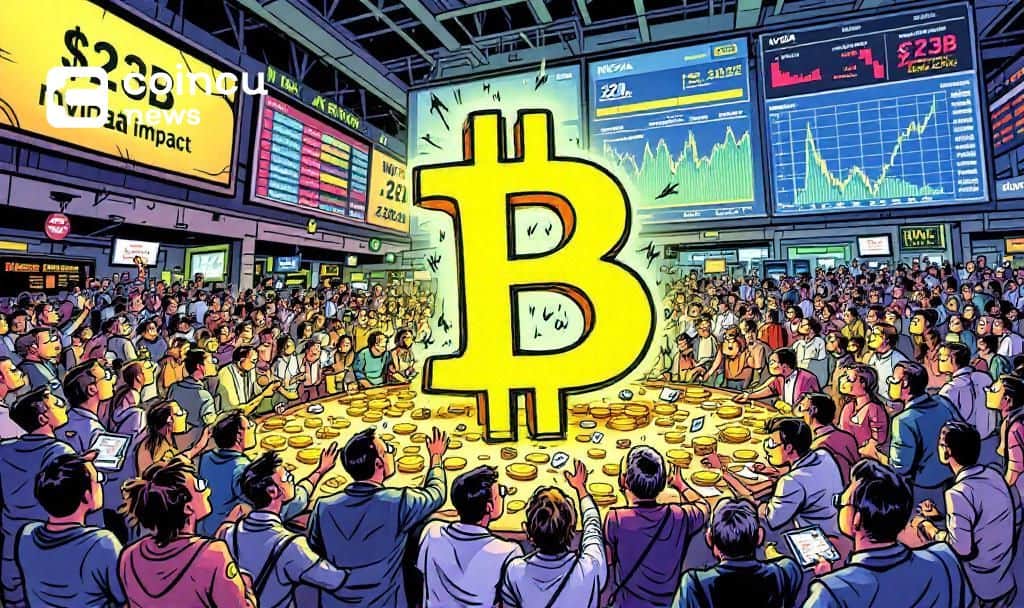
The post Nvidia’s Financial Anomaly Sparks Crypto Market Turmoil appeared on BitcoinEthereumNews.com. Key Points: Nvidia’s financial data anomaly affects technology and crypto markets. Institutional investors show caution amid financial shifts. Potential $23 billion Bitcoin liquidation risk due to market instability. On November 21, financial researcher Shanaka Anslem Perera revealed anomalies in Nvidia’s financial data, raising concerns about potential repercussions for tech stocks and cryptocurrencies. This raises questions about Nvidia’s valuation, indicating possible market volatility and potential cryptocurrency market effects if tech equities adjust. Nvidia’s Financial Irregularities Prompt Market Reactions Independent researcher Shanaka Anslem Perera reported a severe discrepancy in Nvidia’s financial data, including an 89% increase in accounts receivable and a 75% cash conversion rate, which falls short of industry standards. Nvidia’s alleged revenue inflations through circular funding loops with xAI, OpenAI, Microsoft, and Oracle were highlighted. Market uncertainty has prompted significant institutional sell-offs, including actions by Peter Thiel and SoftBank, with Michael Burry acquiring put options, all reflecting caution. The projected impact if Nvidia’s stock drops further could lead to a $23 billion Bitcoin liquidation, causing severe crypto market disturbances. “AI hype cycles always end with volatility crossing over into crypto. Watch for forced liquidations if big tech cracks.” – Arthur Hayes, Co-founder, BitMEX Bitcoin Faces Potential $23 Billion Liquidation Amid Instability Did you know? Nvidia’s cash conversion rate of 75% highlights a financial anomaly not seen since the tech industry’s rapid growth phases in the 2000s, when similar patterns triggered significant market collapses. Bitcoin’s price stands at $85,980.45, with a market cap of $1.72 trillion and dominance of 58.30%, according to CoinMarketCap. It has seen a 7.19% decline over 24 hours, 11.65% over seven days, and a 20.52% drop over 30 days, reflecting market volatility. The 24-hour trading volume has increased by 22.19%. Bitcoin(BTC), daily chart, screenshot on CoinMarketCap at 05:48 UTC on November 21, 2025. Source: CoinMarketCap The Coincu…

Author: BitcoinEthereumNews
ArkStream Capital: The Q3 uptrend has come to an end, and Q4 is entering a repricing phase.

ArkStream Capital: The Q3 uptrend has come to an end, and Q4 is entering a repricing phase.

The third quarter of 2025 was crucial for the crypto market, serving as a bridge between the past and the future: it built upon the rebound in risk assets that began in July and further confirmed the macroeconomic turning point after the September interest rate cut. However, entering the fourth quarter, the market was simultaneously impacted by macroeconomic uncertainties and the outbreak of structural risks within the crypto market itself, leading to a sharp reversal in market dynamics and shattering previous optimistic expectations. As the pace of inflation decline slowed, coupled with the longest-ever US federal government shutdown in October and escalating fiscal disputes, the latest FOMC meeting minutes explicitly signaled caution against premature rate cuts, causing significant fluctuations in market sentiment regarding the policy path. The previously clear narrative that a rate-cutting cycle had begun was quickly weakened, and investors began repricing potential risks such as "higher interest rates will persist longer" and "soaring fiscal uncertainty." Repeated speculation about rate cuts significantly increased volatility in risk assets. Against this backdrop, the Federal Reserve deliberately suppressed excessive market expectations to avoid premature easing of financial conditions. Amid rising policy uncertainty, the prolonged government shutdown has further exacerbated macroeconomic pressures, creating a double squeeze on both economic activity and financial liquidity. GDP growth will be significantly dragged down: The Congressional Budget Office estimates that the government shutdown will reduce the annualized growth rate of real GDP in Q4 2025 by 1.0% to 2.0%, equivalent to billions of dollars in economic losses. Key data gaps and liquidity contraction: The shutdown prevented the timely release of key data such as non-farm payrolls, CPI, and PPI, leaving the market in a "data blind spot" and increasing the difficulty of policy and economic judgments; at the same time, the interruption of federal spending led to a passive tightening of short-term liquidity, putting pressure on risk assets across the board. Entering November, discussions within the US stock market regarding whether the AI sector was experiencing a temporary overvaluation intensified. Volatility in highly valued tech stocks increased, impacting overall risk appetite and making it difficult for crypto assets to receive spillover support from the US stock market's beta. Although the pre-emptive pricing of interest rate cuts in the financial markets during the third quarter significantly boosted risk appetite, this "liquidity optimism" weakened considerably in the fourth quarter due to repeated government shutdowns and policy uncertainties, leading to a new round of repricing for risk assets. Amid rising macroeconomic uncertainty, the crypto market is also facing its own structural shocks. Between July and August, Bitcoin and Ethereum broke through their all-time highs (Bitcoin reached over $120,000; Ethereum touched around $4,956 at the end of August), and market sentiment became more positive in stages. However, the massive liquidation event on Binance on October 11th became the most severe systemic shock to the crypto industry: As of November 20, both Bitcoin and Ethereum have experienced significant pullbacks from their highs, weakening market depth and widening the divergence between bulls and bears. Liquidity gaps caused by liquidation weakened overall market confidence, market depth declined significantly in early Q4, and the spillover effect of liquidation exacerbated price volatility and increased counterparty risk. Meanwhile, the inflow of funds into spot ETFs and crypto-stock DAT slowed significantly in the fourth quarter. Institutional buying was insufficient to offset the selling pressure from liquidations, causing the crypto market to gradually enter a high-level turnover and fluctuation phase from late August, which eventually evolved into a more obvious correction. Looking back at the third quarter, the crypto market's rise stemmed from two main factors: a general recovery in risk appetite and the positive impact of listed companies promoting DAT (Digital Asset Treasury) strategies. These strategies increased institutional acceptance of crypto asset allocation and improved the liquidity structure of some assets, becoming one of the core narratives of the quarter. However, as liquidity tightened and price corrections intensified in the fourth quarter, the sustainability of DAT-related buying began to weaken. The essence of the DAT strategy lies in enterprises incorporating a portion of their tokenized assets into their balance sheets, thereby improving capital efficiency through on-chain liquidity, yield aggregation, and staking tools. As more listed companies and funds explore partnerships with stablecoin issuers, liquidity protocols, or tokenization platforms, this model is gradually moving from the conceptual exploration stage to the practical implementation stage. In this process, assets such as ETH, SOL, BNB, ENA, and HYPE are exhibiting a trend of "token-equity-asset" boundary fusion across different dimensions, demonstrating the bridging role of digital asset treasuries in the macro liquidity cycle. However, in the current market environment, valuation frameworks for innovative assets related to DAT (such as mNAV) have generally fallen below 1, indicating a discount in the market's assessment of the net asset value on the chain. This phenomenon reflects investors' concerns about the liquidity, return stability, and valuation sustainability of related assets, and also implies that the asset tokenization process faces certain adjustment pressures in the short term. At the sector level, multiple segments are demonstrating sustained growth momentum: The market capitalization of stablecoins continues to expand, exceeding $297 billion, further strengthening their role as a financial anchor in an environment of macroeconomic uncertainty. The Perp sector, represented by HYPE and ASTER, has achieved a significant increase in activity through innovative transaction structures (such as on-chain matching, optimized funding rates, and tiered liquidity mechanisms), becoming a major beneficiary of quarterly fund rotation. The market sector is expected to become active again amid macroeconomic fluctuations, with Polymarket and Kalshi repeatedly hitting new highs in trading volume, becoming immediate indicators of market sentiment and risk appetite. The rise of these sectors indicates that funds are shifting from a single price game to a structured allocation based on three core logics: "liquidity efficiency, return generation, and information pricing." Overall, the divergence between the crypto and US stock markets in the third quarter of 2025 translated into a concentrated exposure of structural risks and a comprehensive increase in liquidity pressure in the fourth quarter. The government shutdown delayed the release of key macroeconomic data and exacerbated fiscal uncertainty, weakening overall market confidence. The debate surrounding AI valuations in the US stock market fueled volatility, while the crypto market faced a more direct liquidity and depth shock following the Binance liquidation. Meanwhile, the slowdown in DAT strategy inflows and the widespread drop in mNAV below 1 indicate that the market remains highly sensitive to the liquidity environment and exhibits significant vulnerability during its institutionalization process. Whether the market can stabilize subsequently will largely depend on the speed at which the impact of the liquidation is digested and whether the market can gradually restore liquidity and sentiment stability amidst increasing divergence between bulls and bears. With interest rate cut expectations realized, the market enters a repricing phase. In the third quarter of 2025, the key variable in the global macroeconomic environment will not be the event of "interest rate cuts" themselves, but rather the generation, trading, and consumption of interest rate cut expectations. The market's pricing in of a liquidity inflection point began in July, and actual policy actions will become the point of verification of existing consensus. After two quarters of back-and-forth, the Federal Reserve lowered the target range for the federal funds rate by 25 basis points to 4.00%–4.25% at its September FOMC meeting, followed by a slight rate cut in October. However, because the market had largely priced in the rate cuts, the policy action itself had limited marginal impact on risk assets; the signaling effect of the rate cuts had already been largely priced in. Meanwhile, with inflation slowing and the economy showing greater resilience than expected, the Fed began to explicitly express concern about the market pricing in consecutive rate cuts next year, leading to a significant decrease in the probability of a further rate cut in December after October. This communication stance became a new variable dragging down market risk appetite. Macroeconomic data showed a "mild cooling" trend in the third quarter: The core CPI annual rate fell from 3.3% in May to 2.8% in August, confirming the downward trend in inflation; Non-farm payrolls have increased by less than 200,000 for three consecutive months; The job vacancy rate fell to 4.5%, the lowest level since 2021. This data indicates that the US economy has not fallen into recession, but rather entered a period of moderate slowdown, providing the Federal Reserve with policy space for "controlled interest rate cuts." Consequently, the market had already reached a consensus on a "certain interest rate cut" by early July. According to the CME FedWatch tool, investors had already priced in a 25 basis point rate cut in September with a probability exceeding 95% by the end of August, meaning the market had almost fully priced in this expectation. The bond market also reflected this signal: The yield on 10-year US Treasury bonds fell from 4.4% at the beginning of the quarter to 4.1% at the end of the quarter; The 2-year yield fell more sharply, by about 50 basis points, indicating that market bets on a policy shift were more concentrated. The macroeconomic shift in the third quarter was more a reflection of "the digestion of expectations" than "policy changes." The pricing of liquidity recovery was largely completed between July and August, and the actual rate cut in September was merely a formal confirmation of the existing consensus. For risk assets, the new marginal variable has shifted from "whether to cut rates" to "the pace and sustainability of rate cuts." However, when the interest rate cut was actually implemented, the expected marginal effect had been completely consumed, and the market quickly entered a vacuum phase with "no new catalysts". Since mid-September, changes in macroeconomic indicators and asset prices have shown a clear stagnation: The US Treasury yield curve is flattening: As of the end of September, the spread between 10-year and 3-month Treasury yields was only about 14 basis points, indicating that although the term premium still exists, the risk of inversion has been eliminated. The US dollar index fell back to the 98-99 range, significantly weaker than the high of 107 at the beginning of the year, but the cost of US dollar funding remained tight at the end of the quarter. US stock market liquidity is tightening marginally: The Nasdaq index continues to rise, but ETF inflows are slowing and trading volume growth is weak, indicating that institutions have begun to adjust their risk exposure at high levels. This "vacuum period after expectations are realized" has become the most representative macroeconomic phenomenon of the quarter. The market trades on the "certainty of interest rate cuts" in the first half, and begins to price in the "reality of slowing growth" in the second half. The Federal Reserve's September dot plot (SEP) revealed a clear division within the policymaking body regarding the future path of interest rates: The median policy interest rate is expected to be lowered to 3.9% by the end of 2025; The committee members' forecasts ranged from 3.4% to 4.4%, reflecting the divergence of opinions among policymakers regarding inflation stickiness, economic resilience, and policy space. Following the September rate cut and another small rate cut in October, the Federal Reserve's communication has gradually shifted to a more cautious tone to avoid premature easing of financial conditions. As a result, the probability of another rate cut in December, which was previously highly anticipated, has now significantly decreased, and the policy path has returned to a framework of "data dependence" rather than "pre-set pace". Unlike previous rounds of "crisis-driven easing," this round of interest rate cuts represents a controlled policy adjustment. While cutting rates, the Federal Reserve continues to reduce its balance sheet, signaling a commitment to "stabilizing capital costs and curbing inflation expectations," emphasizing a balance between growth and prices rather than actively expanding liquidity. In other words, the inflection point for interest rates has been established, but the inflection point for liquidity has not yet arrived. Against this backdrop, the market exhibited a clear divergence. Lower financing costs provided valuation support for some high-quality assets, but broad liquidity did not expand significantly, and capital allocation became more cautious. Sectors with robust cash flow and strong earnings support (AI, technology blue chips, and some DAT-related US stocks) continued their valuation recovery trend; Assets with high leverage, high valuations, or lack of cash flow support (including some growth stocks and non-mainstream crypto tokens) have seen their momentum weaken after expectations are realized, resulting in a significant decrease in trading activity. Overall, the third quarter of 2025 is a period of "expectation realization" rather than a period of "liquidity release." The market priced in the certainty of interest rate cuts in the first half, and shifted to a reassessment of the slowdown in growth in the second half. The premature consumption of expectations meant that while risk assets remained high, they lacked sustained upward momentum. This macroeconomic landscape laid the foundation for subsequent structural divergence and explained the "breakout-pullback-high-level consolidation" pattern in the crypto market in Q3: funds flowed to relatively stable assets with verifiable cash flows, rather than systemically risky assets. The DAT Explosion and Structural Turning Point in Non-Bitcoin Assets In the third quarter of 2025, the Digital Asset Treasury (DAT) leaped from a fringe concept in the crypto industry to the fastest-spreading new theme in global capital markets. For the first time, public market funds simultaneously entered the crypto asset market in terms of both scale and mechanism: billions of dollars of fiat currency liquidity flowed directly into the crypto market through traditional financing tools such as PIPE, ATMs, and convertible bonds, forming a structured trend of "crypto-equity linkage". The origins of the DAT model can be traced back to MicroStrategy (NASDAQ: MSTR), a pioneer in the traditional market. Since 2020, the company was the first to include Bitcoin on its balance sheet, and between 2020 and 2025, it purchased approximately 640,000 Bitcoins through multiple rounds of convertible bonds and ATM issuances, with a total investment exceeding $47 billion. This strategic move not only reshaped the company's asset structure but also created a paradigm where traditional stocks become a "secondary carrier" of crypto assets. Due to the systemic differences in valuation logic between the equity market and on-chain assets, MicroStrategy's stock price has consistently exceeded its Bitcoin net asset value, with mNAV (market capitalization/on-chain net asset value) remaining in the 1.2–1.4x range for many years. This "structural premium" reveals the core mechanism of DAT: Companies raise funds in the public market to hold crypto assets, enabling two-way communication and valuation feedback between fiat capital and crypto assets at the company level. From a mechanistic perspective, MicroStrategy's experiments laid the foundation for the three pillars of the DAT model: Financing channels: Introduce fiat currency liquidity through PIPE, ATMs, or convertible bonds to provide enterprises with on-chain asset allocation funds; Asset reserve logic: Incorporate crypto assets into the financial reporting system to form an enterprise-level "on-chain treasury"; Investor access: Allows traditional capital market investors to gain indirect exposure to crypto assets through stocks, reducing compliance and custody barriers. These three elements together constitute DAT's "structural cycle": financing—holding—valuation feedback. Companies use traditional financial instruments to absorb liquidity, forming a reserve of crypto assets, and then use the premium in the equity market to increase capital, achieving a dynamic rebalancing between capital and tokens. The significance of this structure lies in the fact that it enables digital assets to enter the balance sheets of the traditional financial system in a compliant manner for the first time, and gives the capital market a completely new asset form—"tradable on-chain asset mapping." In other words, enterprises are no longer just on-chain participants, but become structural intermediaries between fiat capital and crypto assets. As this model was validated and rapidly replicated by the market, the third quarter of 2025 marked the second phase of the DAT concept's diffusion: extending from a "store of value" centered on Bitcoin to productive assets (PoS yields or DeFi yields) such as Ethereum (ETH) and Solana (SOL). This new generation of DAT models, centered on the mNAV (market capitalization/on-chain net asset value) pricing system, incorporates yield-generating assets into corporate cash flow and valuation logic, forming a "yield-driven treasury cycle." Unlike early Bitcoin treasuries, ETH, SOL, and others possess sustainable staking yields and on-chain economic activity, giving their treasury assets not only store of value attributes but also cash flow characteristics. This shift signifies that DAT is moving from simple asset holding to a stage of capital structure innovation centered on productive returns, becoming a key bridge connecting the value of productive crypto assets with the valuation system of traditional capital markets. Note: Entering November 2025, a new round of decline in the crypto market triggered the most systematic valuation repricing in the DAT sector since its inception. With core assets such as ETH, SOL, and BTC experiencing a rapid pullback of 25-35% in October and November, and the short-term dilution effect brought about by some DAT companies accelerating balance sheet expansion through ATMs, the mNAV of mainstream DAT companies generally fell below 1. BMNR, SBET, and FORD all experienced varying degrees of "discounted trading" (mNAV≈0.82-0.98), and even MicroStrategy (MSTR), which had long maintained a structural premium, saw its mNAV briefly fall below 1 in November, the first time since the launch of the Bitcoin Treasury strategy in 2020. This phenomenon signifies that the market has transitioned from a period of structural premium to a defensive phase of "asset-driven, valuation-discounted" pricing. Institutional investors generally view this as the first comprehensive "stress test" for the DAT industry, reflecting that the capital market is reassessing the sustainability of on-chain asset returns, the rationality of the pace of treasury expansion, and the long-term impact of financing structure on equity value. SBET and BMNR lead the Ethereum treasury revolution In the third quarter of 2025, the market landscape for Ethereum Treasury Assets (ETH DAT) was initially established. SharpLink Gaming (NASDAQ: SBET) and BitMine Immersion Technologies (NASDAQ: BMNR) emerged as two leading companies defining industry paradigms. They not only replicated MicroStrategy's balance sheet strategy but also achieved a leap "from concept to system" in terms of financing structure, institutional participation, and information disclosure standards, thus constructing the dual pillars of the ETH treasury cycle. BMNR: Capital Engineering for Ethereum Treasuryization As of the end of September 2025, BitMine Immersion Technologies (BMNR) has established itself as the world's largest Ethereum Treasury. According to the company's latest disclosure, it holds approximately 3,030,000 ETH, which, based on the closing price of $4,150/ETH on October 1st, corresponds to approximately $12.58 billion (approximately US$12.58 billion) in on-chain net assets. Including the company's cash and other liquid assets, BMNR's total crypto and cash holdings are approximately $12.9 billion (approximately US$12.9 billion). Based on this estimate, BMNR holds approximately 2.4–2.6% of the circulating supply of Ethereum, making it the first listed institution in the market to hold over 3 million ETH. This corresponds to a market capitalization of approximately $11.2–11.8 billion (approximately $11.2–11.8 billion USD), with a projected mNAV ≈ 1.27×, making it the highest-valued publicly traded digital asset treasury (DAT) company currently. BMNR's strategic leap is closely related to its organizational restructuring. After Chairman Tom Lee (former co-founder of Fundstrat) took full control of capital operations in mid-2025, he put forward the core proposition: "ETH is the institutional sovereign asset of the future." Under his leadership, the company completed its structural transformation from a traditional mining company to one that "uses ETH as its sole reserve asset and PoS returns as its core cash flow," becoming the first US-listed company to use Ethereum staking returns as its main operating cash flow. In terms of financing, BMNR demonstrated exceptional fundraising strength and execution efficiency. The company simultaneously expanded its funding sources through both public and private channels, providing long-term ammunition for its Ethereum treasury strategy. This quarter, BMNR not only broke records for fundraising in traditional capital markets but also laid the foundation for the institutionalization of "on-chain asset securitization." On July 9, BMNR, through a Form S-3 registration statement, signed an "At-the-Market (ATM)" issuance agreement with Cantor Fitzgerald and ThinkEquity, with an initial authorized limit of $2 billion. Just two weeks later, on July 24, the company disclosed in its SEC 8-K filing that it had increased this limit to $4.5 billion in response to the positive market response to its ETH treasury model. On August 12, the company submitted further supplementary information to the SEC, increasing the total ATM limit to $24.5 billion (an additional $20 billion), and specifying that the funds would be used to purchase ETH and expand its PoS staking portfolio. These limits represent the maximum number of shares that BMNR can obtain through a sustainable market-based offering approved by the SEC, and are not equivalent to actual cash raised. Regarding the funding aspect, the company has completed several concrete transactions: In early July 2025, a $250 million PIPE private placement was completed to fund the initial ETH position building; ARK Invest (Cathie Wood) disclosed on July 22 that it had purchased approximately $182 million worth of BMNR common stock, of which $177 million of net proceeds were used directly by the company to increase its holdings of ETH. Founders Fund (Peter Thiel) filed a 9.1% stake with the SEC on July 16. Although it was not new financing, it strengthened institutional consensus in the market. Furthermore, BMNR has sold approximately $4.5 billion worth of stock under its early ATM licenses, significantly exceeding the initial PIPE amount. As of September 2025, the company has utilized billions of dollars through multiple channels including PIPE and ATMs, and continues to advance its long-term expansion plans within the framework of a total license of $24.5 billion. BMNR's financing system presents a clear three-tiered structure: The tier of funding with certainty of success includes completed PIPE and institutional private placements, amounting to approximately $450-500 million. Market-based expansion layer – Through the ATM mechanism, shares are sold in stages, and the actual funds raised have reached the level of billions of US dollars; Potential ammunition layer – The $24.5 billion ATM quota already approved by the SEC provides ceiling flexibility for subsequent ETH treasury expansion. With this tiered capital structure, BMNR quickly built up a reserve of approximately 3.03 million ETH (worth approximately $12.58 billion), transforming its treasury strategy from a "single holding experiment" to an "institutionalized asset allocation." BMNR's valuation premium mainly stems from two factors: Asset-level premium: PoS collateralized yields remain at 3.4-3.8% annualized, forming a stable cash flow anchor; Capital premium: As a "compliant ETH leverage channel", its stock price usually leads the ETH spot price by 3-5 trading days, becoming a leading indicator for institutions to track the ETH market. In terms of market behavior, BMNR's stock price reached a record high in the third quarter, in sync with ETH, and repeatedly drove sector rotation. Its high turnover rate and the speed of circulating share circulation indicate that the DAT model is gradually evolving into an on-chain asset mapping mechanism that can be traded in the capital market. SBET: A Case Study of Transparency in Institutionalized Treasury Systems Compared to BitMine Immersion Technologies' (BMNR) aggressive balance sheet expansion strategy, SharpLink Gaming (NASDAQ: SBET) opted for a more robust and institutionalized financial management path in the third quarter of 2025. Its core competitiveness lies not in the size of its funds, but in the transparency of its governance structure, disclosure standards, and audit system, establishing a replicable "institutional-level template" for the DAT industry. As of September 2025, SBET held approximately 840,000 ETH, with on-chain assets estimated at approximately $3.27 billion based on the quarterly average price, corresponding to a stock market capitalization of approximately $2.8 billion, and mNAV ≈ 0.95×. Although the valuation is slightly lower than net assets, the company's quarterly EPS growth reached 98%, demonstrating its strong operating leverage and execution efficiency in ETH monetization and cost control. SBET's core value lies not in aggressive position expansion, but in establishing the first compliant and auditable governance framework in the DAT industry: Strategic advisor Joseph Lubin (Ethereum co-founder and ConsenSys founder) joined the company's strategy committee in Q2 to push for the integration of staking yields, DeFi derivatives, and liquidity mining strategies into the corporate portfolio; Pantera Capital and Galaxy Digital participated in PIPE financing and secondary market shareholding, respectively, providing the company with institutional liquidity and on-chain asset allocation advisory services. Ledger Prime provides on-chain risk hedging and volatility management models; Grant Thornton, as an independent auditing firm, is responsible for verifying the authenticity of on-chain assets, yields, and staking accounts. This governance system constitutes the first disclosure mechanism in the DAT industry that combines "on-chain verifiable information with traditional auditing". In its 10-Q report for the third quarter of 2025, SBET will disclose in full for the first time: The company's main wallet addresses and on-chain asset structure; Pledge yield curve and node distribution; Risk limits for mortgage and restaking positions. This report makes SBET the first publicly traded company to simultaneously disclose on-chain data in its SEC filings, significantly enhancing institutional investor confidence and financial comparability. SBET is widely regarded as a "compliant ETH index constituent": its mNAV is close to 1×, its price maintains a high correlation with the ETH market, yet it exhibits relatively low volatility due to its information transparency and robust risk structure. ETH's dual-track approach to treasury management: asset-driven and governance-driven. The divergence between BMNR and SBET constitutes the two core pillars of ETH DAT ecosystem development in the third quarter of 2025: BMNR: Asset-Driven – Its core logic revolves around financing and balance sheet expansion, institutional shareholding, and capital premium. BMNR rapidly accumulates ETH positions using PIPE and ATM financing tools, and establishes a market-based leverage channel through mNAV pricing, promoting the direct coupling of fiat capital and on-chain assets. SBET: Governance-Driven – Focusing on transparency and compliance, structured treasury revenue, and risk control. SBET incorporates on-chain assets into its audit and information disclosure system, establishing the institutional boundaries of DAT through a governance architecture that combines on-chain verification with traditional accounting. These two represent the two extremes of ETH's treasury transformation from a "reserve logic" to an "institutionalized asset form": the former expands capital scale and market depth, while the latter lays the foundation for governance trust and institutional compliance. In this process, the functional attributes of ETH DAT have transcended that of an "on-chain reserve asset," evolving into a composite structure that combines cash flow generation, liquidity pricing, and balance sheet management. The institutional logic of PoS revenue, governance rights, and valuation premium The core competitiveness of the treasury of PoS crypto assets such as ETH comes from the triple combination of interest-bearing asset structure, network layer discourse power, and market valuation mechanism. High collateralized yield: Establishing a cash flow anchor Unlike Bitcoin's "non-productive holdings," ETH, as a PoS network asset, can generate an annualized yield of 3-4% through staking, forming a compound yield structure (Staking + LST + Restaking) in the DeFi market. This allows DAT companies to capture real on-chain cash flow in a corporate form, transforming digital assets from "static reserves" into "yield assets" with stable endogenous cash flow characteristics. The power of discourse and scarcity of resources under the PoS mechanism As the ETH treasury's staking volume increases, it gains governance and ranking power at the network level. BMNR and SBET currently control approximately 3.5-4% of the total ETH staking volume, placing them within the marginal influence range of protocol governance. This type of control carries a premium logic similar to "systemic status," and the market is willing to assign it a valuation multiplier higher than its net asset value. The formation mechanism of mNAV premium The valuation of DAT company not only reflects the net asset value (NAV) of its on-chain assets, but also incorporates two types of expectations: Cash flow premium: staking yield and expected distributable profits from on-chain strategies; Structural premium: Corporate equity provides traditional institutions with a compliant channel for ETH exposure, thereby creating institutional scarcity. At the market peak in July and August, the average mNAV of ETH DAT remained in the range of 1.2-1.3 times, with some individual companies (BMNR) even reaching 1.5 times. This valuation logic is similar to the premium or discount structure of gold ETFs or closed-end funds' NAV, serving as an important "pricing intermediary" for institutional funds entering on-chain assets. In other words, the premium of DAT is not driven by sentiment, but rather by a complex structure based on real returns, network power, and capital channels. This also explains why the ETH Treasury achieved higher capital density and trading activity than the Bitcoin Treasury (MSTR model) in just one quarter. The structural evolution from ETH to a multi-altcoin asset treasury Entering August and September, the expansion of non-Ethereum-based DATs accelerated significantly. A new wave of institutional allocation, exemplified by Solana's treasury-based model, signifies a shift in market focus from "single-asset reserves" to "multi-chain asset stratification." This trend indicates that the DAT model is being replicated from the Ethereum core to multiple ecosystems, forming a more systematic cross-chain capital structure. FORD: An Institutionalized Example of the Solana Treasury Forward Industries (NASDAQ: FORD) stands out as the most representative case in this phase. The company completed a $1.65 billion PIPE funding round in the third quarter, with all funds used for Solana spot trading and ecosystem collaboration investments. As of September 2025, FORD held approximately 6.82 million SOL tokens. Based on an average quarterly price of $248–$252, its on-chain treasury net value was approximately $1.69 billion, corresponding to a stock market capitalization of approximately $2.09 billion, with a mNAV ≈ 1.24×, ranking first among non-ETH treasury companies. Unlike the early days of ETH DAT, the rise of FORD was not driven by a single asset, but rather by the resonance of multiple capital sources and the ecosystem: Investors include Multicoin Capital, Galaxy Digital, and Jump Crypto, all of which are long-term core investors in the Solana ecosystem; The governance structure incorporates members of the Solana Foundation Advisory Board, establishing a strategic framework of "on-chain assets as enterprise means of production"; The SOL assets held remain fully liquid and have not yet been staked or configured in DeFi, in order to preserve the strategic flexibility for future restaking and linkage with RWA assets. This "high liquidity + configurable treasury" model makes FORD the capital hub of the Solana ecosystem, and also reflects the market's structural premium expectations for high-performance public chain assets. Structural changes in the global DAT landscape As of the end of Q3 2025, the total publicly disclosed global non-Bitcoin DAT treasury exceeded $24 billion, representing a quarter-on-quarter increase of approximately 65%. The structure and distribution are as follows: Ethereum (ETH) remains dominant, accounting for approximately 52% of the total market size; Solana (SOL) accounts for approximately 25%, making it the second largest allocation direction for institutional funds; The remaining funds are mainly distributed in emerging assets such as BNB, SUI, and HYPE, forming the horizontal expansion layer of the DAT model. The valuation of ETH DAT is anchored by PoS yield and governance value, representing a combination of long-term cash flow and network control. SOL DAT, on the other hand, uses ecosystem growth and staking efficiency as its core premium sources, emphasizing capital efficiency and scalability. BMNR and SBET established the institutional and asset foundations during the ETH phase, while the emergence of FORD has propelled the DAT model into its second phase of multi-chain and ecosystem development. At the same time, some new entrants have begun to explore the functional extensions of DAT: Ethena (ENA)'s StablecoinX model combines government bond yields with on-chain hedging structures to attempt to build a "yield-generating stablecoin treasury" to create stable but cash-flow-generating reserve assets. BNB DAT is led by the exchange system and relies on the asset collateral and reserve tokenization of ecosystem enterprises to expand the liquidity pool, forming a "closed treasury system". A temporary stagnation following overvaluation and risk repricing After a concentrated upward trend in July and August, the DAT sector entered a rebalancing phase in September following valuation overvaluation. Second-tier financial stocks initially boosted the overall sector premium, with the median mNAV exceeding 1.2x. However, with tightening regulations and slower financing, valuation support quickly declined by the end of the quarter, and the sector's enthusiasm cooled significantly. Structurally, the DAT industry is transitioning from "asset innovation" to "institutional integration." While ETH and SOL have established a "dual-core valuation system," the liquidity, compliance, and real yield of expansionary assets are still in the verification stage. In other words, market drivers have shifted from "premium expectations" to "yield realization," and the industry has entered a repricing cycle. Entering September, key indicators weakened in tandem: ETH staking yield fell to 3.1% from 3.8% at the beginning of the quarter, while SOL staking yield decreased by more than 25% quarter-over-quarter. Several second-tier DAT companies have seen their mNAV fall below 1, indicating diminishing marginal returns to capital efficiency. The total amount of PIPE and ATM financing declined by about 40% month-on-month, and institutions such as ARK, VanEck, and Pantera suspended new DAT allocations; At the ETF level, net capital inflows turned negative, and some funds replaced their ETH Treasury holdings with short-duration Treasury bond ETFs to reduce valuation volatility risk. This pullback exposes a core problem: the capital efficiency of the DAT model has been overdrawn in the short term. The early valuation premium stemmed from structural innovation and institutional scarcity, but as on-chain revenue declined and financing costs rose, companies expanded their balance sheets faster than revenue growth, falling into a "negative dilution cycle"—that is, market capitalization growth depends on financing rather than cash flow. From a macro perspective, the DAT sector is entering a period of "valuation internalization": The core companies (BMNR, SBET, FORD) maintain structural stability through sound financial resources and transparent information. Marginal projects face deleveraging and liquidity contraction due to their simple capital structure and insufficient disclosure; In terms of regulation, the SEC requires companies to disclose their primary wallet addresses and staking yield disclosure standards, further reducing the space for "high-frequency balance sheet expansion". The main short-term risk stems from valuation compression caused by liquidity reflexivity. When mNAV continues to decline and PoS yields struggle to cover financing costs, market confidence in the "on-chain reserve + equity pricing" model will be damaged, leading to a systemic valuation correction similar to that following the DeFi summer of 2021. Despite this, the DAT industry has not entered a recession, but rather transitioned from a "balance sheet expansion driven" to a "yield driven" phase. In the coming quarters, ETH and SOL treasuries are expected to maintain their institutional advantages, and their valuations will increasingly rely on: Efficiency of returns from pledging and re-pledging; On-chain transparency and compliance disclosure standards. In other words, the first phase of the DAT boom has ended, and the industry has entered a period of consolidation and validation. The key variables for future valuation adjustments lie in the stability of PoS yields, the efficiency of re-staking integration, and the clarity of regulatory policies. Prediction Markets: A Barometer of Macro Narratives and the Rise of the Attention Economy In the third quarter of 2025, prediction markets evolved from a "native crypto-edge activity" to a "new type of market infrastructure where on-chain and compliant finance converge." In an environment of frequent macroeconomic policy changes and dramatic fluctuations in inflation and interest rate expectations, prediction markets have gradually become important venues for capturing market sentiment, hedging policy risks, and discovering narrative prices. The fusion of macroeconomic and on-chain narratives has transformed them from speculative tools into a market layer that combines information aggregation and price signaling functions. Historically, crypto-native prediction markets have demonstrated significant foresight in numerous macroeconomic and political events. During the 2024 US presidential election, Polymarket's total trading volume exceeded $500 million, with the "Who Will Win the Presidential Election?" contract alone reaching $250 million. The peak daily trading volume surpassed $20 million, setting a record for on-chain prediction markets. In macroeconomic events such as "Will the Federal Reserve cut interest rates in September 2024?", contract price changes significantly outpaced the expected adjustments of CME FedWatch interest rate futures, demonstrating that prediction markets have become leading indicators in certain timeframes. Nevertheless, the overall size of on-chain prediction markets remains far smaller than that of traditional markets. Since 2025, the global crypto prediction market (represented by Polymarket, Kalshi, etc.) has accumulated a trading volume of approximately $24.1 billion, while traditional compliant platforms such as Betfair and Flutter Entertainment have annual trading volumes in the hundreds of billions of dollars. The on-chain market is less than 5% the size of the traditional market, but it demonstrates higher growth potential than traditional financial products in terms of user growth, topic coverage, and trading activity. In the third quarter, Polymarket became a phenomenal growth case. Contrary to the mid-year rumors of a $1 billion valuation financing round, the latest news in early October indicated that ICE, the parent company of the NYSE, planned to invest up to $2 billion, acquiring approximately a 20% stake, corresponding to a valuation of approximately $8-9 billion for Polymarket. This signifies that its data and business model have gained recognition from Wall Street. As of the end of October, Polymarket's cumulative annual trading volume was approximately $13.2 billion, with September's trading volume reaching $1.4-1.5 billion, a significant increase from the second quarter, and October's trading volume even setting a new record high of $3 billion. Trading themes focused on macroeconomic and regulatory events such as "whether the Fed will cut interest rates at the September FOMC meeting," "whether the SEC will approve an Ethereum ETF before the end of the year," "the winning probability of key states in the US presidential election," and "Circle (CIR) stock price performance after its listing." Some researchers pointed out that the price fluctuations of these contracts, in most cases, lead US Treasury yields and the FedWatch probability curve by approximately 12-24 hours, becoming a forward-looking indicator of market sentiment. Meanwhile, Kalshi achieved an institutional breakthrough in compliance. As a prediction market exchange registered with the U.S. Commodity Futures Trading Commission (CFTC), Kalshi completed a $185 million Series C funding round in June 2025 (led by Paradigm), valuing the company at approximately $2 billion; its latest valuation disclosed in October had risen to $5 billion, with an annualized trading volume growth rate exceeding 200%. In the third quarter, the platform launched contracts related to crypto assets, such as "Will Bitcoin close above $80,000 by the end of this month?" and "Will an Ethereum ETF be approved before the end of the year?", marking the formal entry of traditional institutions into the speculative and hedging market of "crypto narrative events." According to Investopedia, its crypto-related contracts saw a trading volume exceeding $500 million within two months of launch, providing institutional investors with a new channel to express macroeconomic expectations within a compliant framework. Thus, the prediction market has formed a dual-track structure of "on-chain freedom + rigorous compliance." Unlike earlier prediction platforms that focused on entertainment and political themes, the mainstream market focus in Q3 2025 shifted significantly towards macroeconomic policies, financial regulations, and events linking cryptocurrencies and stocks. Macroeconomic and regulatory contracts on the Polymarket platform saw a cumulative trading volume exceeding $500 million, accounting for over 40% of the quarterly total trading volume. Investors remained highly engaged on topics such as whether an ETH spot ETF would be approved before Q4 and whether Circle's stock price would break through key levels after its listing. The price movements of these contracts even outpaced traditional media sentiment and derivatives market expectations at times, gradually evolving into a "market consensus pricing mechanism." The core innovation of on-chain prediction markets lies in their use of tokenization to achieve liquidity pricing for events. Each prediction event is priced binary or continuously in the form of tokens (such as YES/NO Token), and liquidity is maintained by automated market makers (AMMs), thus achieving efficient price discovery without the need for matching. Settlement relies on decentralized oracles (such as UMA and Chainlink) for on-chain execution, ensuring transparency and auditability. This structure allows almost all social and financial events—from election results to interest rate decisions—to be quantified and traded as on-chain assets, constituting a new paradigm of "financialization of information." However, rapid development comes with significant risks. First, oracle risk remains a core technological bottleneck for on-chain prediction markets; any delays or manipulation of external data could trigger disputes over contract settlement. Second, unclear compliance boundaries continue to constrain market expansion, as the regulatory approaches for event-based derivatives in the US and EU are not yet fully aligned. Third, some platforms still lack KYC/AML processes, potentially posing compliance risks related to funding sources. Finally, excessive concentration of liquidity on leading platforms (Polymarket's market share exceeds 90%) could lead to price deviations and amplified market volatility under extreme market conditions. Overall, the performance of prediction markets in the third quarter shows that they are no longer a marginal "crypto game" but are becoming an important carrier of macro narratives. They are both an immediate reflection of market sentiment and an intermediary tool for information aggregation and risk pricing. Looking ahead to the fourth quarter, prediction markets are expected to continue evolving along a dual-circulation structure of "on-chain × compliance": the on-chain portion, Polymarket, will expand its reach by leveraging DeFi liquidity and macro narrative trading; while the compliant Kalshi will accelerate its attraction of institutional capital through regulatory approval and its USD-denominated pricing mechanism. With the popularization of data-driven financial narratives, prediction markets are moving from an attention economy to a decision-making infrastructure, becoming a rare new asset layer in the financial system that can both reflect collective sentiment and possess forward-looking pricing capabilities. Reference Links https://www.strategicethreserve.xyz/ https://blockworks.com/analytics/treasury-companies https://www.theblock.co/data/decentralized-finance/prediction-markets-and-betting ArkStream Capital is a crypto fund founded by native cryptocurrency professionals. It incorporates primary market and liquidity strategies, investing in web3 native and cutting-edge innovations, and is dedicated to fostering the growth of web3 founders and unicorns. The ArkStream Capital team entered the cryptocurrency space in 2015 and comes from universities and companies such as MIT, Stanford, UBS, Accenture, Tencent, and Google. Its portfolio includes over 100 blockchain companies, including Aave, Sei, Manta, Flow, Fhenix, Merlin, Avail, and Space and Time. Website: https://arkstream.capital/ Medium: https://arkstreamcapital.medium.com/ Twitter: https://twitter.com/ark_stream

Author: PANews