Oracle

Oracles are essential infrastructure components that feed real-time, off-chain data (such as price feeds, weather, or sports results) into blockchain smart contracts. Without decentralized oracles like Chainlink and Pyth, DeFi could not function. In 2026, oracles have evolved to support verifiable randomness and cross-chain data synchronization. This tag covers the technical evolution of data availability, tamper-proof price feeds, and the critical role oracles play in ensuring the deterministic execution of complex decentralized applications.

5085 Articles
Created: 2026/02/02 18:52
Updated: 2026/02/02 18:52
Chainlink Secures Tokenized META, TSLA, NVDA & GOOGL Trading on Solana

Chainlink Secures Tokenized META, TSLA, NVDA & GOOGL Trading on Solana

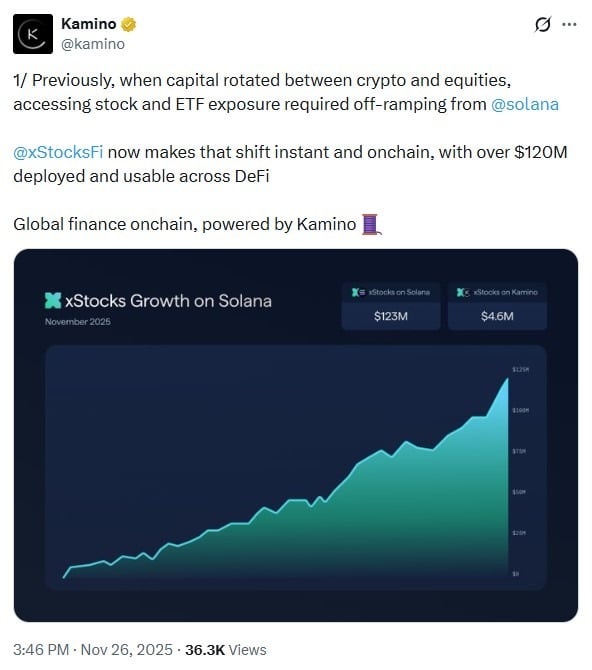
Kamino Finance integrates with Chainlink Data Streams to power tokenised trading of stocks. Chainlink leads the oracle sector with 63% market control, demonstrating increased demand. Chainlink (LINK) plays an important infrastructure role in the Kamino xStocks ecosystem. Kamino disclosed that Chainlink provides secure, tamper-proof data feeds for tokenised equities, including META, TSLA, NVDA, and GOOGL, [...]]]>

Author: Crypto News Flash
New DeFi Crypto Coin Jumps 250% and Could Surge 12x After V1, Phase 6 90% Gone

New DeFi Crypto Coin Jumps 250% and Could Surge 12x After V1, Phase 6 90% Gone

There is a new DeFi cryptocurrency that is becoming popular. The token price is already surging, the initial investors are buying more tokens, and investor demand is growing at a rate that is astounding even for long term market observers. As the updates about creating a new development arrive and the next phase of the […]

Author: Cryptopolitan
Top Crypto Analysts Track a 900% Upside for This DeFi Coin as Phase 6 Surges 90%, Here’s the Math

Top Crypto Analysts Track a 900% Upside for This DeFi Coin as Phase 6 Surges 90%, Here’s the Math

The crypto market is tightening up once again though there is a new token under $0.04 that is moving at a higher rate than expected by most people. According to analysts the following figures are an indication of an apparent upside and the further the presale goes in Phase 6 and over 90, the more […]

Author: Cryptopolitan
Chainlink Reserve on track to reach 1 million LINK amid steady accumulation

Chainlink Reserve on track to reach 1 million LINK amid steady accumulation

The post Chainlink Reserve on track to reach 1 million LINK amid steady accumulation appeared on BitcoinEthereumNews.com. Key Takeaways Chainlink Reserve has accumulated over 973,700 LINK tokens in over three months. This reserve operates autonomously, converting revenue from off-chain and on-chain network activities into LINK. Chainlink Reserve has accumulated over 973,700 LINK tokens to support network growth, the decentralized oracle network announced today. It is on track to reach the one million milestone. RESERVE UPDATE Today, the Chainlink Reserve has accumulated 89,079.05 LINK. The Chainlink Reserve now holds a total of 973,752.70 LINK.https://t.co/oxMv5N3rFC The Chainlink Reserve is designed to support the long-term growth and sustainability of the Chainlink Network by… pic.twitter.com/r5u9UpIhtu — Chainlink (@chainlink) November 27, 2025 The Chainlink Reserve operates as an on-chain treasury contract that automatically accumulates LINK tokens by converting network revenue from off-chain enterprise payments and on-chain service fees through decentralized exchanges. The tokens are locked under a multi-year no-withdrawal policy enforced by a timelocked smart contract. The reserve mechanism supports ongoing LINK accumulation to foster long-term growth and sustainability of the Chainlink Network. Recent updates show consistent weekly deposits driven by enterprise adoption and service usage across both off-chain and on-chain implementations. Source: https://cryptobriefing.com/chainlink-reserve-accumulates-link-network-growth/

Author: BitcoinEthereumNews
This $0.035 New Crypto Is Almost Gone, Phase 6 Hits 96% as Investors Expect a 20x Rally

This $0.035 New Crypto Is Almost Gone, Phase 6 Hits 96% as Investors Expect a 20x Rally

There are numerous rapid moves to the presale in the crypto market in 2025, although very few have reached the same speed that investors are currently observing. One token with a price of $0.035 has surpassed the allocation rate of 96% and has attracted buyers who hold the view that a massive boom would follow […]

Author: Cryptopolitan
Can Antitrust Regulations Keep Up With AI? Researchers Warn of Growing Structural Tensions

Can Antitrust Regulations Keep Up With AI? Researchers Warn of Growing Structural Tensions

The article examines how market structure—especially vertical integration—shapes AI safety, competition, regulatory oversight, and policy design. It highlights unresolved research questions around supply-chain opacity, compute monitoring, national security tensions, and whether structural remedies may be needed to govern frontier AI systems effectively.

Author: Hackernoon
Oracle Credit Risk Escalates on AI Spending Concerns, Morgan Stanley Flags Potential 2026 Impact

Oracle Credit Risk Escalates on AI Spending Concerns, Morgan Stanley Flags Potential 2026 Impact

The post Oracle Credit Risk Escalates on AI Spending Concerns, Morgan Stanley Flags Potential 2026 Impact appeared on BitcoinEthereumNews.com. Oracle’s credit risk is escalating due to its aggressive AI infrastructure investments, with the five-year credit default swap reaching a three-year high of 1.25 percentage points. This reflects investor concerns over mounting debt and funding uncertainties, potentially worsening by 2026 if financing plans remain unclear. Key Point 1 – Rising CDS Spreads: Oracle’s five-year CDS hit 1.25 percentage points, nearing 2008 crisis levels and signaling heightened default fears. Key Point 2 – Massive AI Spending: The company raised $18 billion in bonds and is pursuing $56 billion in loans for data centers, straining its balance sheet. Key Point 3 – Market Hedging Surge: Banks and traders are increasing CDS protection, with trading volume up amid ongoing construction projects in multiple states. Oracle faces growing credit risk from AI data center expansions, with CDS spreads at three-year highs. Investors hedge against debt pile-up—explore funding challenges and market reactions now. What is Driving Oracle’s Increasing Credit Risk? Oracle’s credit risk is surging primarily due to its rapid expansion in artificial intelligence infrastructure, leading to substantial debt accumulation and uncertain funding sources. In November, the company’s five-year credit default swap spread reached 1.25 percentage points, a three-year peak according to data from ICE Data Services. This escalation highlights market worries that the balance sheet could deteriorate further by 2026 without transparent financing strategies. How Are Banks Responding to Oracle’s AI Loan Demands? Banks are ramping up hedging activities as Oracle’s AI-related borrowing explodes, with around 20 institutions arranging an $18 billion project finance loan for a New Mexico data center campus where Oracle will serve as the anchor tenant. This follows a $18 billion bond issuance in September and an additional $38 billion loan package for Vantage Data Centers projects in Texas and Wisconsin, as reported by Bloomberg. Analysts from Morgan Stanley note…

Author: BitcoinEthereumNews
Top Crypto Investors See 750% Upside Potential in This New $0.035 Token, Here’s the Breakdown

Top Crypto Investors See 750% Upside Potential in This New $0.035 Token, Here’s the Breakdown

The post Top Crypto Investors See 750% Upside Potential in This New $0.035 Token, Here’s the Breakdown appeared first on Coinpedia Fintech News A growing number of top crypto investors are turning their attention to a new DeFi token priced at $0.035. Early data shows rapid demand, rising interest from larger buyers and a long term structure that analysts say could support strong growth into 2026 and 2027. Some projections even show a path toward a 750% increase …

Author: CoinPedia
QIE Blockchain — The World’s Most Undervalued High-Utility Network Is Entering Its Breakout Phase

QIE Blockchain — The World’s Most Undervalued High-Utility Network Is Entering Its Breakout Phase

In a crypto market crowded with hype-driven narratives, QIE stands out for a far more important reason: it solves real problems. Fast settlement, ultra-low fees, a deflationary design, free oracles, cross-chain bridges, and a developer ecosystem that actually funds builders make QIE one of the few blockchains engineered for real-world adoption rather than speculation.

Author: Cryptodaily
How The Nation’s Power Grid Will Handle The $2.5 Trillion A.I. Boom

How The Nation’s Power Grid Will Handle The $2.5 Trillion A.I. Boom

The post How The Nation’s Power Grid Will Handle The $2.5 Trillion A.I. Boom appeared on BitcoinEthereumNews.com. Tech giants want to double A.I. electricity consumption in 5 years by enough to power more than 30 million homes. America can do it. Between now and 2030, the giants of A.I. like OpenAI, Google, Microsoft, Amazon and Meta aim to more than double the computing power dedicated to growing and operating their non-human minds. They currently use about 40 gigawatts of power, enough for 30 million homes. The cost of this ambition will be astronomical — about $50 billion per gigawatt of computing power built for a total of $2.5 trillion over the next five years alone. Roughly 80% of that will go to buy GPUs made by the likes of Nvidia and AMD; the rest — some $500 billion — will provide the energy via new power plants and transmission lines. At the trajectory these hyperscalers are on, Goldman Sachs figures that by 2030 American datacenters will consume 500 terawatt hours per year — more than 10% of total domestic electricity. “I think we should already be raising the alarm on the potential for facilities to complete construction but be without power in 2028 and 2029,” says Zach Krause, an analyst at East Daley, a Denver energy consultancy. “I hope they don’t march into a wall.” Some already have. In Oregon, Amazon Data Services has filed a complaint against Berkshire Hathaway subsidiary Pacificorp, which has refused to provide power to energize some of Amazon’s $30 billion in data center investments there. In Santa Clara, Calif. two 50 megawatt centers developed by Digital Realty and Stack Infrastructure are ready to go but can’t get electricity until Silicon Valley Power completes $450 million in grid upgrades – not expected until 2028 or later. Faced with new demand for 30 gigawatts of power, utility AES in Ohio told developers they had…

Author: BitcoinEthereumNews